

Table of Contents
I’ve spent the last week digging into the 2026 banking data for South Africa, and what I found is honestly a bit sickening. Your R390 SASSA grant isn’t actually R390. By the time the banks are finished with you, a “silent tax” of R35 or more has likely vanished. This isn’t just a minor annoyance; it’s a direct hit on your survival money. Between declined transaction fees, SMS alerts, and ATM charges, your grant is being picked apart. In this guide, I’ll show you how to compare Capitec, FNB, and Postbank so you can keep every cent you’re owed.
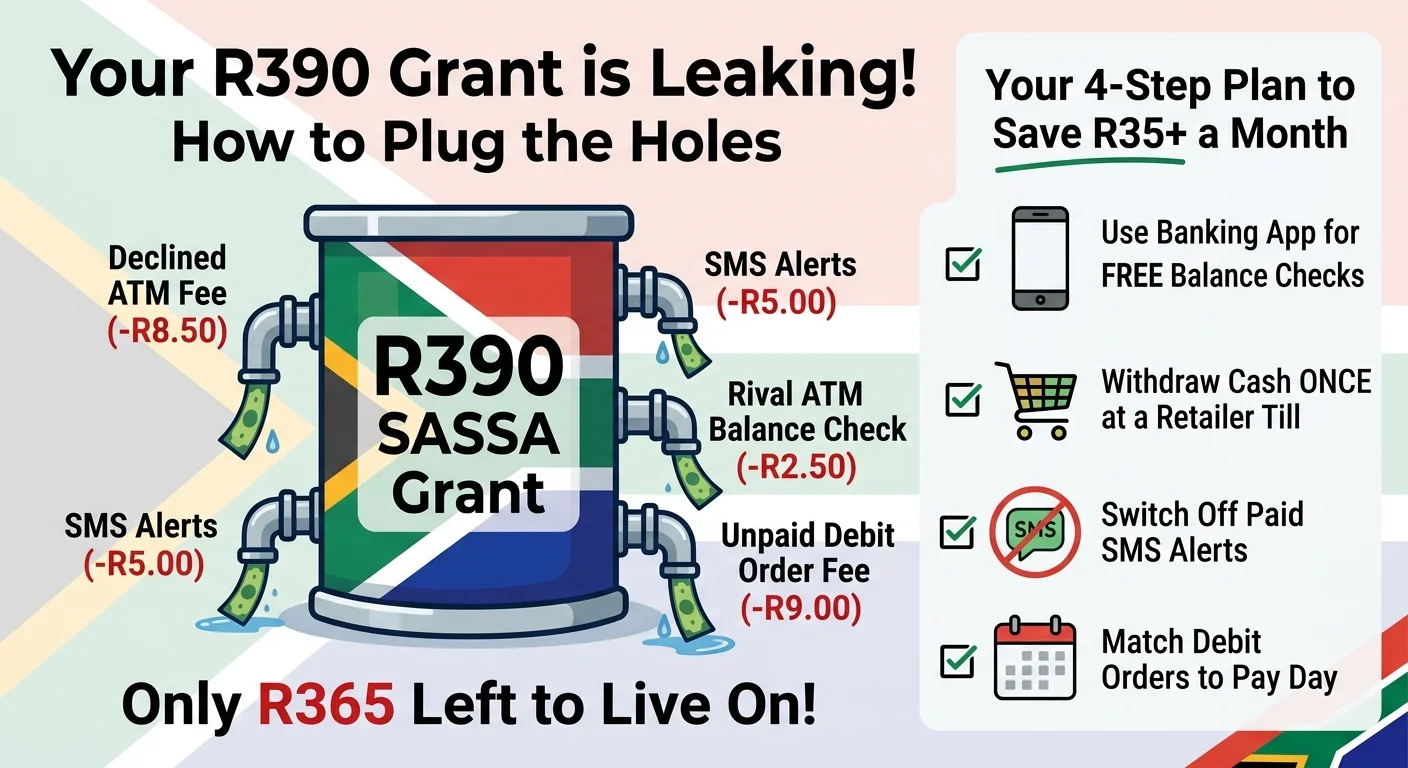
The Unseen Enemy: The 2026 Bank Fee Hike Nobody Warned You About
The biggest threat to your R390 SASSA grant in April 2026 isn’t some new government policy or a technical glitch. It’s a quiet, steady erosion happening inside your own bank account. While everyone is arguing about the grant value, a massive hike in banking fees has slipped under the radar. I’ve seen reports from early 2026 showing that “punitive” fees—the ones they charge you for making a mistake—have jumped by 12% since last year.
This “silent tax” doesn’t make the front page, but it can easily swallow R40 before you’ve even walked out of the store. It makes me angry because these fees hit SASSA beneficiaries the hardest. When your balance is always near zero, you are a sitting duck for “insufficient funds” penalties. Just one attempt to check if your money is there a day early could cost you R8.50. That is 2.5% of your whole grant gone in a second. If you want to avoid this, make sure you know exactly when your money arrives by checking the SASSA Payment Dates page.
Death by a Thousand Cuts: Unmasking the Top 5 ‘Silent’ Grant Killers
These fees are small on purpose. They want you to ignore them. But when you add them up, they are a heavy weight on an already tight budget. Here are the five ways your R390 grant is being drained in 2026:
- The Declined ATM Withdrawal Fee (Cost: ~R8.50): This is a total trap. You try to draw cash, but the grant hasn’t cleared yet. The machine says “no,” and then the bank charges you for the privilege of being told you’re broke.
- Compulsory SMS Notification Fees (Cost: ~R0.75 per SMS, up to R10/month): These feel helpful, but many banks now charge for every single alert. If you get 10 messages a month about payments and marketing, that’s R10 you’ll never see again.
- The ‘Insufficient Funds’ Penalty (Cost: ~R9.00): This happens when a debit order for your airtime or insurance hits your account before your SASSA payment. The bank blocks the payment but still fines you for the “inconvenience.”
- Over-the-Counter Cash Withdrawal Fee (Cost: ~R25.00+): I know the ATM lines are long, but going inside to a teller is a financial disaster. Banks charge huge fees to discourage this, sometimes taking 6% of your grant in one go.
- Balance Inquiry Fees (Cost: ~R2.50 at another bank’s ATM): Checking your balance shouldn’t cost money, but if you use a different bank’s ATM to see if your grant is in, they will take a cut.
When you add these up, you aren’t living on R390. You’re living on R355.
Your Bank, Your Choice? Comparing Low-Cost Accounts for Your R390 in 2026
You aren’t stuck with one bank. Choosing where your SASSA grant goes is your best defense. Here is how the 2026 options look:
- Postbank: The government really wants you to use this. It’s the default for a reason. It is cheap and usually gives you one free withdrawal at the Post Office. But let’s be real: the queues are a nightmare and the systems crash constantly.
- Capitec: Still a favorite for a reason. They use a “pay-as-you-transact” model, so you don’t get hit with massive monthly fees for nothing. Their app is great for free balance checks, and drawing cash at Shoprite or Pick n Pay is only about R2.
- TymeBank: This is the one to watch. There are no monthly fees at all. If you withdraw cash at a Pick n Pay or Boxer till, it’s free. The only downside is that it’s all digital, which I know can be intimidating if you prefer talking to a human.
- The ‘Big Four’ (Absa, FNB, Nedbank, Standard Bank): These banks have huge ATM networks, which is nice. But you have to be very careful. Their penalty fees are often much higher, and their “basic” accounts can be surprisingly complicated.
My take: If you want to keep the most money in 2026, Capitec or TymeBank are your best bets. They are just easier on the pocket.
The R0 Fee Myth: Why ‘Free’ Cash Withdrawals at Retailers Aren’t Always Free
Banks love to talk about “free” till-point withdrawals. While it is usually cheaper than an ATM, it isn’t always a win. There are “soft” costs that people don’t talk about enough:
- The ‘Compulsory Purchase’ Cost: Most shops make you buy something to get cash back. Even a R5 chocolate is a fee you wouldn’t have paid otherwise.
- The Transport Cost: If you spend R20 on a taxi just to get to a specific Shoprite, you’ve already lost more than the ATM fee would have cost you.
- The Temptation Cost: Supermarkets are designed to make you spend. You go in for R390 cash and walk out with R100 worth of stuff you didn’t plan to buy.
- The Time Cost: On payday, those till lines are brutal. Your time is worth something, too.
The best move? Only withdraw at the shop when you were already planning to do your big monthly grocery run.
Your 2026 Masterplan to Protect Every Rand of Your Grant
You have to be proactive. Nobody is going to protect your R390 for you. Here is exactly what I would do to stop the bleeding:
- Be a One-Time Withdrawer: Do not go to the ATM five times a month. Every swipe or withdrawal is a chance for a fee. Take out R380 in one go and leave R10 for the account’s basic costs.
- Use the Right Spot: If you’re with Capitec or TymeBank, use the till at Pick n Pay or Boxer. It’s the cheapest way, period.
- Get the App and Use It: This is huge. Download your bank’s app. Checking your balance on the app is free. Never, ever check your balance at an ATM again. If you aren’t sure if your grant is even approved yet, use the SRD Status Check portal first.
- Kill the SMS Alerts: Go into your app or the branch and turn off SMS notifications. They are a waste of money. You can check your transactions for free on the app whenever you want.
- Audit Your Account: Go to your bank and ask for a fee statement. If you see “service fees” or “admin fees” higher than R10, tell them you want the cheapest account they have. If they won’t help, move your money.
Frequently Asked Questions
Which bank is the absolute cheapest for SASSA beneficiaries in 2026?
Can a bank legally charge me a fee if my SASSA transaction is declined at an ATM?
How can I check my SASSA balance for free in 2026?
Is the new government-mandated Postbank or Khulisa account really the cheapest option?
My statement shows an 'unpaid debit fee'. What is this and why am I being charged?
How do I switch my SASSA grant payment to a new, cheaper bank account?
Read Next
The R390 vs R4,488 Minimum Wage Gap: Why Your April 2026 SASSA Payment is More Critical Than Ever
BREAKING ANALYSIS for April 2026: As South Africa’s new minimum wage rises …
The R150 Water Bill Shock: 2026 Tariff Hikes to Wipe Out 40% of Your SASSA Grant
BREAKING March 2026: Major South African cities have just announced shocking …
Comments & Discussions