Table of Contents
Let’s be honest: trying to survive on a SASSA grant in 2026 feels like trying to catch rain with a sieve. With the cost of bread and taxi fares hitting the roof, that R390 barely lasts a week. But I’m seeing something incredible happening across South Africa—a digital stokvel revolution where people are pooling tiny amounts of money to create real survival funds for school fees, emergencies, or starting a small business.
The Digital Stokvel Boom: A 2026 Lifeline Amidst Soaring Costs
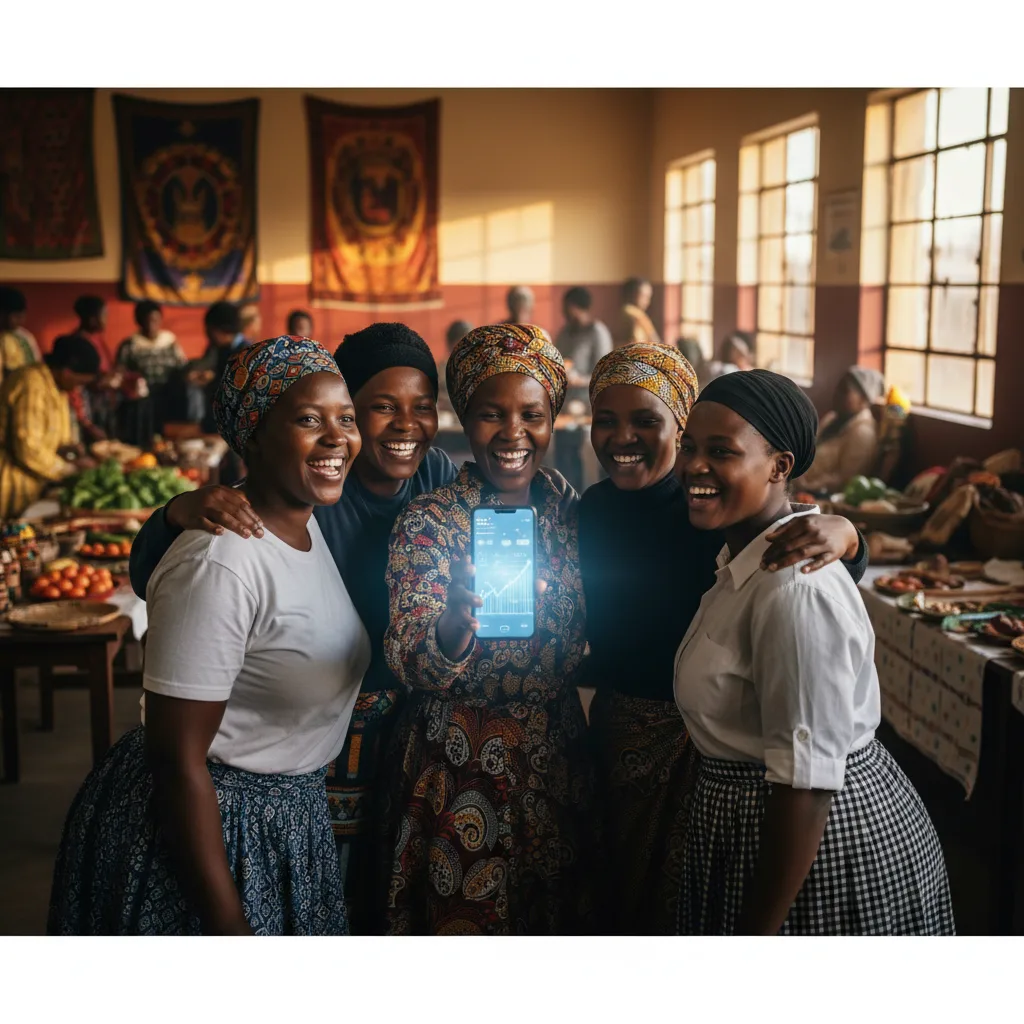
A digital stokvel is essentially our grandmothers’ savings clubs moved onto a smartphone. It’s a group of people using an app to manage their money together. In April 2026, as we all struggle with the price of food and transport, these platforms are exploding. I’ve been looking at the data from the National Stokvel Association of South Africa (NASASA), and while 11 million people still use traditional cash-based groups, the digital side is growing fast.
One report shows that downloads for these apps jumped by 200% just in the first few months of 2026. For the 8.8 million people living on the R390 SRD grant, this is more than a trend. It’s a way to fight back. Instead of trying to survive alone on a tiny amount, people are joining forces. It’s a direct challenge to big banks with their high fees and the dangerous “mashonisas” (loan sharks) who prey on the desperate.
Why Your R390 Grant is More Powerful in a Group
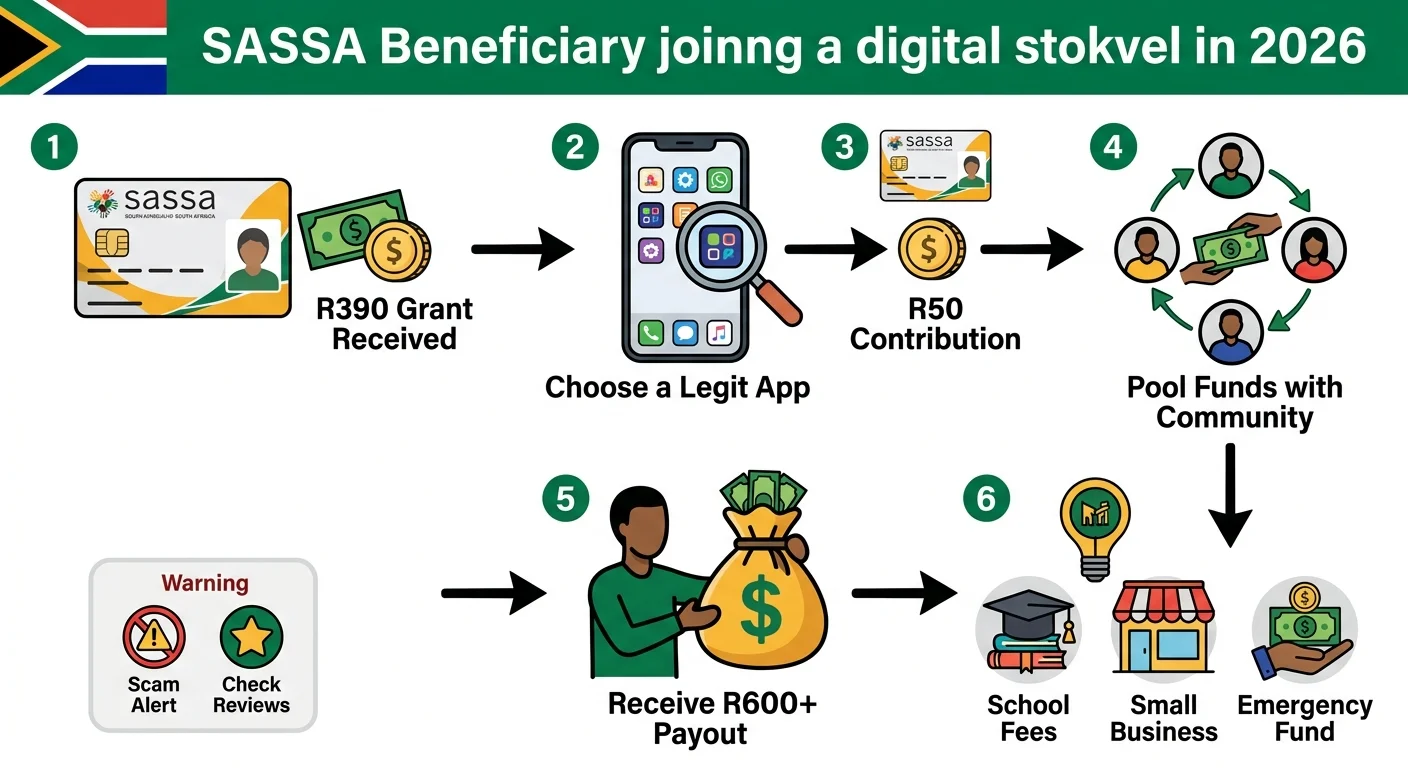
When you pool your money, the math changes. R390 on its own is gone in a flash at the grocery store. But if you put just R50 or R100 into a pot with 10 other people, suddenly you’re looking at a R1,000 or R1,200 payout when it’s your turn.
This changes everything. Instead of just “getting by,” you can actually pay for a school uniform, put down a deposit on a better place to live, or buy stock for a small side-hustle. My look at the 2026 economy shows that a R1,000 lump sum does three times more work than a single R390 grant because it lets you make big moves rather than just reacting to hunger. It’s a disciplined way to save that builds community trust. A standard bank account usually eats your balance with fees, but a stokvel actually helps it grow. Before you commit, just make sure you know when your money is coming in by checking the SASSA Payment Dates page.
Your 2026 Guide to Spotting a LEGIT Digital Stokvel App
I hate that I have to say this, but where there is money, there are scammers. The growth of these apps has brought out the bottom-feeders. A real app in 2026 has to be safe and transparent. Here is what I look for before I’d ever suggest putting a cent of your grant into one:
- Check for FSCA Registration: Even if the group is informal, the app itself should be registered with the Financial Sector Conduct Authority (FSCA) or be partnered with a real bank. Look for this in the “Legal” section of the app.
- Clear Rules: A good app lets you create a “constitution.” This is a digital document that says exactly how much everyone pays, when they get paid, and what happens if someone misses a payment. If there are no rules, run away.
- Safe Payments: The app should use systems like PayFast or Ozow. If someone asks you to EFT money directly to a personal bank account, it’s probably a scam.
- Read the 1-Star Reviews: Don’t trust the 5-star ratings. Go straight to the bad reviews on the Play Store. If people are screaming about missing money or locked accounts, listen to them.
- Real Support: Can you call a South African number and talk to a human? If the only way to get help is a generic contact form, be very careful.
Step-by-Step: How to Join and Start Saving with Your SASSA Grant
Starting out is actually pretty simple if you have a smartphone. Here is the safest way to do it:
Step 1: Verify Your Grant. Don’t commit money you don’t have yet. Do a quick SRD R350 Status Check to make sure your payment for the month is actually approved.
Step 2: Pick Your Platform. Research the big names like Stokfella or Franc. These are popular in 2026 for a reason.
Step 3: Register. You’ll need your ID and phone number. This is standard for any financial app in South Africa.
Step 4: Form Your Circle. You can join public groups, but I’m wary of those. The safest way is to invite people you actually know—family, neighbors, or friends from church. Trust is everything here.
Step 5: Set the Rules. Decide together: is it R50 a month? R100? Who gets the first “hand” (payout)? Use the app to lock these rules in.
Step 6: Link Your Account. Link your bank account or your SASSA Postbank card. Make your first payment through the app’s secure system.
Step 7: Stay Involved. Check the app regularly. A good group talks to each other and keeps everyone accountable.
The Risks vs. The Rewards: Protecting Your R390 Grant
The reward is obvious: you get a lump sum that feels like a massive win. However, I’m not going to sugarcoat the risks. Dr. Busi Molefe, a researcher at Wits, warns that digital platforms can make fraud happen faster if we aren’t careful.
The biggest danger is a “platform scam” where an app just disappears with everyone’s money. That’s why vetting the app is the most important thing you’ll do. The second risk is a member “ghosting” the group—taking their payout early and then never paying again. This is why I always say: start with people you trust. In 2026, my best advice is to start small. Try R50. Once you see the system works and you trust your group, then you can talk about increasing the amount.
Frequently Asked Questions
Is it safe to join a stokvel with strangers online?
How much of my R390 SASSA grant should I contribute to a stokvel?
What happens if the stokvel app shuts down or disappears?
Can I be in more than one digital stokvel at a time?
Are stokvel payouts considered income by SASSA?
What is the difference between a stokvel and a pyramid scheme?
Read Next
SASSA June Payment Update: June 2026 Payment Cycle Confirmed
The June 2026 SASSA payment cycle is confirmed for 2, 3 and 4 June 2026 for the …
The R50 Billion Food Waste SHOCK: Why Your R390 SASSA Grant Can't Buy Food While SA Throws It Away
BREAKING May 2026: A shocking new report reveals South Africa wastes over R50 …
Comments & Discussions