
Table of Contents
Title: The R99 Funeral Cover ‘Scam’ Siphoning 25% of Your R390 SASSA Grant in 2026
It is April 2026, and I am honestly disgusted by how many people are losing a quarter of their R390 SASSA grant to funeral policies they barely understand. We are looking at the ugly truth behind these popular R99 schemes targeting millions of vulnerable South Africans. I want to help you spot the red flags and find safer ways to protect your money so your grant goes toward living, not just dying.
The SASSA Payday Ambush: How 25% of Your Grant Vanishes at Pay Points
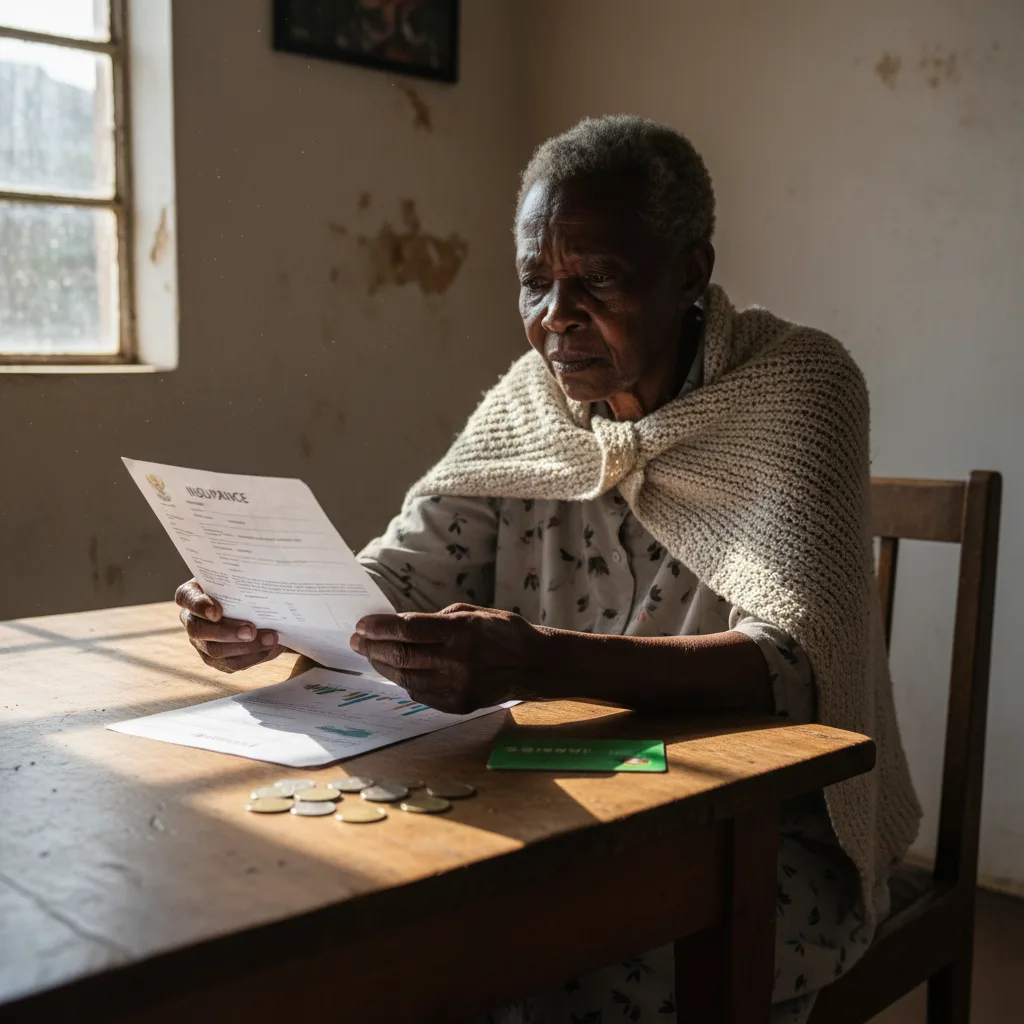
The R390 Social Relief of Distress (SRD) grant is a lifeline for over 8.5 million South Africans in 2026, but it has become a feeding ground for predatory funeral agents. I’ve seen them waiting at pay points with their clipboards and smooth talk, promising “peace of mind” for just R99 a month. It sounds cheap until you realize that for someone living on R390, that is more than 25% of their entire month’s food and transport gone. The Financial Sector Conduct Authority (FSCA) says this funeral market is worth over R10 billion a year, and a huge chunk of that comes from people who can least afford it. These agents use high-pressure tactics, playing on the deep cultural need for a dignified burial. They get people to sign complicated forms or hand over Postbank details without explaining that they are signing up for a recurring debit order that is a nightmare to cancel. It makes me angry to see a grant meant for basic survival turned into a permanent paycheck for insurance companies, leaving some people with less than R300 to survive the month.
Decoding the R99 ‘Bargain’: The Hidden Traps in Your Policy
A R99 policy for a R10,000 payout sounds like a great deal, but the fine print is where things get ugly. The biggest trap is the “waiting period.” Most of these policies won’t pay a cent for natural death in the first six months. If someone dies during that time, the family just gets their premiums back. Salespeople love to highlight the immediate cover for accidents while whispering about the natural death clause. Then there are the exclusions. Suicide isn’t covered for the first year or two. If you have HIV, diabetes, or high blood pressure and don’t mention it during a rushed sign-up, they can void the whole policy. Dr. Thandi Mkhize, a social policy analyst, points out that the value is often terrible. If you pay R99 a month for ten years, you have spent R11,880 for a R10,000 payout. You are literally paying more than the benefit is worth, and that is assuming the company even approves the claim.
The Unbreakable Debit Order: SASSA’s Digital Handcuffs
Once you say yes, stopping that R99 deduction from your SASSA account feels like trying to stop a runaway train. Even though SASSA does not take the money directly, giving your bank or Postbank details to an agent is like handing over the keys to your house. These companies use third-party systems to pull the money the second it hits your account. I have heard from so many people who spend weeks being bounced between the insurer and the bank, with neither side taking responsibility. It is a mess by design. Data from the Payments Association of South Africa (PASA) shows that “DebiCheck” disputes are incredibly high in low-income areas. Most people do not have the data or the transport money to visit bank branches or use apps to stop these orders. This digital gap keeps people trapped, watching their grant disappear month after month.
Red Flags for 2026: How to Spot a Predatory Funeral Policy
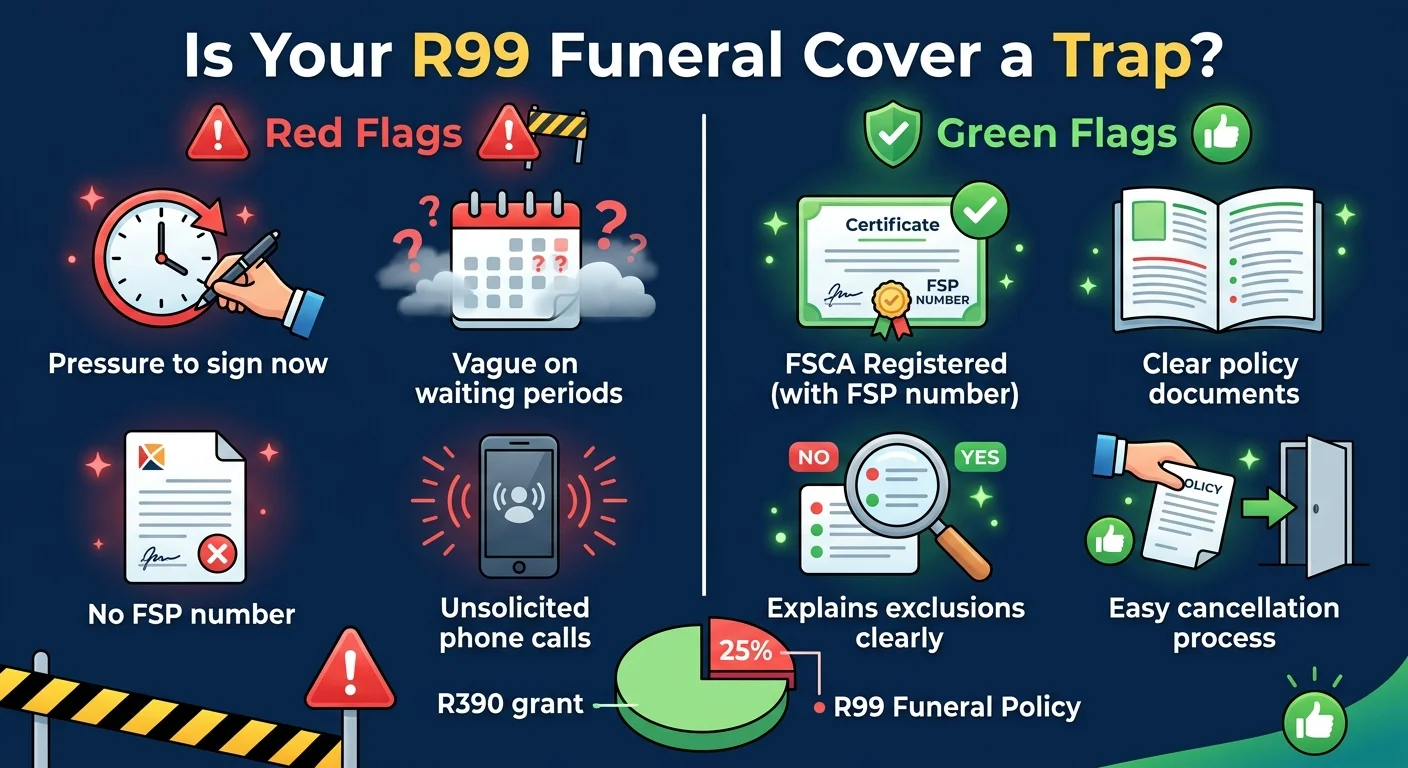
You have to be incredibly careful with your R390 grant in 2026. If an agent is pressuring you to “sign now or lose the deal,” that is your first sign to walk away. Real companies do not mind if you take a day to think. You need to ask hard questions. Ask about the waiting period for natural death and what exactly is excluded. If they get vague, they are hiding something. Always demand a paper copy of the terms before you agree to anything. Don’t trust the “we’ll send it later” promise. Also, never buy a policy over the phone from a random caller. Always check their Financial Service Provider (FSP) number on the FSCA website. If they won’t give you that number, they are likely running a scam. If it feels too good to be true, it probably is.
Your Rights & Safer Alternatives: Taking Back Control of Your R390
You deserve a fair deal. If you have been tricked, you need to complain to the insurance company first. If they do not fix it, go straight to the FSCA. They are there to stop this kind of exploitation. You can file a complaint on their site or call their toll-free line. To stop a debit order, you have to tell your bank in writing. Do not just take the agent’s word that they will cancel it. If you actually want cover, look at big, reputable banks or insurers. They might cost a tiny bit more, but they are much safer. Compare at least three different companies before deciding. I also want to remind you that some SASSA grants, like the Older Persons Grant, already have a small funeral benefit built in. Check what you already have before buying something extra. For the latest on when your money will arrive, keep an eye on the official SASSA Payment Dates schedule.
Frequently Asked Questions
Can SASSA deduct a funeral policy from my R390 grant directly?
How can I check if a funeral policy provider is legitimate in 2026?
What is a 'waiting period' and why is it important?
I signed up for a policy and want to cancel. What is the first step?
Can I stop a debit order on my SASSA card at the post office?
Are there any free or government-provided funeral benefits?
Read Next
SASSA's New 'Mandatory App' Locks Your R390 Grant? The 2026 Guide for Beneficiaries Without a Smartphone
BREAKING April 2026: SASSA is rolling out a mandatory new smartphone app, …
The R140 Paraffin Price SHOCK: How 40% of Your R390 SASSA Grant Will Vanish on May 1st, 2026
BREAKING April 2026: NERSA has approved a devastating 40% increase in the price …
Comments & Discussions