Table of Contents
Title: The R99 SASSA Debit Order Scam: How Funeral Policies Are Draining Your R370 Grant in 2026
Are those annoying R99 debit orders for funeral cover or airtime bleeding your SASSA grant dry in 2026? It is a nightmare that too many people are facing right now. This guide isn’t just a list of tips; it is a way to fight back against the predatory companies trying to steal your money. We will look at how they use the DebiCheck system against you and give you a real plan to stop these deductions and protect your R370.
The Silent Thief: How R99 a Month is Crippling SASSA Beneficiaries in 2026
It usually starts with a phone call or a “friendly” agent standing near the pay point. They offer “peace of mind” for just R99 a month. For anyone living on the R370 SRD grant in January 2026, that R99 is a massive chunk of money. It is more than 26% of your total income. That is not just a small fee. It is the difference between buying a bag of maize meal or going to bed hungry. These companies are not selling security. They are vultures. They know exactly when SASSA pays out, and they pounce the second your money hits the account, leaving you with nothing but scraps. I am tired of seeing people lose their lifeline to these traps. This is an action plan to help you fight back against this theft.
DebiCheck Demystified: Is It a Gatekeeper or a Scammer’s Best Friend?
DebiCheck was supposed to be our shield. The idea was simple: you have to electronically approve a payment before it happens. This was meant to stop people from just dipping into your account. But in 2026, I am seeing these companies turn that shield against us. Salespeople are trained to bully you into clicking “yes” on an SMS or USSD prompt without explaining what it really means. They might tell you it is just to “verify your account details,” but you are actually signing away your grant.
Here is how they trick you:
- Bullying Tactics: They corner you in long queues or call you over and over until you give in.
- Lies: They won’t call it a “debit order.” They use fancy words like “policy activation” to confuse you.
- The Digital Trap: They rush you through the phone menus so fast that you don’t realize you are signing a contract.
Once you hit that button, the company has “legal” permission to take your money. This makes it much harder to fight later because the bank sees it as something you wanted. You have to remember that your phone is like your checkbook. Never approve anything from a company you don’t know, no matter how much they push.
Your 4-Step Action Plan: How to Find, Fight, and Block Unwanted Debit Orders
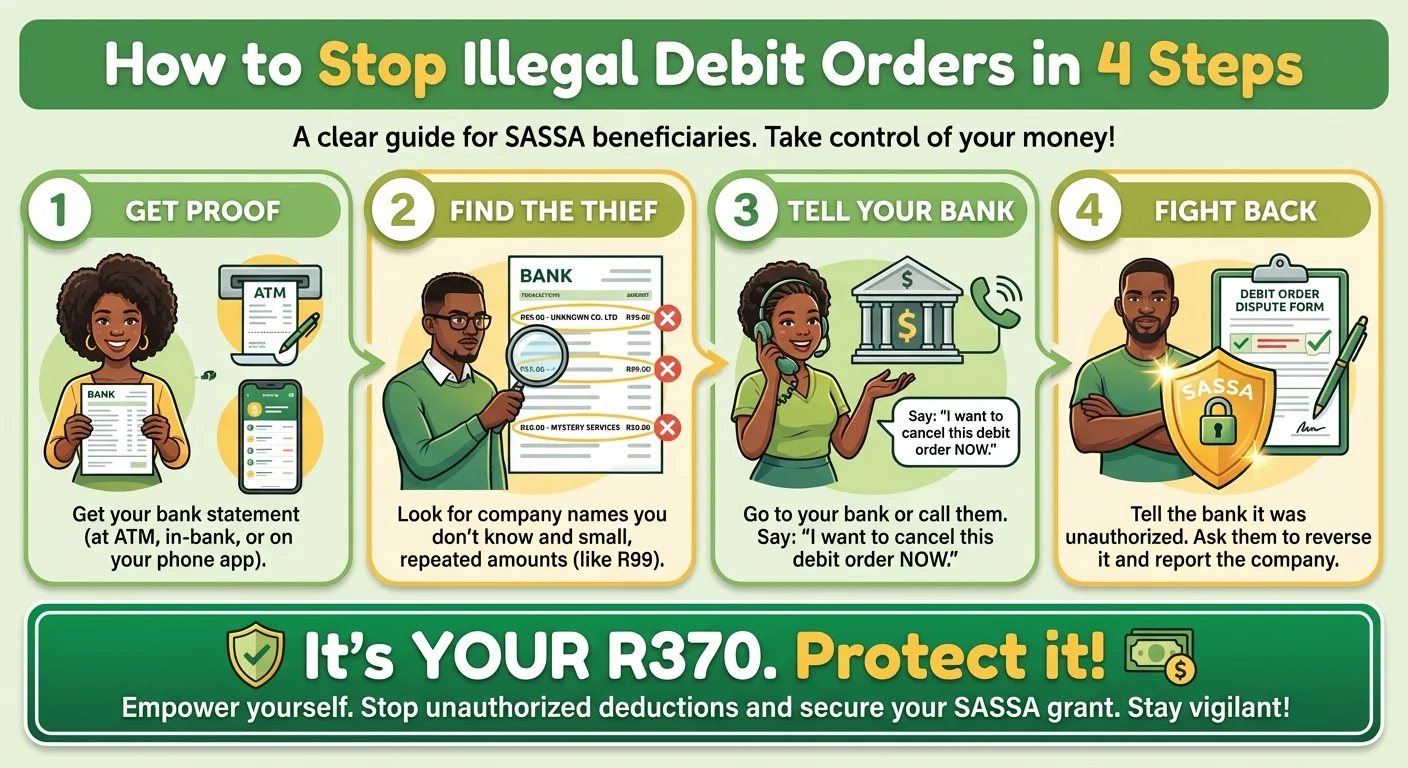
Feeling helpless is exactly what these companies want. But you have the power to shut them down. You just have to be organized about it. Follow these four steps immediately if you think someone is stealing from your SASSA grant account.
Step 1: Be Your Own Detective You can’t stop what you can’t see. Go to the ATM and get a mini-statement, or use your banking app to see your full history. Look at every single cent. If you see a payment you didn’t make yourself, that is your target.
Step 2: Find Out Who They Are Look for the name next to the R99 or R80 deduction. It might be a company you’ve never heard of. Write down the name, the amount, and the date they took it. If you search for that company name online, you will likely find hundreds of other people complaining about the same thing.
Step 3: Tell Your Bank to Stop It This is where you take control. You need to tell your bank to stop that specific payment. You can do this by:
- Going into the branch: Take your ID and card. Tell them you want to “stop a debit order” and “dispute the transaction.”
- Calling them: Use the customer service number on the back of your card.
- Using the app: Most banks have a “Debit Orders” section where you can stop them yourself.
Step 4: Demand Your Money Back Stopping the payment only protects your next grant. You should also try to get back what they already took. Tell the bank the payment was “unauthorized” or that you were misled. They have a form for this. You should also report the company to the National Consumer Commission (NCC) so they can see how many people are being hurt.
Reclaiming Your R370: A Guide to Disputing and Reversing Deductions
Simply stopping a debit order isn’t enough. You need to fight for every Rand. The dispute process is your way of telling the bank that the money was taken unfairly. According to the rules in South Africa, you have a right to question any deduction.
The Fight With Your Bank: When you file a dispute, the bank will check their records. If it was a DebiCheck order, they might try to say you agreed to it. This is where you have to be firm. Tell them: “I was lied to. I did not understand that I was agreeing to a monthly payment.”
- The Wait: Banks usually take about 40 days to finish an investigation. Don’t let them forget about you. Keep your reference numbers.
- The Refund: If the bank agrees with you, the money goes back into your account. It isn’t always a sure thing, but it is always worth the effort.
Taking it Higher: If the bank is being difficult, don’t give up. Contact the Ombudsman for Banking Services. They are an independent group that helps people for free. Give them your bank statements and your reference numbers. It feels like a lot of work, but every time someone wins a dispute, it makes it harder for these scammers to keep operating.
Beyond Blocking: Smart Habits to Protect Your SASSA Grant for Good
Stopping one scammer is great, but you need to make sure it doesn’t happen again. Here is how I think you should protect your grant in 2026:
- Your Phone is Private: Never click “Yes” or enter your PIN on your phone unless you are 100% sure why. A digital “Yes” is just as powerful as a signature on paper.
- Be Rude if You Have To: You don’t have to be nice to salespeople. If someone is bothering you at a pay point, say “No” and walk away. You don’t owe them an explanation.
- Don’t Sign Anything: If someone gives you a form, don’t sign it. If you can’t read the small print, take it to someone you trust first. Never trust the person trying to sell you the policy.
- Watch the Calendar: Know exactly when your money is arriving. You can check the latest dates on our Payment Dates page. If you know the day the money lands, you can withdraw it before the scammers can grab it.
- Look for a Basic Account: Ask your bank for an account that doesn’t allow debit orders at all. Some “pay-as-you-transact” accounts are built this way and can act as a wall between your money and the scammers.
Frequently Asked Questions
Can SASSA stop a debit order from my grant money?
How can I check for unwanted debit orders without going to the bank?
*120*321# for Capitec) and follow the menu to get a statement or see recent transactions.What is the difference between a stop order and a debit order?
Will I get my money back if I dispute the debit order?
Is it illegal for a company to deduct money without my clear permission?
Where can I report a company for a bad funeral policy or service?
My SASSA grant was approved but the money is gone. Could this be the reason?
Are all funeral policies sold to SASSA beneficiaries a scam?
Read Next
SASSA's R10 'Khulisa Account': Your Guide to the New Low-Cost Bank Account for 2026
BREAKING March 2026: The South African Reserve Bank has mandated a new …
The R80 Chicken Apocalypse: How Avian Flu Will Steal Over R100 of Your R390 SASSA Grant in April 2026
BREAKING March 2026: A catastrophic Avian Flu outbreak is set to decimate South …
Comments & Discussions