Table of Contents
A comprehensive 2026 guide for SASSA beneficiaries on managing their finances. Learn how to choose a zero-fee bank account, find affordable funeral cover, avoid predatory loans, and strategically use your R350 SRD grant to build a stronger financial future in South Africa. We analyze the traps and offer actionable solutions.

The 2026 Mindset Shift: Your R350 is Not Just for Bread
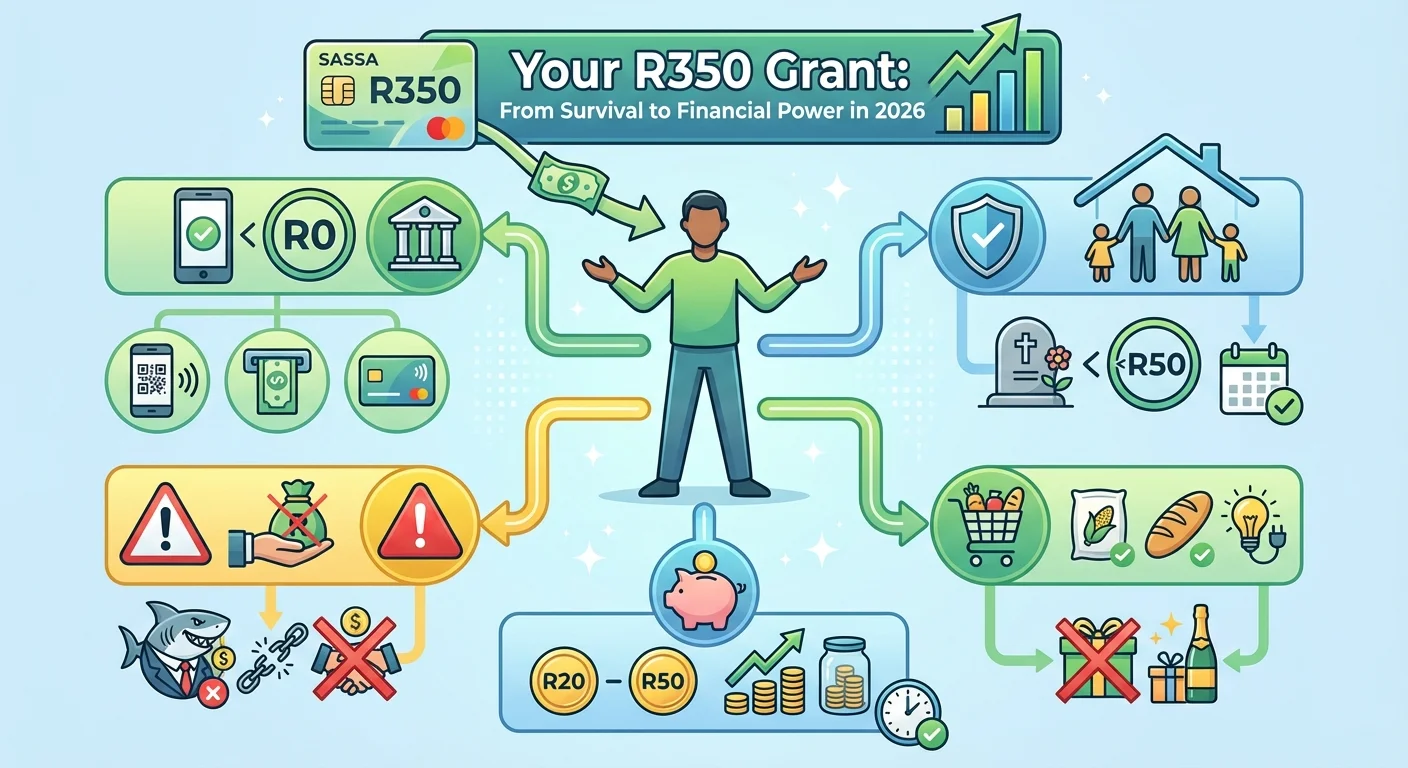
Let’s be honest. For millions in South Africa, the R350 Social Relief of Distress (SRD) grant is a lifeline. It puts food on the table when there’s nothing else. But what if we’ve been looking at it all wrong? What if, in 2026, we stopped seeing it as just survival money and started treating it as the most important financial tool we have? The system is designed to keep you dependent, waiting for the next payment date. Banks, loan sharks, and even some insurers see that monthly R350 as a guaranteed income stream… for them. This article is about flipping the script. It’s about taking back control and making that R350 work for you, not for them.
The Bank Account Trap: Are ‘Free’ Accounts Secretly Costing You?
The first place your grant can lose value is your bank account. Many banks offer ’low-cost’ or ‘basic’ accounts perfect for SASSA grants, but the devil is in the details. A ‘R5 monthly fee’ might seem small, but it’s nearly 1.5% of your grant gone before you even touch it. Over a year, that’s R60 – enough for a big bag of maize meal.
What to look for in a 2026 SASSA-friendly bank account:
- Zero Monthly Fees: This is non-negotiable. Banks like TymeBank, Bank Zero, and Capitec’s base account often lead the pack here.
- Free Cash Withdrawals: Look for accounts that offer free withdrawals at specific supermarket tills (like Pick n Pay or Shoprite). ATM withdrawals almost always have a cost.
- No Swipe Fees: You should not be charged for paying with your card at a store. This is the cheapest way to use your money.
- Low to No Transfer Fees: If you need to send money, check the costs. Some digital banks offer free EFTs.
Our Take: The days of accepting hidden bank fees are over. Your grant is too precious to give away to a bank. Before your next SASSA Payment Date, take 30 minutes to compare your current bank statement with the offerings from digital-first banks. You could be saving hundreds of Rands a year.
Funeral Cover: The Necessary Protection vs. The Expensive Scam
In our communities, a dignified burial is incredibly important. This has created a massive industry for funeral cover, and some providers specifically target SASSA beneficiaries with high premiums for low cover. You should never pay more than R50-R70 per month for basic, individual funeral cover from your grant. Anything more is likely a rip-off.
Smart Steps for Affordable Cover in 2026:
- Shop Around: Don’t just sign up with the first person who approaches you at the pay point. Get quotes from reputable insurers like Old Mutual, Sanlam, or even your bank.
- Read the Fine Print: Look for waiting periods. Most policies have a 6-month waiting period for natural death. Understand this before you sign.
- Cover Yourself First: While covering the whole family is ideal, start with yourself. Secure a small, affordable policy (e.g., R10,000 cover for R40/month) before trying to cover everyone.
- Beware of ‘Add-ons’: Be careful of policies that add ‘airtime benefits’ or ‘grocery coupons’. These often inflate the premium for very little real value.
The Hard Truth: Unscrupulous agents see your consistent grant as a guaranteed monthly premium. Protect your dignity, but do it smartly. A good policy brings peace of mind; a bad one just drains your grant.
The Loan Shark Danger Zone: Why ‘Easy’ Money is a R350 Grant Killer
This is the single biggest destroyer of wealth for grant recipients. Loan sharks, both illegal mashonisas and predatory micro-lenders, promise quick cash when you’re desperate. They might offer you R200 and demand R350 back on your payment day. This is an interest rate of 75% in just a few weeks! It is a cycle designed to be inescapable.
Why it’s a trap:
- They Take Your Card: Many will illegally demand you hand over your SASSA card and PIN as ‘security’. This is illegal and gives them total control.
- The Interest Cripples You: Once you owe them, your next grant is already gone. You have to borrow again just to eat, digging the hole deeper.
- There is No Escape: They use intimidation and threats to ensure you keep paying.
If you are in this situation, please seek help. Contact the National Credit Regulator (NCR) at 0860 627 627. There are ways out, but the first step is to never, ever take a loan against your grant from an informal lender. The short-term relief is not worth the long-term prison of debt. If your grant application was unfairly declined and you’re feeling desperate, rather focus your energy on the official SASSA Appeals Guide.
Store Accounts: Building Credit or Digging a Hole?
Many retail stores (like Jet, Pep, or Ackermans) offer store cards to SASSA beneficiaries. This can be a double-edged sword.
The Smart Way:
- Use it for Essentials Only: You could use a store card to buy school uniforms for your child at the beginning of the year and pay it off over 3-4 months. This is a strategic use.
- Build a Payment History: By making small, consistent payments, you build a positive credit record. This could help you get a formal, low-interest bank loan for a real emergency or opportunity one day.
The Dangerous Way:
- Buying Luxuries: Using the card for clothes, electronics, or items you don’t need is a fast track to debt. The interest rates are often high (over 20% per year).
- Maxing it Out: If you use the full credit limit, your monthly repayment could eat up a huge chunk of your R350 grant, leaving you with nothing.
Verdict: A store card is a tool, not free money. Use it surgically for planned, essential purchases and pay it off as quickly as possible. Never see it as a way to supplement your monthly income.
Micro-Insurance: Protecting Your Lifeline (Your Phone)
In 2026, your cellphone isn’t a luxury; it’s your connection to everything. You use it to check your SRD Status, apply for jobs, and communicate. What happens if it gets stolen or broken? For as little as R20-R40 a month, you can get micro-insurance for your device. Companies linked to mobile providers or banks often have these accessible policies. It’s a small deduction that can save you from a R1,500 replacement cost, which would be impossible on a grant.
The 2026 Digital Stokvel: Saving R20 a Month
Saving seems impossible on R350. But what if you and four trusted friends or family members started a digital stokvel? Using a bank’s immediate payment feature, you could each commit to sending just R20 to one person on grant payment day. That’s R100 for one person to use for a specific need – like buying bulk mielie meal, paying for a child’s school trip, or an emergency taxi fare.
It’s not about getting rich; it’s about creating a small, community-based emergency fund. It builds financial discipline and trust. Doing it digitally avoids the risks of carrying cash. This is a modern take on a timeless South African tradition.
Your Step-by-Step R350 Budget for January 2026
Here’s a sample breakdown. It’s tough, but it’s a starting point for control.
Bank Fees: R0 (If you’ve switched to a zero-fee account)
Funeral Cover: R45 (For basic, essential cover)
Phone Insurance: R25 (Protecting your key asset)
Digital Stokvel Savings: R20 (Building a safety net)
Sub-Total (Fixed Costs): R90
Remaining for Living Expenses: R260
This R260 is what you have for food, electricity, transport, and airtime. It’s not a lot, but by ring-fencing those other costs, you know exactly what you’re working with. You’ve protected your future and your assets first. This is the definition of paying yourself first, even on a small amount.
Conclusion: The Power is in Your Hands, Not Theirs
The SASSA grant system can feel disempowering. You wait for an SMS, you stand in a queue, you accept what you’re given. But the moment that R350 hits your account, the power transfers to you. For 30 days, you are the CEO of that money.
In 2026, make the choice to be a proactive manager, not a passive recipient. Question every fee, reject every predatory loan, and find every opportunity to make that money stretch. The system may not change overnight, but you can change your own financial reality starting today.
Frequently Asked Questions
What is the absolute best and cheapest bank for my SASSA grant in 2026?
Can I really get a loan with just my SASSA grant?
Is funeral cover a scam for SASSA recipients?
How can I avoid all bank charges on my grant money?
Can I get a store card from places like Pep or Jet with an R350 grant?
What happens if I have other debts? Can they take my SASSA money?
Is it realistic to save money from the R350 grant?
What is the safest way to receive my SASSA payment in 2026?
My grant application failed, what financial help can I get?
How do I check if a financial advisor or insurer is legitimate?
Read Next
SASSA's R100 Mistake: Why Your Gold Card Is Secretly Costing You Money in 2026
In 2026, millions of South Africans are losing up to R100 or more per month from …
SASSA January 2026 Payment Dates CONFIRMED: Why You Must Check Before You Collect
The official SASSA grant payment dates for January 2026 are here. This guide …
Comments & Discussions