Table of Contents
Title: From R20,000 Salary to R390 Grant: The 2026 Transnet Layoffs & SASSA’s Ticking Time Bomb
South Africa’s economy just took a massive hit. In February 2026, Transnet confirmed it’s cutting 20,000 jobs, and I can’t help but worry about the fallout for the SASSA R390 Social Relief of Distress (SRD) grant. We need to look at whether our social safety net can actually survive this.
The Shockwave: 20,000 Transnet Jobs Vanish in February 2026
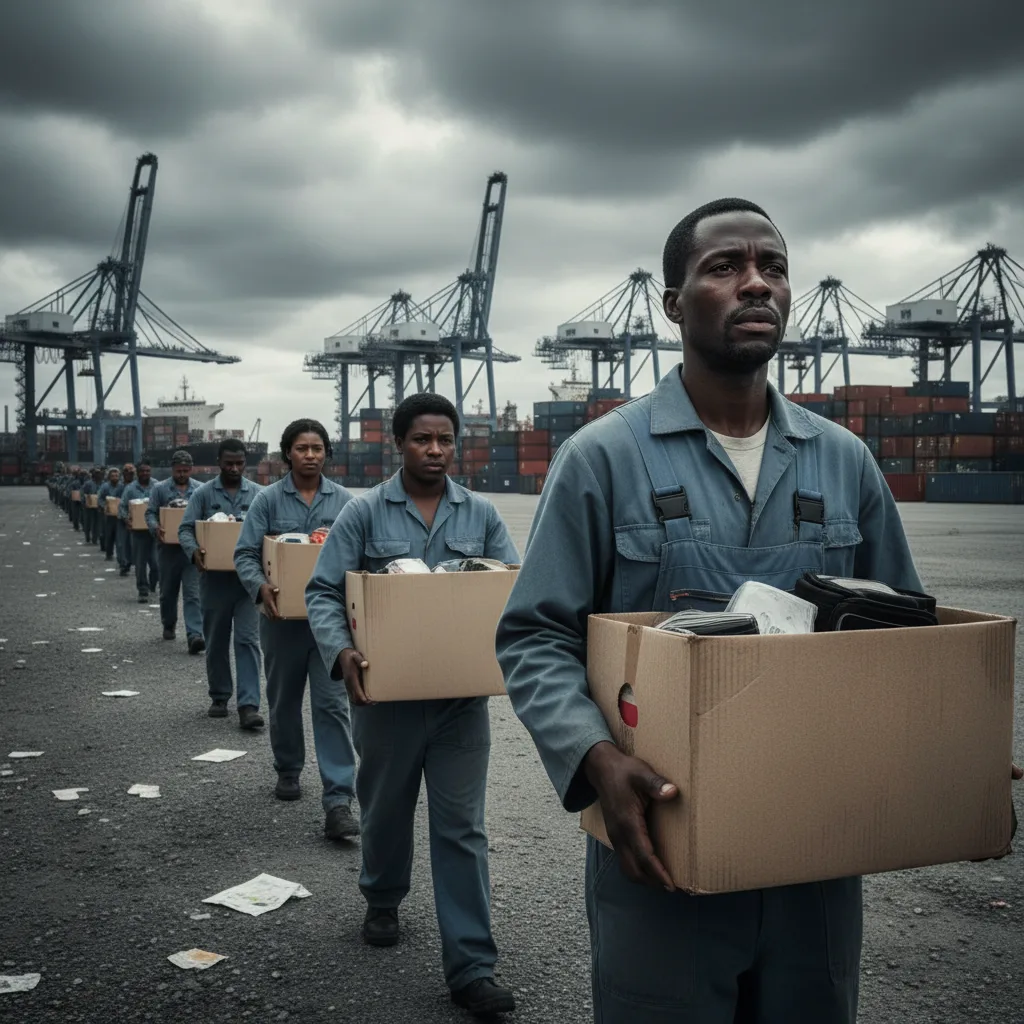
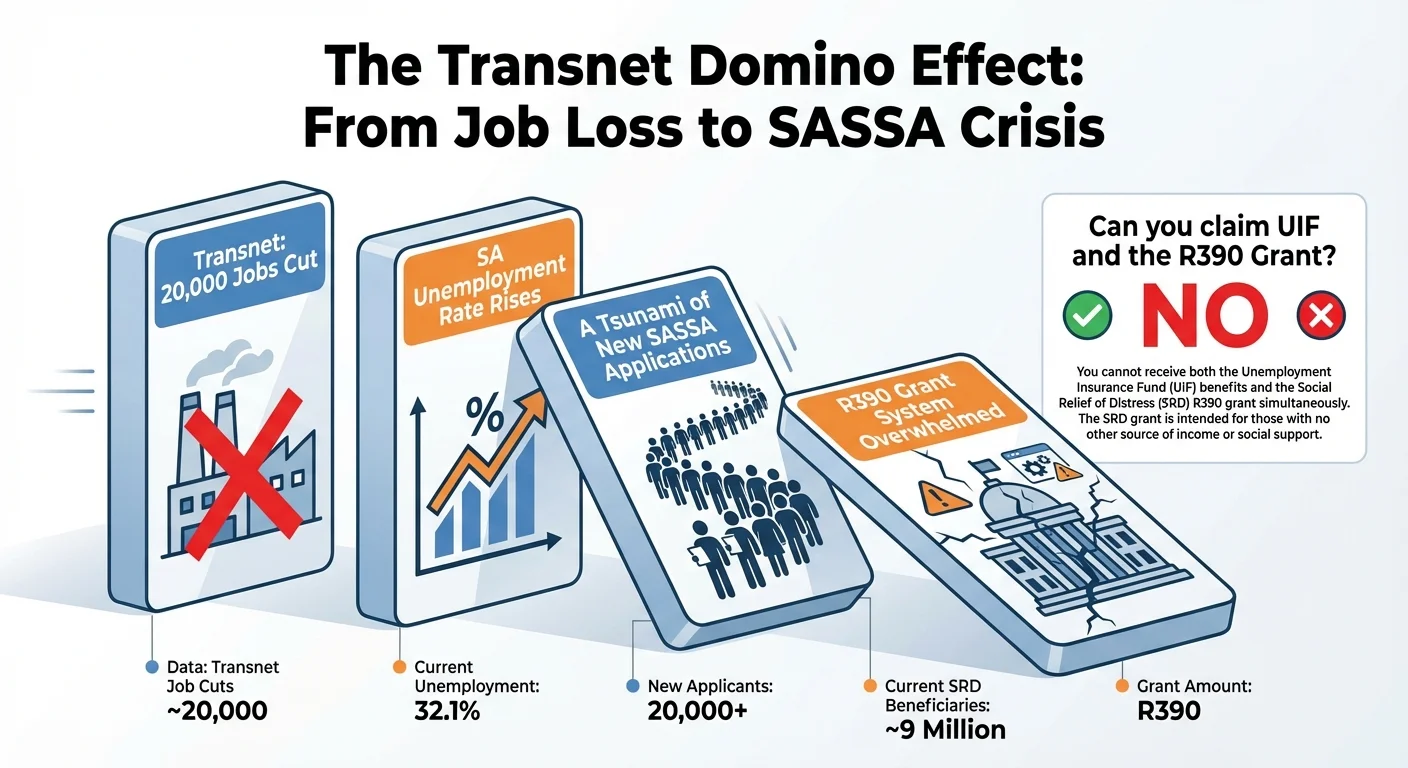
The news from Transnet this week felt like a gut punch. Seeing 20,000 people lose their livelihoods at a state-owned giant is more than just a bad headline; it’s a disaster for families across the country. According to News24 on February 26, 2026, this is all part of a “restructuring plan” to save money, but the human cost is staggering. With unemployment already sitting at 32.1% at the end of 2025, we’re heading toward a breaking point.
Union leaders are calling it a “brutal betrayal,” and they aren’t wrong. People who had stable lives, medical aid, and a plan for retirement are now staring at a blank calendar. I keep thinking about the families behind these numbers. For most of them, the only thing left to turn to is the state’s last-resort safety net: the SASSA R390 Social Relief of Distress grant.
From a R20,000 Payslip to a R390 Grant: The New Face of Poverty
The R390 SRD grant was meant for people with absolutely nothing. But this Transnet crisis changes the whole picture. We are now seeing thousands of skilled workers—engineers, techs, and office staff—who used to earn R20,000 a month being forced to apply for R390. That is a 98% drop in income.
The shock of that transition is hard to even imagine. A logistics coordinator who used to manage a household budget and school fees now has to join a digital queue with millions of others. This creates a new class of applicants: people with bank accounts and credit histories that might confuse the SASSA means test. I’m concerned that the system’s algorithm, which wasn’t built for this kind of sudden middle-class collapse, will reject people who are genuinely desperate just because they owned a car or a house two months ago.
Can the SASSA System Handle the Influx? A Network at Breaking Point
SASSA is already struggling to keep its head above water. They’re dealing with nearly 9 million people every month. If you dump another 20,000 desperate applications into that system at once, the whole thing might just break. SASSA’s 2025 annual report showed how many glitches and backlogs they already have, and this influx will only make things worse.
The biggest headache will be the verification process. SASSA has to check databases from Home Affairs, SARS, and the UIF. The rule is simple: you can’t get the SRD grant if you’re eligible for UIF. Verifying that for 20,000 new people is going to take weeks, maybe months. Families will be sitting with zero income while a computer tries to decide if they’re “poor enough.” The R3.4 billion monthly budget for the SRD grant simply wasn’t ready for a shock this big.
What the Transnet Crisis Means for Existing SRD Beneficiaries
If you’re already relying on that R390 every month, this news should worry you. It’s not just about the new applicants; it’s about the pressure on the whole pot of money. I expect we’ll see massive delays in March and April 2026 because the system is bogged down.
And there’s another worry. To make the budget stretch, SASSA might get even pickier with their “means test.” They’ll be looking for any reason to say no, which means more frequent checks and more “incorrect” rejections. It feels like we’re pitting the “newly poor” against people who have been struggling for years for the same tiny bit of help. That’s a recipe for real anger.
Your Action Plan: Applying for SASSA After a 2026 Retrenchment
If you’ve just been retrenched, you need to move fast and be careful. First, get your UIF sorted with the Department of Labour. It’s a pain, but it’s a legal requirement. SASSA will reject you immediately if they see you’re eligible for UIF.
Once your UIF runs out—or if you can’t get it for some reason—then you apply for the SRD grant. You’ll need your ID and a working phone. I’ve linked a How to Apply for the SRD Grant Guide here that breaks down the steps. Keep every piece of paperwork Transnet gave you. You’re going to need it if the system flags your application and you have to prove you no longer have an income. Don’t wait, because the line is about to get much longer.
The Bigger Picture: Is the Grant a Plaster on a Gushing Wound?
Let’s be honest: a R390 grant is a band-aid on a gunshot wound. The Transnet mess shows how badly our state-owned companies are failing and how thin the line is between a stable life and absolute poverty. We can’t just keep moving people from payrolls to grant queues.
Social policy expert Dr. Elmarie Pretorius says it best: using the SRD grant to catch formal-sector layoffs is like trying to empty a sinking ship with a plastic bucket. It’s not sustainable. This situation forces us to ask a hard question: Is South Africa’s future one of actual jobs, or are we just going to manage mass dependency on grants forever? Without real reform, the SASSA queue will just keep growing until the money runs out.
Frequently Asked Questions
If I was retrenched from Transnet in 2026, do I automatically qualify for the SASSA R390 grant?
Will this new wave of 20,000 Transnet applicants delay my existing SASSA payment?
Can I receive both my UIF payment and the SASSA R390 grant at the same time?
What documents do I need to prove my unemployment status after being laid off?
How long does a new SASSA application take to be approved in 2026?
My SASSA application was rejected after I lost my job. What should I do?
Read Next
The R99 Funeral Cover 'Scam' Siphoning 25% of Your R390 SASSA Grant in 2026
BREAKING for April 2026: A wave of aggressive R99-per-month funeral policies is …
SASSA's New 'Mandatory App' Locks Your R390 Grant? The 2026 Guide for Beneficiaries Without a Smartphone
BREAKING April 2026: SASSA is rolling out a mandatory new smartphone app, …
Comments & Discussions