
Table of Contents
In February 2026, a massive wave of people moving to the city is clashing with SASSA’s latest system updates, and it’s a mess. If you’ve recently packed up for Johannesburg, Cape Town, or Durban, your R370 grant is at serious risk. An old address, a missing proof of residence, or a simple change in your phone number could see your payments suspended overnight. This guide walks you through how to update your details, ditch the closed Post Office for good, and handle the proof of residence headache in informal settlements so you don’t lose your money.
The Urban Dream vs. The SASSA Nightmare in 2026
Everyone is heading for the cities right now. In 2026, the rush to find work in Gauteng, the Western Cape, and KZN is faster than ever. It’s the classic South African story of looking for a better life, but for anyone relying on the R370 SRD grant, it’s becoming a logistical disaster. I’m honestly worried that while people are focused on finding a job, they’re going to lose the only safety net they have.
SASSA is getting much stricter about where you actually live. Since the Post Office has completely stopped doing payouts, having an old village address on your profile is a huge red flag for the system. It can trigger an automatic suspension. You should always check the latest Payment Dates to stay ahead, but remember, knowing the date doesn’t help if your money never gets approved. The reality is that SASSA’s tech isn’t keeping up with how much people move around. A simple move can make you look “unverifiable” in their eyes, leaving you stuck in a loop of failed payments and endless appeals.
The R370 Address Trap: How Your Old Home Haunts Your March Grant
Your old address is probably the biggest threat to your grant right now. In the past, using a family member’s home in the Eastern Cape while you were in Joburg wasn’t a dealbreaker. In 2026, that’s no longer true. Here is why your old address will cause you trouble:
- Aggressive Verification: After all those ID theft scandals earlier this year, SASSA is now checking your data against bank records and RICA details. If your bank says you’re in Durban but your SASSA profile says you’re in a rural village, the system will likely flag you for fraud.
- The Post Office is Done: Since Post Offices aren’t paying out anymore, SASSA wants you using a bank account or retail shops like Shoprite and Pick n Pay. These options need your real, current info. The system needs to know exactly where you are to process these transfers correctly.
- Sudden Suspensions: If the system finds a mismatch, they won’t call you to chat about it. They just suspend the grant. You’ll log in to do an SRD Status Check and see a “Failed” or “Pending” message without much explanation. It’s then up to you to prove you’re still eligible, which is a nightmare once the money has already stopped.
Proving You Exist: The 2026 Proof of Residence Crisis
I know how hard it is for people living in backyard rooms or informal settlements. How are you supposed to show a utility bill when you don’t even have a formal lease? This is a massive gap in the SASSA system that makes life incredibly difficult for the most vulnerable. But you can’t just give up. In 2026, you have to be your own advocate. Here are the documents that actually work:
- A Police Affidavit: Go to the nearest station and get a sworn affidavit confirming where you live. It helps if the person you’re staying with goes with you and brings their own proof of address.
- Ward Councillor Letters: This is often the best way. Your local councillor can give you an official stamped letter confirming you live in their ward. Most SASSA offices accept this without any drama.
- Clinic or School Letters: If your kids are in a local school or you’ve visited the local clinic, a stamped letter from them can prove you’re actually living in the area.
Don’t wait for your grant to fail before you do this. Get these papers sorted the week you move. It’s the only way to keep your payments flowing.
The New ‘Payment ID’ System and Your New City SIM Card
There is a new “Payment ID” pilot happening for March 2026, and it’s catchng a lot of people off guard. SASSA is trying to stop fraud by linking your grant to your specific phone number.
Here’s the problem. When people move to a new city, they often grab a new SIM card for better signal or a cheaper data deal. If you do that and don’t tell SASSA, you’re in trouble. You won’t get the SMS notifications or the OTPs you need to collect your money. You’ll be locked out of your own grant. It is absolutely vital that the number SASSA has is the one in your phone right now. If you get stuck or rejected because of a tech glitch, you’ll have to go through the Appeals Guide process, which takes forever.
Your 4-Step ‘SASSA Move’ Checklist for 2026
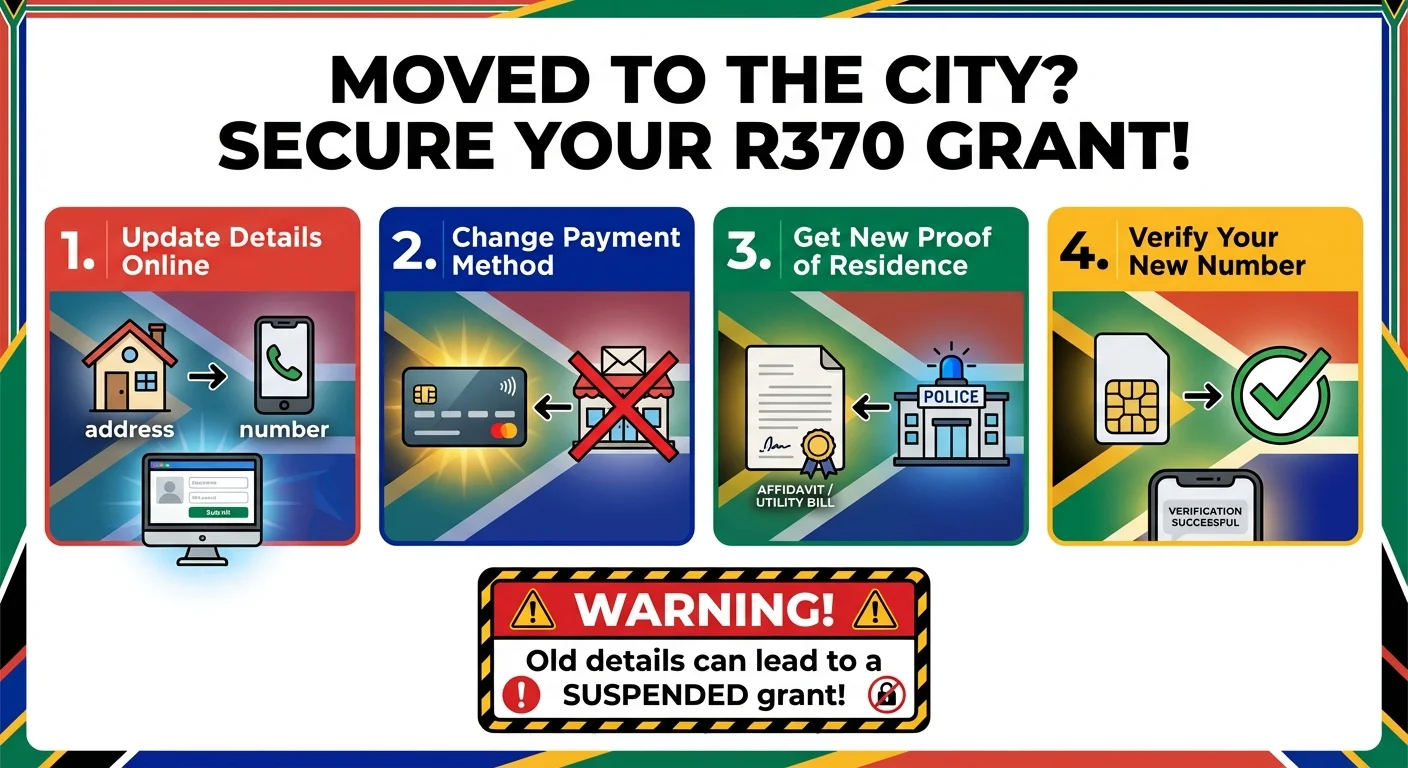
Don’t let a change of scenery ruin your finances. If you’ve moved, follow these steps immediately to protect your R370 grant. This is the only way to make sure your March 2026 payment actually hits your pocket.
Step 1: Update Your Details Online. Get on the official SASSA SRD website. Find the “Update Your Grant Application” section and change your address and your phone number. Do it now. This is the first place the system looks when it decides whether to pay you or not.
Step 2: Move to a Bank Account. Stop trying to use the Post Office or waiting in massive retail lines. Open a cheap account with Capitec or TymeBank and put those details into the SASSA system. It’s safer, faster, and gives the system a clear record of who you are.
Step 3: Get Your Proof of Residence Ready. Don’t wait for a “pending” status to scare you. Go get that affidavit or councillor letter today. Take a clear photo of it on your phone so you have it ready to upload the second SASSA asks for it.
Step 4: Check Everything Twice. Go back into the portal and make sure there are no typos. One wrong digit in a phone number or bank account means no money. Being proactive is the only way to survive the 2026 bureaucracy.
Frequently Asked Questions
What happens to my SASSA grant if I move to another province in 2026?
How do I officially change my address with SASSA in 2026?
What can I use for proof of residence if I live in a shack or backyard room?
Will getting a new SIM card affect my March 2026 SASSA payment?
Can SASSA just suspend my grant without warning if I move?
Do I need to reapply for the R370 SRD grant if I move?
Read Next
SASSA's New 'Mandatory App' Locks Your R390 Grant? The 2026 Guide for Beneficiaries Without a Smartphone
BREAKING April 2026: SASSA is rolling out a mandatory new smartphone app, …
The R140 Paraffin Price SHOCK: How 40% of Your R390 SASSA Grant Will Vanish on May 1st, 2026
BREAKING April 2026: NERSA has approved a devastating 40% increase in the price …
Comments & Discussions