Table of Contents
Title: Eskom’s New ‘Smart Meter’ Debt Clawback: Is 50% of Your R390 SASSA Grant Already Gone in 2026?
It is March 2026, and a quiet crisis is unfolding at the power box. A new policy by Eskom and local municipalities to claw back billions in debt through smart meters is hitting South Africa’s most vulnerable people the hardest. I’ve been watching this unfold, and it’s clear that this debt recovery system is essentially a “silent tax” on the poor. You need to know how this works and what you can do to protect the value of your R390 SASSA social grant before your electricity credits are cut in half.
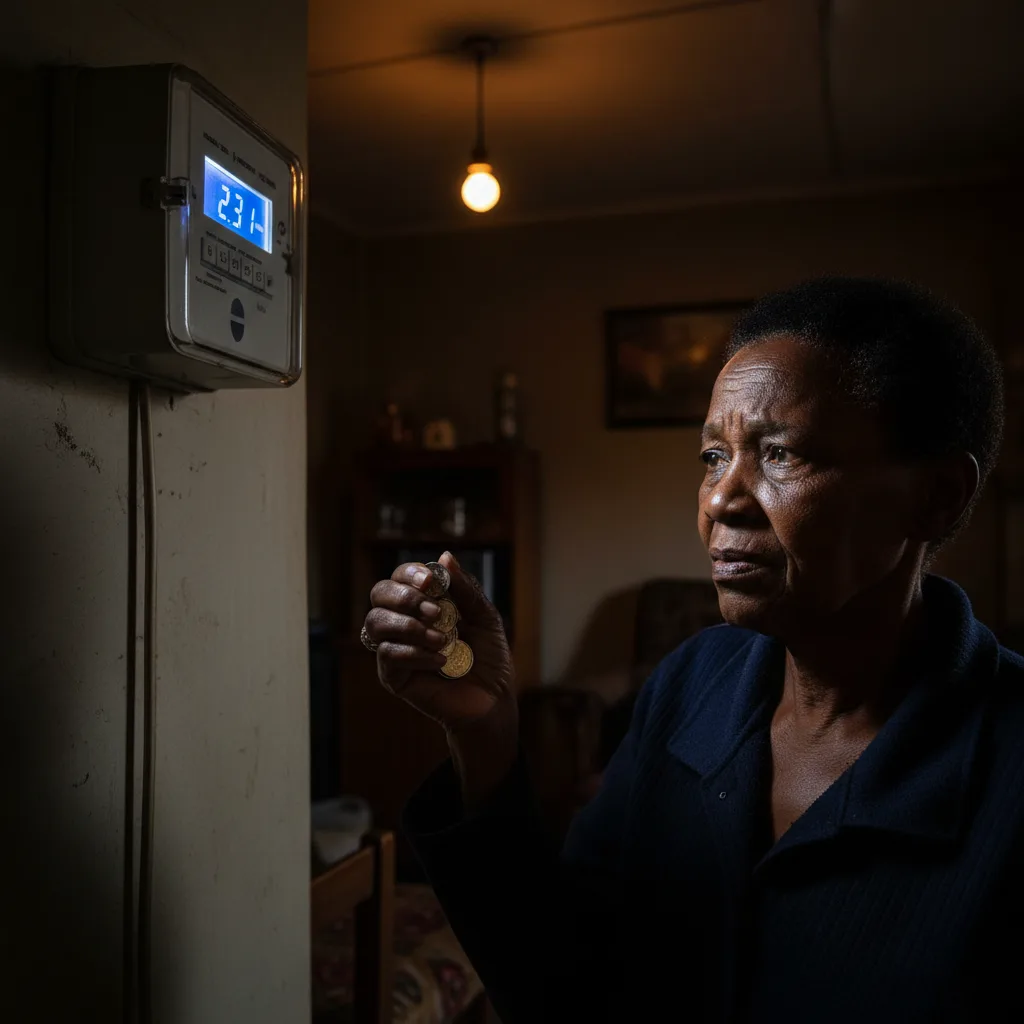
The R60 Billion Crisis: Why Your Power Socket is Government’s New Collection Box
The mandatory rollout of smart electricity meters across South Africa in early 2026 didn’t happen in a vacuum. It’s a desperate response to a massive money hole. By late 2025, National Treasury reports showed that municipal debt owed to Eskom had exploded to over R60 billion. To fix this, the government launched ‘Operation Vulindlela,’ which gives municipalities the power to be aggressive about collecting what they’re owed. Their favorite new tool? The smart meter.
These aren’t the old-school prepaid meters that just gave you what you paid for. These devices are linked directly to your ID number and your municipal account. When you try to buy electricity, the system checks if you owe money for water, rates, or trash collection. Before you get a single kilowatt, the system takes a cut to pay off those old bills. For anyone relying on a R390 SASSA grant, this is devastating. It feels like a loophole; while the law says the government can’t take money directly from your grant, they’ve found a way to grab it the second you try to spend it. It’s shrinking the grant’s power without the government ever having to admit they’re cutting it.
How the ‘Smart Meter Clawback’ Works: A Step-by-Step Financial Ambush
The clawback system is designed to be automatic and impossible to skip. If you owe the city money, the meter knows. Data from pilot programs in Ekurhuleni and eThekwini shows that these deductions are taking between 30% and 60% of every cent spent on power.
Here is how that looks for a SASSA beneficiary in March 2026:
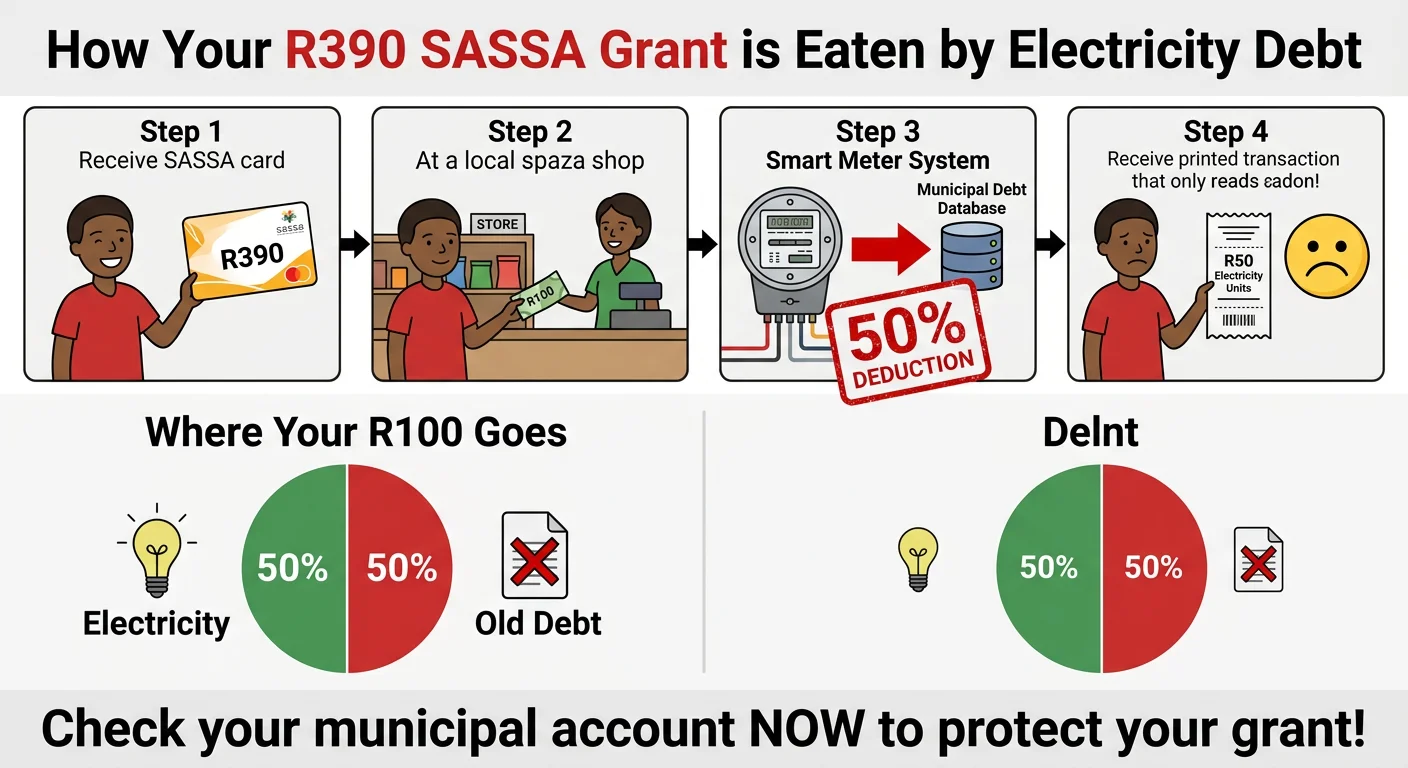
- You get your grant: Your R390 SRD Grant hits your account. You can see when this happens on our Payment Dates page.
- You go to buy power: You take R100 of that grant to the shop for electricity.
- The system checks your ID: The vendor puts in your meter number, and the system immediately flags your old municipal debt.
- The money vanishes: If your municipality has a 50% collection rate, the system takes R50 right then and there.
- You get half the power: You walk away with a slip for R50 worth of units. The other R50 is gone, swallowed by a debt you might not have even known was that high.
In one go, your R100 is worth half what it was. If you spend R200 of your R390 grant on electricity in a month, you might only get R100 of actual light and heat. That leaves you with R290 for food and transport. It’s turning a survival grant into a collection tool for the city.
A Policy Blind Spot: When Social Protection Clashes with Debt Collection
This policy shows a total lack of coordination in government. One department is trying to keep people from starving, while another is taking their food money to pay for old water bills. It’s a mess. As of February 2026, over 8.9 million people are living on this grant, which is already way below the food poverty line of R760.
Social policy expert Dr. Zama Khumalo says it best: “The smart meter clawback is a classic example of siloed government thinking. You cannot solve a revenue problem by taking money meant for food.” The system doesn’t care if your bill was wrong or if you couldn’t pay because you lost your job. It just takes the money. For people whose grant status is already shaky—something you can monitor on the SRD Status Check portal—this extra loss can be the breaking point.
Your 4-Step Emergency Plan: How to Defend Your R390 Grant
You don’t have to just sit there and let this happen. You can take steps to minimize the damage to your R390 grant, but you have to be proactive.
Step 1: Get your statement now. Don’t wait until you’re at the shop and the money disappears. Go to the municipal office or check their website. Get a full statement and look for mistakes.
Step 2: Find out the deduction rate. Call your municipality and ask specifically: “What is the percentage for arrears collection on prepaid meters?” Is it 30%? Is it 60%? You need this number to plan your month.
Step 3: Get help to negotiate. Groups like the Black Sash or local legal clinics can be lifesavers. They can help you challenge old, wrong bills or help you sign an ‘Acknowledgement of Debt.’ Sometimes, if you agree to a payment plan, they will lower the automatic deduction percentage on your meter.
Step 4: Change your budget. It’s a bitter pill to swallow, but you have to assume some of your electricity money is going to be taken. Budgeting for R50 of power when you spend R100 is better than being surprised and sitting in the dark for a week.
The Bigger Picture: A War on the Poor or Fiscal Necessity?
This whole smart meter fight is a snapshot of the struggle South Africa faces in 2026. The government says if the cities go broke, everything stops. They argue that everyone has to pay their fair share.
But I see it differently. This feels like a war on the poor. It puts the weight of a broken economy on the people who can’t even afford a loaf of bread. Instead of fixing the billing systems or creating jobs, the state is just squeezing the last few Rands out of the most desperate households. It doesn’t ask if you won’t pay or if you can’t pay. As this rolls out, I worry we’re going to see more hunger and more people turning to dangerous illegal connections just to survive.
Frequently Asked Questions
What is the new smart meter debt clawback policy of 2026?
Is it legal to deduct money from my SASSA grant this way?
How much of my money can the municipality take when I buy electricity?
What can I do if most of my R390 grant is being taken for electricity debt?
Will this smart meter debt affect my SASSA grant application or payment dates?
Where can I check if I have historical municipal debt?
How do I apply for the SRD grant if I'm not yet a beneficiary?
Read Next
The R390 Stokvel Revolution: How Your SASSA Grant Can Become R2,000 with PayShap in 2026
In March 2026, the R390 SASSA grant barely covers essentials. But a financial …
SASSA's New 'Household Test' for 2026: Why Living with Family Could Cost You Your R390 Grant
BREAKING March 2026: The Department of Social Development has just announced a …
Comments & Discussions