Table of Contents
Title: Goodbye R390 SRD: Govt’s New ‘Tiered’ R450-R750 SASSA Grant for 2026 Explained
The flat-rate R390 SASSA grant is reaching its expiration date. I’ve been looking into the proposed 2026 policy shift that plans to scrap the SRD grant in favor of a tiered R450 to R750 system. This change introduces a controversial ‘activity test’ that every beneficiary needs to understand before the new rules kick in.
The Bombshell Policy: Scrapping the R390 SRD Grant in 2026
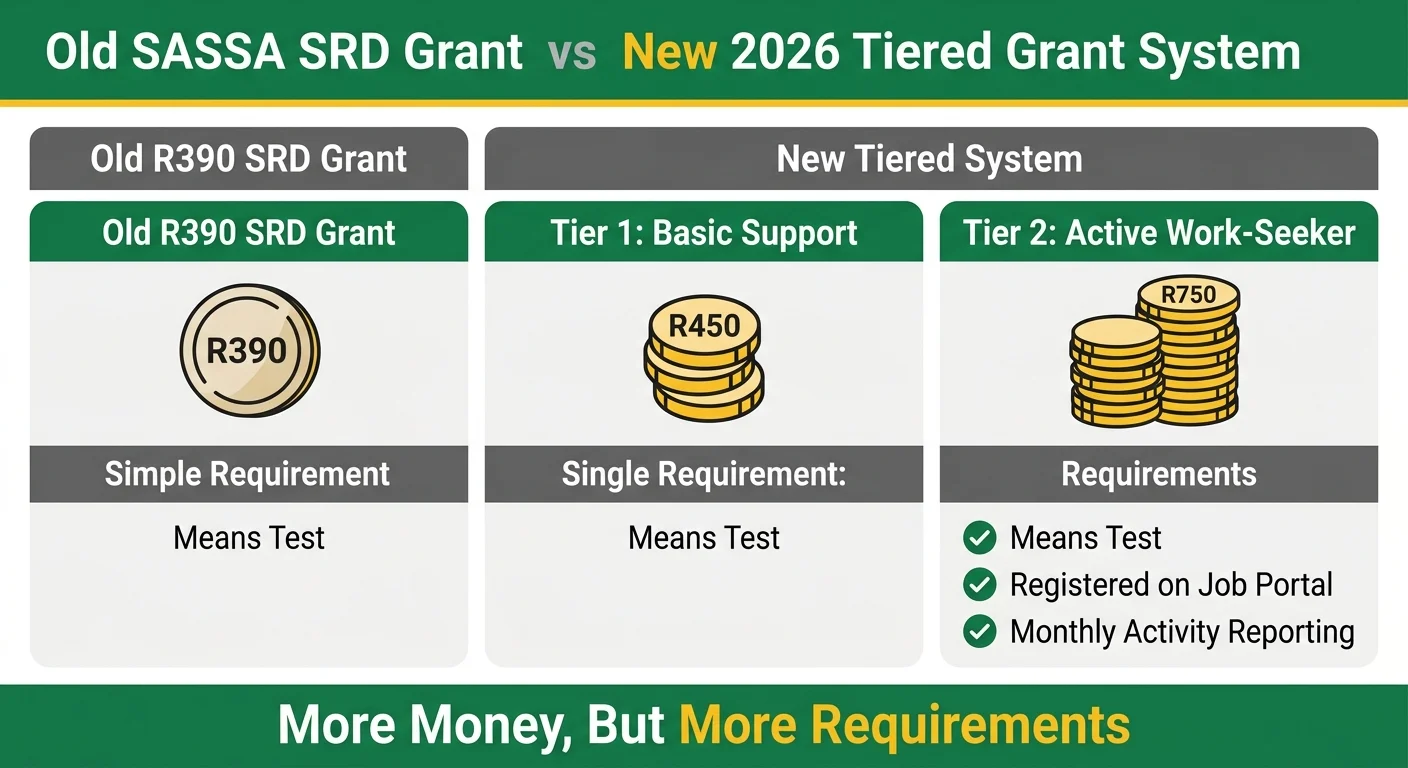
The R390 Social Relief of Distress (SRD) grant has been a survival line for over 8.5 million people in South Africa, but its days are numbered. A draft policy from the Department of Social Development, dated April 2026, shows that the Government of National Unity (GNU) is planning a total overhaul. By late 2026, the R390 grant will be gone. In its place, we’re getting a complicated ‘Active Labour Market Support Grant.’
This is the biggest shift in social policy we’ve seen in years. The government is moving away from just helping people survive and toward a system that demands economic activity in exchange for a check. They say they want to “incentivize a pathway out of poverty,” but I worry this is just going to be a bureaucratic nightmare. It feels like the state is changing the deal: the grant is no longer a right for the poor, but a reward for those who can navigate a complex new system.
The New Three Tiers Explained: From R450 to a R750 ‘Job-Seeker’ Grant
Instead of one simple payment, the new system splits beneficiaries into three groups. Each one has its own rules and its own payout. If you’re currently on the SRD grant, you need to know where you fit.
Tier 1: Basic Support Grant (R450 per month) This is the new starting point. It’s for South Africans aged 18 to 59 who have no income and aren’t getting other grants. While R450 is a R60 increase from the old R390, let’s be real—it’s still way below the 2026 Food Poverty Line of R760. It’s basically the old SRD grant with a tiny bit of extra cash added on.
Tier 2: Active Work-Seeker Grant (R750 per month) This is where things get messy. To get the higher R750 payment, you have to prove you are “actively seeking work.” The draft policy says this means:
- Mandatory registration: You must have an active profile on SAYouth.mobi or another government job site.
- Activity Reporting: You’ll likely have to show proof every month that you applied for jobs, went to workshops, or did online training.
Tier 3: Vulnerable Support Top-Up (Amount Undetermined) There is a mention of a third tier for people with specific struggles, like caregivers who don’t quite qualify for the Child Support Grant. But honestly, the details are so thin right now that it’s hard to know who will actually get this or how much it will be.
Winners vs. Losers: Who Benefits and Who Gets Left Behind?
This new system is going to create a divide. The government wants to reward those trying to find work, but the reality on the ground in South Africa is a lot more complicated than a policy document suggests.
Potential Winners:
- Tech-savvy youth in cities: If you have a smartphone, good signal, and live in a place like Gauteng where there are actual jobs to apply for, you’ll probably find it easy to get that R750.
- The ‘job-ready’: People who already have a CV and the data to upload it will navigate this just fine.
Potential Losers:
- Rural beneficiaries: I keep thinking about the millions of people in rural areas with no signal. Stats SA showed in 2026 that 30% of rural people can’t get online reliably. How are they supposed to update a job profile every month?
- The digitally illiterate: If you don’t know how to use a job portal, you’re stuck with the lower R450 tier, even if you’re desperate for work.
- Those in dead-end economies: It’s hard to prove you’re “actively seeking work” when you live in a town where the only employer shut down years ago. With youth unemployment at 45%, this feels like we’re blaming the victims of a broken economy.
Our Analysis: Is This a Pathway Out of Poverty or a Trap?
I’ll be honest: this feels like a massive gamble. While I understand the idea of linking aid to activity, it feels like the government is ignoring the fact that there just aren’t enough jobs to go around. We are shifting the blame for unemployment onto the unemployed.
Social policy expert Dr. Nomvula Zondi put it perfectly: “Tying a survival grant to job-seeking in a country with over 12 million unemployed people is not empowerment; it’s a cruel exercise in futility.” Even if you “win” and get the R750, you’re still R10 short of the Food Poverty Line. You still can’t afford a basic basket of food. Instead of this complex system of tracking what poor people are doing every day, the government should be looking at a universal basic income and actual job creation.
How to Prepare for the Change: Your 2026 Action Plan
The policy is still a draft, but you shouldn’t wait for the final law to start moving. If this goes through later this year, you want to be at the front of the line.
- Get Your Digital Profile Ready: Go to a library or use a friend’s phone to get on SAYouth.mobi now. Build your profile and get used to the site. It’s likely going to be the only way to get that R750.
- Update Your SASSA Details: Check that your phone number and bank info are perfect. If there’s a mistake, you might get cut off during the switch. You can check everything on the SRD Status Check portal.
- Organize Your Documents: If you’re still using the green ID book, try to get a Smart ID. It’s likely going to make the digital verification much smoother.
- Start a Record: Keep a small notebook. Write down every time you ask for a job or send a CV. If SASSA asks for proof of “activity,” you’ll be glad you have it.
- Stay Informed: The rules are going to shift. Keep an eye on SASSA Payment Dates to see when the new payment cycles actually start hitting bank accounts.
Frequently Asked Questions
When will the R390 SRD grant officially end and the new tiered system begin?
Will I be automatically moved from the R390 grant to the new system?
What will count as 'actively seeking work' for the R750 grant?
Is the new R750 grant enough to live on in 2026?
How will this new system affect other SASSA grants like the Old Age or Disability Grant?
What can I do if I don't have a smartphone or internet to register on job portals?
Read Next
SASSA June Payment Update: June 2026 Payment Cycle Confirmed
The June 2026 SASSA payment cycle is confirmed for 2, 3 and 4 June 2026 for the …
The R50 Billion Food Waste SHOCK: Why Your R390 SASSA Grant Can't Buy Food While SA Throws It Away
BREAKING May 2026: A shocking new report reveals South Africa wastes over R50 …
Comments & Discussions