
Table of Contents
A comprehensive analysis of the proposed 2026 policy to make the SASSA SRD R350 grant a permanent Basic Income Grant. We explore the economic consequences, social impact, and the potential pitfalls SASSA must avoid. This is the debate that will define South Africa’s future.
The Elephant in the Room: The R350 Grant is Here to Stay. Now What?
January 2026 marks a watershed moment for South Africa’s social welfare system. The conversation is no longer about if the R350 Social Relief of Distress (SRD) grant will continue, but how it will be formalized into a permanent Basic Income Grant (BIG). What started as a temporary lifeline during the 2020 pandemic has become an immovable feature of our socio-economic landscape. But as government officials signal a permanent policy, a storm of debate erupts. Is this the compassionate, progressive step needed to combat rampant poverty, or is it a fiscally reckless move that creates a cycle of dependency? The truth, as always, is far more complex and uncomfortable.
The Argument for a Triumph: Why a Permanent Grant Could Save a Generation
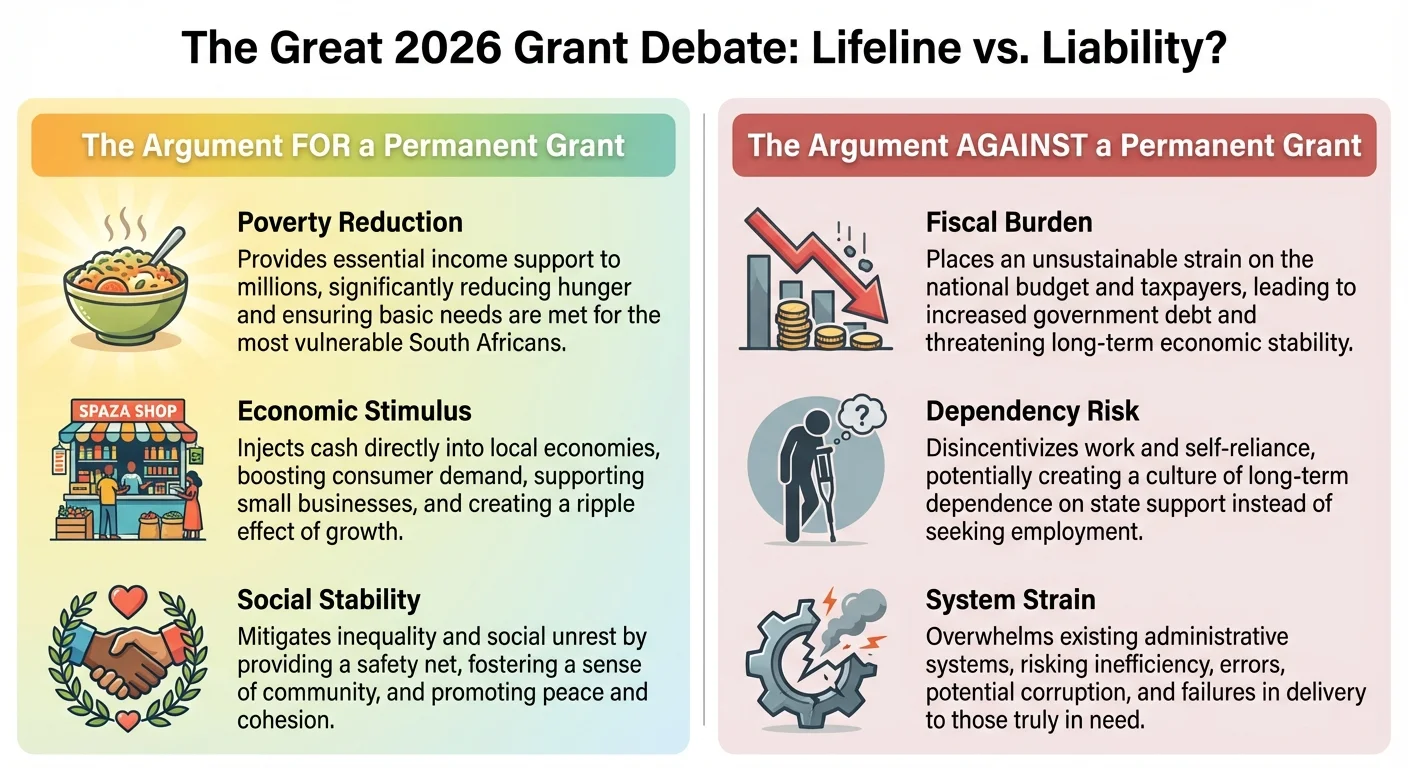
Proponents of the permanent grant, including many civil society organizations, paint a compelling picture. They argue that a guaranteed basic income, however small, provides a crucial safety net in a country with one of the world’s highest unemployment rates.
Key benefits touted in 2026 include:
- Poverty Alleviation: For millions, R350 is the difference between eating and starving. It allows for the purchase of absolute essentials, providing a floor below which no one should fall.
- Local Economic Stimulus: Unlike corporate tax breaks, this money is spent immediately and locally. It goes directly to spaza shops, taxi fares, and food producers, creating a micro-economic ripple effect that supports small businesses.
- Empowerment and Dignity: A consistent income enables job seeking (e.g., paying for transport to an interview), supports small-scale entrepreneurship, and provides a measure of dignity and social inclusion for those systematically excluded from the formal economy.
The Argument for a Disaster: The Fiscal Cliff Everyone is Ignoring
On the other side of the aisle, economists and the National Treasury raise stark warnings. The numbers are staggering. Formalizing the grant for the roughly 9 million current recipients would cost the fiscus over R37 billion annually, and that’s before considering any potential increase to the amount. Where does this money come from?
The primary concerns voiced in early 2026 are:
- Unsustainable Debt: South Africa’s debt-to-GDP ratio is already precarious. Funding a permanent BIG could necessitate tax hikes, severe cuts to other essential services like healthcare and education, or further borrowing that mortgages the country’s future.
- Risk of Dependency: This is the most controversial point. Critics argue that a permanent grant without pathways to employment could disincentivize work, particularly in the low-wage sector, creating a generation dependent on state welfare.
- Administrative Nightmare: SASSA’s infrastructure is already under immense strain. Payment glitches, fraudulent claims, and an overwhelmed appeals system are daily realities. Can this system handle a permanent, and likely expanding, beneficiary base without collapsing? The constant need for beneficiaries to check their status via the SRD Status Check page highlights the existing system’s fragility.
What the 2026 Policy Shift Really Means for You
Beyond the high-level economic debate, what does this mean for the person in the queue? A permanent grant isn’t just about consistent payments; it implies a host of potential changes:
- Re-application Annoyance: Will beneficiaries need to re-apply every year, or will the system be streamlined for permanent eligibility? This is a key point of failure.
- Stagnant Grant Value: With the grant becoming a permanent budget line item, the pressure to keep the amount low will be immense. The R350 of 2026 buys significantly less than it did in 2020 due to inflation.
- Increased Scrutiny: To manage costs, expect stricter means-testing and verification processes. This could lead to more wrongful rejections and a heavier burden on the already flooded SASSA appeals process.
- Payment Method Lock-in: The push will be to move all beneficiaries to bank accounts or Postbank, further phasing out cash pay points, which could disenfranchise rural recipients.
The Unspoken Crisis: Can SASSA’s Technology Even Handle This?
The political debate often overlooks the glaring operational weaknesses within SASSA. The system relies on monthly database checks against SARS, UIF, and other records. This process is notoriously buggy, leading to thousands of eligible people being declined for phantom income. We’ve seen entire payment cycles delayed due to ’technical glitches'.
Making the grant permanent without a complete overhaul of the IT and payment infrastructure is like building a skyscraper on a foundation of sand. Before we promise permanent support, we must demand a system that can deliver it reliably. The current process, from application to payment, is a source of immense anxiety, as reflected by the constant search for the latest SASSA Payment Dates.
Are We Asking the Wrong Question? Beyond a Simple Handout
Perhaps the entire debate is framed incorrectly. Instead of a simple ‘for or against’ argument, we should be asking: How can this R37 billion+ be used to not only support but uplift?
Alternative models being discussed in 2026 include:
- Grant-with-Training: Linking grant eligibility to participation in accredited skills development or vocational training programs.
- Support for Entrepreneurs: Providing grant recipients with additional micro-capital or business mentorship to foster self-employment.
- Conditional Grants: Tying payments to community work programs (e.g., public works, green initiatives) to build social value and provide work experience.
The Verdict: A Necessary Evil or a Noble Failure?
Our analysis in January 2026 suggests that making the R350 grant permanent is a necessary, but deeply flawed, intervention. In the absence of meaningful job creation, removing it would be a humanitarian catastrophe. However, formalizing it without addressing the fiscal risks and SASSA’s operational failures is irresponsible.
The government is walking a tightrope. It must provide this essential support while simultaneously building the economic pathways that will one day make it redundant. The greatest risk is that the grant becomes a permanent solution to a temporary problem, a band-aid on a gaping wound of structural unemployment. South Africa deserves more than just survival; it deserves a real chance to thrive.
What You Must Do Now: Navigating the System in January 2026
Regardless of the political outcome, your immediate reality is dealing with the system as it is today.
- Verify Your Details: Always ensure your contact and banking details are correct on the SASSA portal. Incorrect information is the number one reason for payment delays.
- Understand the Process: If you are applying for the first time, read our comprehensive SRD Grant Application Guide to avoid common mistakes.
- Check Your Status Regularly: Don’t wait for an SMS. Use the official online portal or the WhatsApp method to check your status at least twice during the payment cycle.
- Know Your Rights: If you are unfairly declined, you have the right to appeal. Do not miss the deadline.
Frequently Asked Questions
Will the R350 grant amount be increased in 2026 if it becomes permanent?
What is a Basic Income Grant (BIG) and how is it different from the SRD grant?
If the grant becomes permanent, will I need to reapply every few months?
What are the main arguments against making the SASSA grant permanent?
How will a permanent grant be funded in 2026?
Will the eligibility criteria for the R350 grant change if it becomes a BIG?
What happens if my grant is declined under the new permanent system?
Is there a specific date in 2026 when the grant will officially become permanent?
Read Next
Stage 8 Blackout: Your March 2026 SASSA R390 Payment is Trapped. The Ultimate Survival Guide.
BREAKING March 2026: Eskom has plunged South Africa into an unprecedented Stage …
The R50 Taxi Bombshell: How 2026 Fare Hikes Will Erase R100 From Your R390 SASSA Grant
BREAKING March 2026: The Department of Transport has approved devastating …
Comments & Discussions