Table of Contents
The End of the SASSA Card as You Know It? The New 2026 Biometric System and Your R370 Grant
If you are one of the millions of South Africans relying on a monthly grant, things are about to get complicated. By January 2026, the way you get your R370 is changing forever. SASSA is overhauling its payment system with mandatory biometric verification linked to the new Home Affairs Smart ID. I’ve looked at the new government policy, and while it’s meant to stop fraud, it’s going to be a massive adjustment. Here is what this “digital revolution” means for your R370 grant, the future of the SASSA Gold Card, and what you must do to make sure you don’t lose your money.
The Shake-Up: A New Minister and a “Digital First” Mandate for SASSA in 2026
With the Government of National Unity (GNU) finding its feet in early 2026, we are seeing some massive policy shifts. The biggest one for grant recipients came from the new Minister of Social Development. In a press briefing on 23 January 2026, she announced a “digital first” mandate for SASSA. This isn’t just a minor tweak to the app. It is a total rebuild of how grants are verified and paid.
The heart of this plan is a mandatory biometric system for everyone. They are rolling it out in phases starting in the second quarter of 2026. The Minister says the goal is to kill off fraud and “ghost” beneficiaries. I think we can all agree that stopping corruption is good, but the way they are doing it feels rushed. This move ties your money directly to your fingerprints and your face. It also pretty much signals the end of the SASSA Gold Card as we know it.
What is the Biometric Verification System? From Fingerprints to Facial Scans
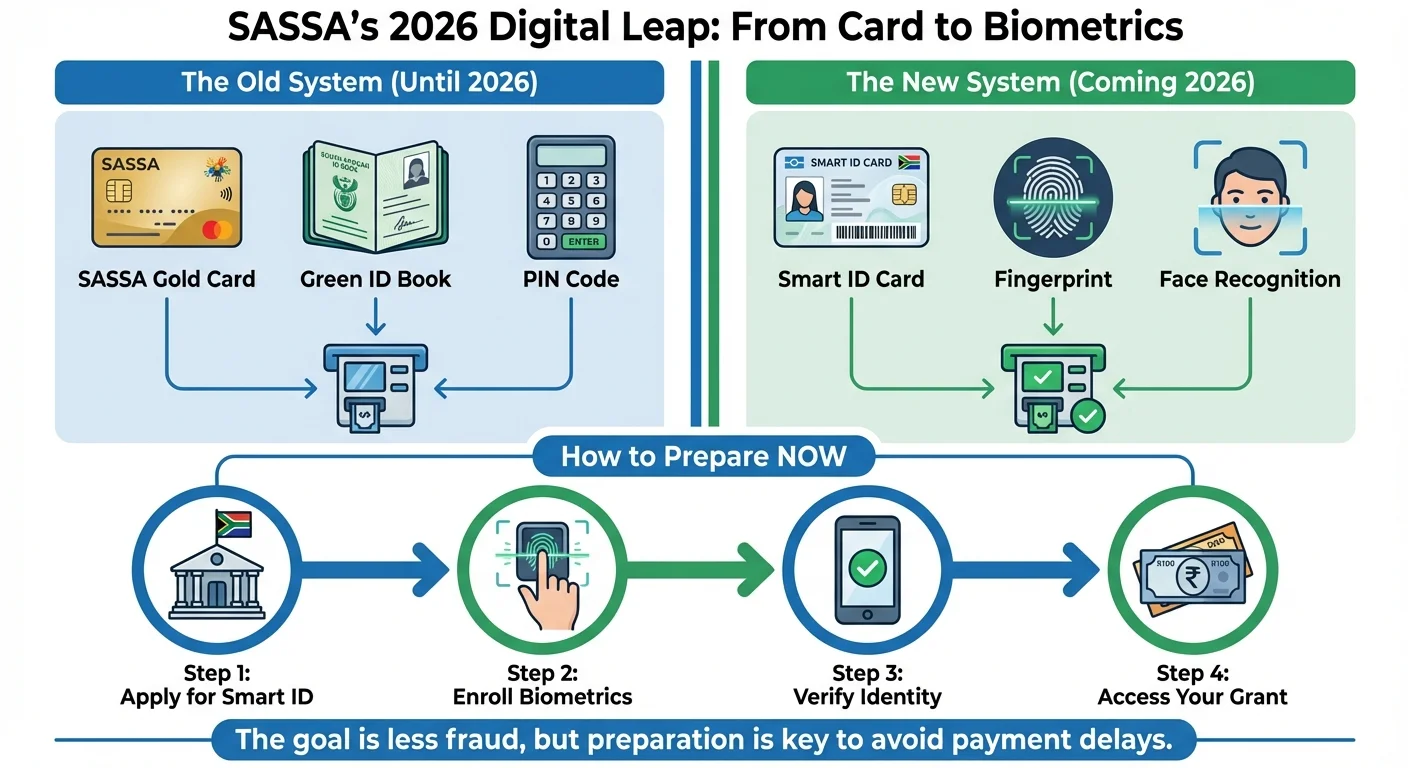
“Biometrics” sounds like something out of a movie, but it’s about to become your daily reality. So, how does it actually work? Basically, SASSA is linking your profile to the data held by Home Affairs, specifically through the Smart ID card.
Here is the simple version:
- You Must Have a Smart ID: This is the big one. If you are still using the old green ID book, you are going to have a problem. Every beneficiary, including those getting the R370 SRD grant or child grants, needs a Smart ID.
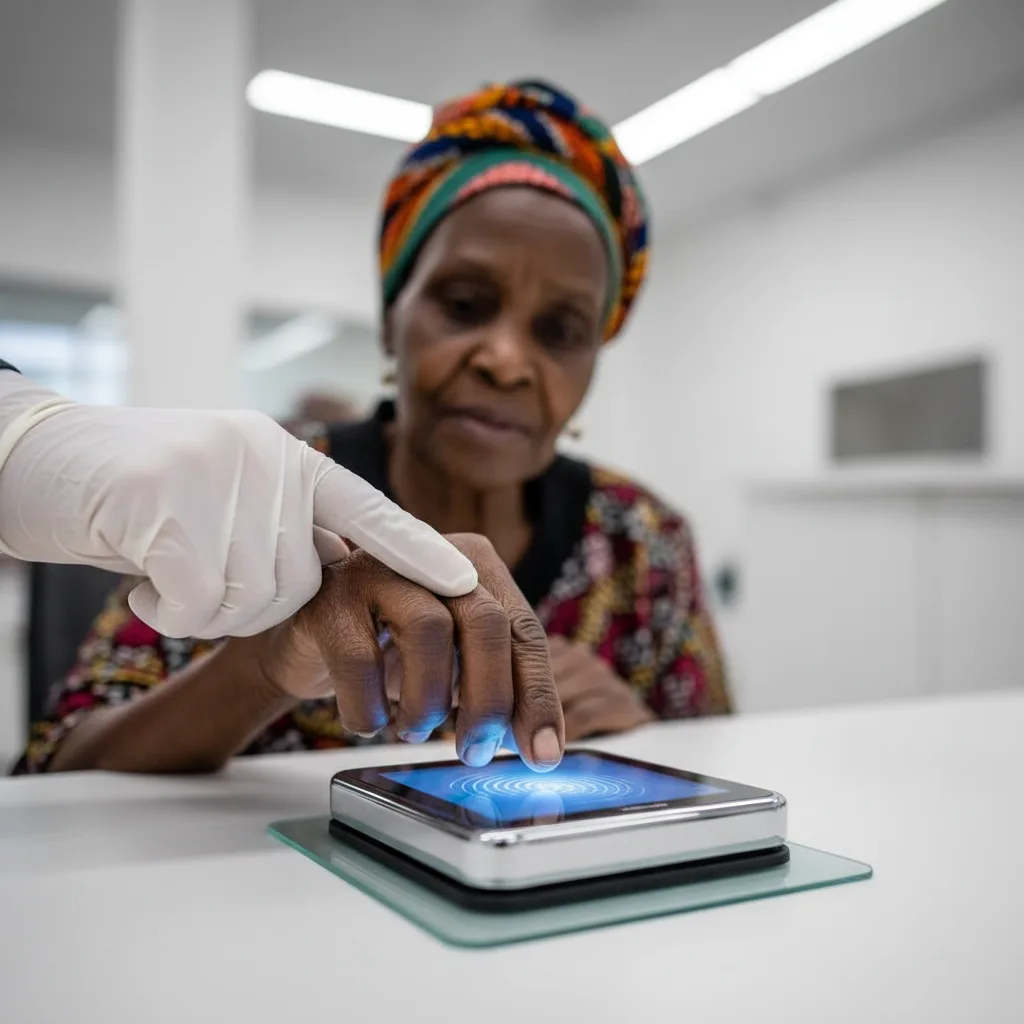
- Giving Your Data: You will have to go to a SASSA office, a Post Office, or a mobile unit to have your fingerprints scanned and a photo taken. They will link this to your ID number.
- Proving It’s You: When you go to get your money, you’ll have to prove it’s you using your body, not just a PIN.
- At shops like Shoprite or Pick n Pay, you might have to scan your thumb on a new device before the cashier can give you your cash.
- ATMs might get fingerprint scanners.
- There might even be an app that uses your phone’s camera to recognize your face before sending money to your bank account.
Your physical card is becoming less important. Your fingerprint is now the key to your grant.
The Official Promise: Eradicating Fraud and Ghost Beneficiaries
The government is betting big on this technology to stop the massive fraud that has plagued the system for years. We’ve all seen the reports from the Auditor-General showing billions of Rands lost. “Ghost” beneficiaries—people using IDs of the deceased—and syndicates using cloned cards have been stealing from the poor for too long.
The logic is that you can’t fake a fingerprint. By making sure the person standing at the till is actually the person registered for the grant, the department wants to:
- Stop Double Dipping: The system will know if one person is trying to claim multiple grants under different names.
- Clean Up the Lists: By checking against Home Affairs death records and requiring a “live” scan, payments to dead people should stop immediately.
- End Card Scams: Cloned cards won’t work if the thief doesn’t have your thumbprint.
On paper, it’s a great solution. The Minister promises that the money saved will go back into the system to improve services. I hope that’s true, but I’m worried about the people who might get caught in the gears of this new machine.
The Unspoken Risk: Will Millions Be Left Behind by the Digital Divide?
This is what really concerns me. It is all well and good to talk about “digital first” in a boardroom in Gauteng, but the reality on the ground is different. South Africa has a massive digital divide, and forcing a high-tech system on everyone could lock out the people who need help the most.
Here is what I’m worried about:
- The Elderly: Many grandmothers and grandfathers aren’t comfortable with technology. Scanners and facial recognition can be intimidating, and if the scan fails, it’s going to cause a lot of stress.
- Rural Reality: What happens in a remote village with no internet or constant load shedding? A real-time biometric system needs power and data. If the system is down, does that mean people don’t eat?
- The Home Affairs Nightmare: The whole thing depends on everyone having a Smart ID. But we know Home Affairs has huge backlogs. If you can’t get your ID in time, do you lose your grant?
- Tech Glitches: Technology breaks. A dirty sensor or bad lighting for a face scan could mean a “Verification Failed” message. Right now, there isn’t a clear appeals process for when the tech fails. You should definitely keep doing your SRD Status Check to stay on top of things.
- Your Privacy: Having a massive database of fingerprints and faces for millions of people is a huge security risk. If that data gets hacked, it’s a disaster.
Your New To-Do List: How to Prepare for SASSA’s Digital Future
Whether we like it or not, this is coming. You can’t afford to wait until the last minute. If you want to keep receiving your R370, you need to act now.
1. Get Your Smart ID: This is the most important thing. If you still have a green ID book, go to Home Affairs today. Don’t wait for the rush. Help your neighbors and elderly family members do the same.
2. Check Your Details: Your name and ID number on your SASSA profile must match your Smart ID perfectly. Even a small spelling mistake could cause the biometric system to reject you. Use the online portals to make sure your phone number and details are 100% correct.
3. Watch Out for Scammers: Criminals are going to use this confusion to steal from you. They might pretend to be SASSA officials and ask for money to “register your prints.” SASSA will never ask you for money to do this. Only do your enrollment at official offices or clearly marked mobile units.
4. Follow the News: Keep an eye on the rollout dates for your province. We will keep the Payment Dates page updated as things change. Don’t listen to rumors on WhatsApp; stick to official sources.
Frequently Asked Questions
Will I need a smartphone for the new SASSA biometric system in 2026?
What happens if my biometric verification fails at a pay point?
Is the new SASSA biometric system compulsory for all grant types?
Will this new system replace my SASSA Gold Card?
When will this new biometric system start in 2026?
How can I protect my biometric data from scammers?
Will this new policy change the SASSA R370 grant amount?
What if I have worn fingerprints or scars that make scanning difficult?
Read Next
SASSA's R10 'Khulisa Account': Your Guide to the New Low-Cost Bank Account for 2026
BREAKING March 2026: The South African Reserve Bank has mandated a new …
The R80 Chicken Apocalypse: How Avian Flu Will Steal Over R100 of Your R390 SASSA Grant in April 2026
BREAKING March 2026: A catastrophic Avian Flu outbreak is set to decimate South …
Comments & Discussions