Table of Contents
Title: The R20 Insult: Why the 2026 Budget’s SASSA Increase Won’t Save You From the New ‘Proof of Poverty’ Rule
A deep-dive analysis of the February 2026 National Budget Speech announcements for SASSA beneficiaries. I’m breaking down why the R20 SRD grant increase to R390 is overshadowed by a dangerous new, stricter means test overhaul, what this ‘Proof of Poverty’ system actually does, and who is most likely to lose their grant in 2026.
The 2026 Budget Bombshell: A R20 Increase and a Crushing New Rule
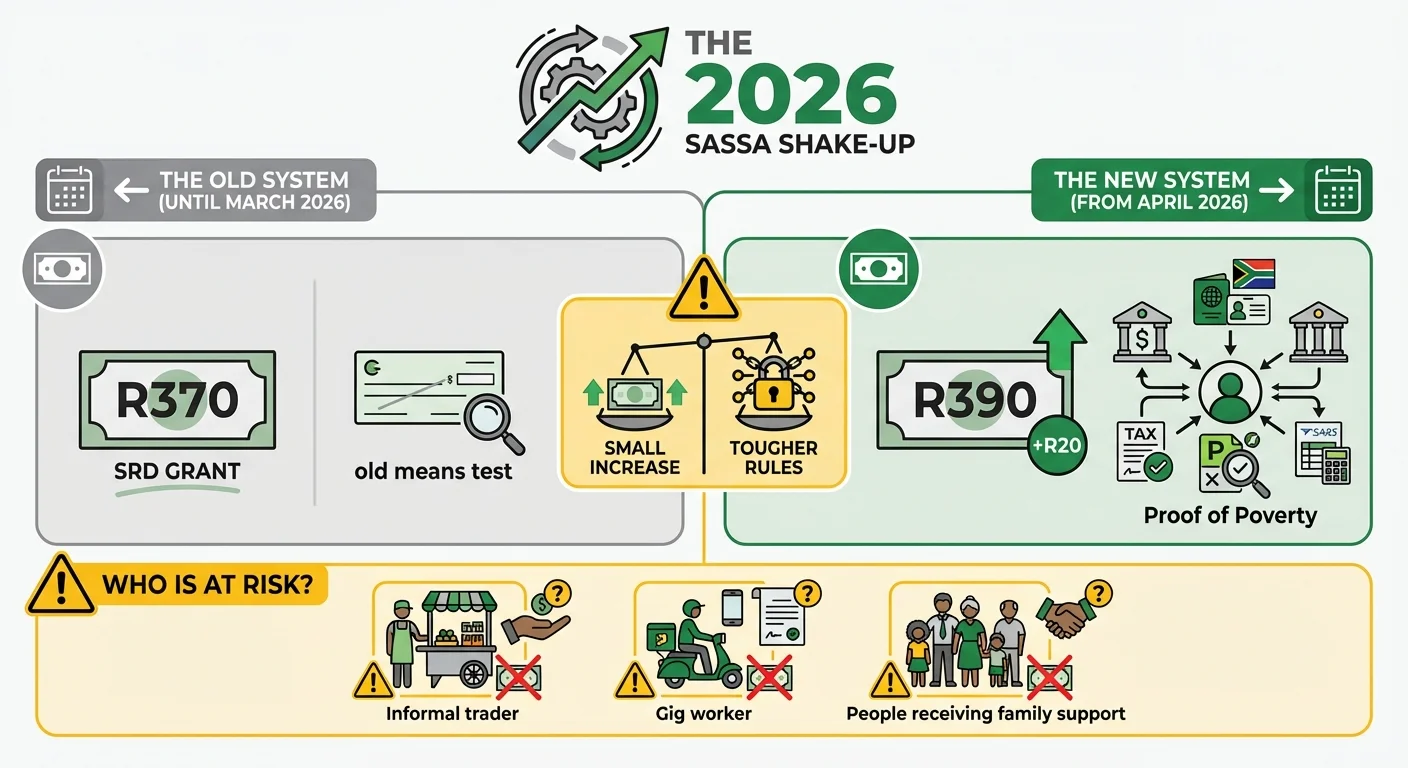
The February 2026 National Budget Speech has left the 8.8 million people relying on the SRD grant feeling more than a little abandoned. The Finance Minister finally announced the long-awaited grant increase, but let’s be honest: it’s a measly R20. This raises the monthly payment from R370 to R390 starting April 2026. While any extra cent helps, this 5.4% bump is a joke when you look at what things actually cost in South Africa today. That R20 is already gone before you even get it, swallowed up by the new R2 ‘Green Tax’ on petrol and a loaf of bread that now costs nearly R20 in many shops.
But the real sting wasn’t the small amount. It was the hidden trap: a total overhaul of how SASSA decides if you’re “poor enough.” Critics are calling it the ‘Proof of Poverty’ rule, and it’s a massive change in how the government handles social relief. Instead of trying to help as many people as possible, they are building a digital wall to keep people out. This new system is designed to tighten eligibility so much that I’m worried thousands of people will be kicked off the system entirely. It feels like the government is giving you a tiny gift with one hand while using the other to push you out the door.
Deconstructing the ‘Proof of Poverty’ Rule: What the New Means Test Entails
The new means test is much more invasive than what we’ve seen before. In the past, SASSA mostly looked for UIF payments or big chunks of money in your bank account. That’s changing. According to documents from the Department of Social Development (DSD), this new system starts rolling out in April 2026 and it’s going to be watching everything.
First, SASSA is getting real-time access to your bank data. They won’t just look at your balance at the end of the month. They’ll be flagging how often money comes in and where it comes from. If your cousin sends you a R100 e-wallet to help with electricity, the system might see that as “income” and reject you. Second, they are linking up with Home Affairs and SARS to build a full financial profile on everyone. They want to find any reason to say you aren’t “destitute.” Stats SA says you need at least R760 a month just for food, yet the government is giving you R390 and then spending even more energy trying to disqualify you. This ‘Proof of Poverty’ rule puts all the pressure on you to prove you have nothing, while an automated algorithm looks for any excuse to cut you off.
High-Risk Profile: Who Will Be Cut Off by the New SASSA Rules?
I’m really concerned about the people working in the informal economy. If you have a side hustle or a non-traditional job, you are right in the crosshairs of this new verification system. Think about the people selling vegetables on the corner, recycling plastic, or doing hair from home. Their income goes up and down every day. They might deposit small amounts of cash just to keep it safe. The new algorithm isn’t going to understand that. It’s just going to see “frequent deposits” and flag you as having a stable income.
Another group at risk is anyone getting a little help from family. That R200 sent for school shoes or a bag of maize meal could be the very thing that gets your R390 grant cancelled. The system doesn’t care about the story behind the money. It just sees a transaction. Gig workers, like delivery drivers or freelance builders, are also in trouble. You might have one good week where you earn a bit of money, and the system will use that one week to kick you out for months. The government isn’t looking for nuance here. They are looking for data points that let them say “no.” If you do get rejected, you need to fight it. Our Appeals Guide explains exactly how to handle that.
Government’s Logic vs. Civil Society’s Fury: The Two Sides of the Coin
The government says they have to do this to stop fraud. The Finance Minister talked a lot about “fiscal consolidation” and “eliminating wastage.” They claim that syndicates are stealing billions and this high-tech system will make sure only the “truly deserving” get paid. From their perspective, they are just being responsible with a tight budget.
But if you talk to civil society groups, they are furious. They’re calling this a “technocratic war on the poor.” And I have to agree. With Stage 8 load shedding and food prices through the roof, this is the worst time to make it harder to get help. Groups like the Black Sash have pointed out a heartbreaking reality: for every one person trying to scam the system, there are probably ten truly desperate people who will get caught in this digital net. This isn’t just a policy debate. It’s a question of whether we should be punishing people for trying to survive in a broken economy.
Your Action Plan: How to Prepare for the New SASSA Verification System
This sounds scary, but you aren’t powerless. If you rely on this grant, you need to be proactive before the changes hit in April 2026.
1. Watch your bank account: Be very careful about what comes into your account. If a friend or family member wants to help you out, ask them for cash if possible. Digital transfers and e-wallets leave a trail that the new SASSA system will use against you.
2. Check your paperwork: Make sure your name, ID number, and phone number are exactly the same at SASSA, your bank, and Home Affairs. If there is even a small mistake, the computer might flag it as fraud and stop your payment. Go to Home Affairs or the bank now to fix any errors.
3. Stay on top of your status: Don’t wait for an SMS that might never come. Check your status yourself every single month. We have a guide that shows you exactly how to do it on our SRD R350 Status Check page.
4. Keep your phone number active: SASSA uses your mobile number to talk to you. If you lose your SIM or change your number, you must update SASSA immediately. If they can’t reach you, they might stop your grant.
5. Fight every rejection: If you get a “declined” message, don’t just give up. The system makes mistakes. You have a right to appeal, usually within 30 to 90 days. You have to act fast. To make sure you know when the money is actually landing, keep an eye on our Payment Dates page.
Frequently Asked Questions
What is the new official SASSA SRD grant amount after the 2026 Budget Speech?
What is the new 'Proof of Poverty' rule for SASSA grants in 2026?
When do the new SASSA means test rules begin?
Could I lose my R390 grant because of money sent by family?
How does the R20 SASSA increase compare to the cost of living in 2026?
What is the first thing I should do if my grant is rejected under the new rules?
Read Next
SASSA's New 'Mandatory App' Locks Your R390 Grant? The 2026 Guide for Beneficiaries Without a Smartphone
BREAKING April 2026: SASSA is rolling out a mandatory new smartphone app, …
The R140 Paraffin Price SHOCK: How 40% of Your R390 SASSA Grant Will Vanish on May 1st, 2026
BREAKING April 2026: NERSA has approved a devastating 40% increase in the price …
Comments & Discussions