Table of Contents
Title: SASSA & Foreign Nationals: The R0 Grant Truth vs. The R4.5 Billion Myth in 2026
In February 2026, the noise around SASSA grants and foreign nationals is reaching a fever pitch. I’ve seen the viral posts claiming billions are being handed out to non-citizens, but frankly, most of it is just dangerous misinformation. We have looked into the Social Assistance Act and the Refugees Act to separate real facts from the fiction being spread online.
The Social Media Firestorm: Why Foreigners and SASSA Are Trending in February 2026
As South Africa deals with the fallout from the 2026 National Budget Speech and service delivery protests, a familiar scapegoat has popped up on WhatsApp and social media. People are angry, and it is easy to point fingers at foreign nationals. I find it deeply concerning how quickly these myths take hold—the idea that millions of non-citizens are “draining” the system while locals suffer. This narrative is often pushed by people with a specific agenda, suggesting your grant is late or the system is failing because of an influx of foreign beneficiaries. This article is about cutting through that noise. I am not just repeating what officials say. I am looking at the evidence to give you the truth. The reality is messy, and it points to problems that have almost nothing to do with where a person was born.
Fact from Fiction: What South African Law Actually Says About Grant Eligibility
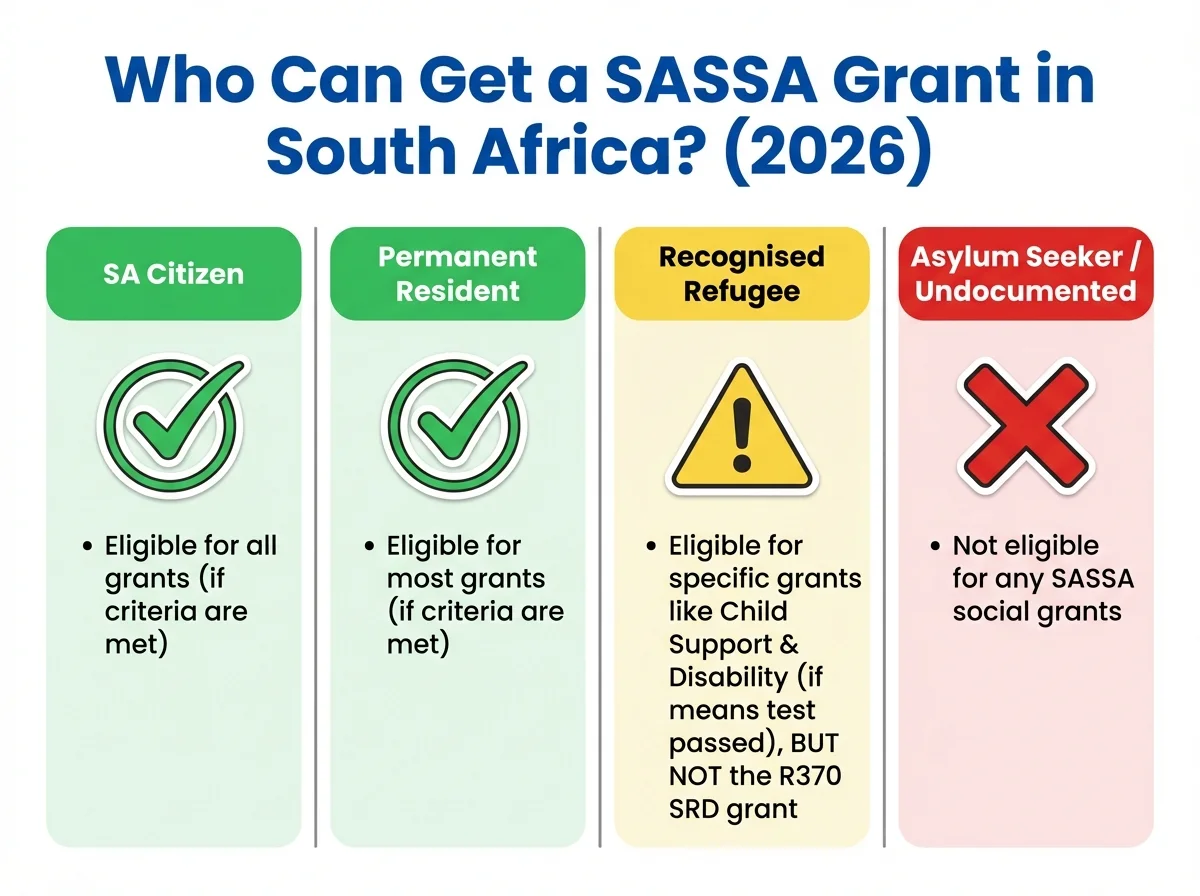
To understand who actually gets a grant, we have to ignore the angry Facebook posts and look at the law. The Social Assistance Act of 2004 is the rulebook here, and it is very specific. Only these groups can even think about applying for social grants:
- South African Citizens: These are the primary people the system was built for.
- Permanent Residents: These are people who have legal permanent status under the Immigration Act. They pay taxes and have most of the same rights as citizens, so they are eligible if they meet the financial criteria.
- Refugees: This means people with formal refugee status under the 1998 Refugees Act.
I want to be very clear about this: this list does not include asylum seekers or undocumented migrants. An asylum seeker is someone waiting for a decision on their case. They are allowed to be here, but they do not have the rights of a refugee and they get zero SASSA grants. If someone is undocumented, they are completely outside the system and cannot apply. The idea that anyone who walks across the border can just sign up for a grant is a total lie.
The R370 SRD Grant: A System Built for South African IDs
The Social Relief of Distress (SRD) grant, which sits at R370 right now, is where most of the misinformation lives. But the application process itself is a massive wall for non-citizens. To get the SRD grant, you must have a valid 13-digit South African ID number. There is no way around this. For a full look at how this works, you can read our Complete SRD Grant Application Guide.
Asylum seekers have temporary permits with number formats that the SASSA system won’t even accept. Refugees have their own ID format too. While a refugee might be able to apply for a Child Support or Disability Grant through a slow, manual process, the automated R370 SRD system is hard-coded to the Home Affairs population register. This means the vast majority of non-citizens, especially the asylum seekers often targeted by public anger, have a zero percent chance of getting that money.
Debunking the R4.5 Billion Myth: A Look at the Real Numbers
You might have seen that R4.5 billion figure being thrown around. It sounds scary, but if you stop and do the math, it falls apart. The total grant budget for 2025/2026 is over R250 billion. Based on data from the UNHCR and Home Affairs, the number of legal refugees and permanent residents in South Africa is a tiny fraction of the population. For that R4.5 billion claim to be true, over a million non-citizens would have to be getting a grant every single month. That is statistically impossible.
The truth is that the amount paid to legal refugees and residents is a drop in the ocean. These people still have to pass the same strict means tests as any South African citizen. The “multi-billion rand drain” is a fantasy designed to distract us from the actual problems.
The Real Strain on SASSA: Mismanagement, System Flaws, and Internal Fraud
If foreign nationals aren’t the problem, what is? The answer is much closer to home, and it’s frustrating. We recently covered the R5,000 Fake ID Scandal, which showed a much bigger threat: internal syndicates using stolen or fake South African IDs to create “ghost” beneficiaries.
On top of that, we have constant system glitches, databases that wrongly say people are employed, and huge backlogs in the appeals process. These are the real reasons millions of South Africans are struggling to get their money. Just last month, thousands of people were unfairly declined. If that happened to you, I suggest looking at our guide on how to appeal a declined grant. Blaming a vulnerable minority is easy, but it won’t fix the corruption and incompetence that is actually costing taxpayers billions.
Your Role in 2026: How to Fight Misinformation and Find the Truth
We all have a responsibility to stop the spread of fake news. Before you share an angry post or a WhatsApp rumor, try these steps:
- Check the Source: Is it a real news site or just an anonymous message? Trust official info. You can check the SASSA official website or the Department of Home Affairs.
- Question the Motive: Why is this being shared? Is it trying to help, or is it just trying to make you angry at someone?
- Look for Proof: Big claims need big evidence. The “foreigners are taking everything” myth usually has no proof behind it.
- Share Facts: Instead of passing on a rumor, share this article or official government info.
Frequently Asked Questions
Can an asylum seeker get the R370 SRD grant in South Africa in 2026?
Do all refugees in South Africa automatically get SASSA grants?
What grants can a permanent resident apply for?
Why do so many people believe foreign nationals get SASSA grants?
How much of the total SASSA budget actually goes to non-citizens?
My SRD grant status is 'Declined'. Could it be because of grants going to foreigners?
Where can I find the official SASSA payment dates for February 2026?
Is it true that SASSA is giving grants to Zimbabweans on the border?
Read Next
The R500 'SASSA Easter Bonus' SMS is a Scam: Your 2026 Guide to Protecting Your R390 Grant
BREAKING for March 2026: A new, highly convincing SMS scam is promising a R500 …
SASSA April Payout Alert: Major Retailers Warn of 'System Upgrade' Delays Ahead of Easter 2026
BREAKING March 2026: Major SASSA retail pay points like Shoprite, Pick n Pay, …
Comments & Discussions