
Table of Contents
Title: Shoprite’s R20 Billion Payday: Is Your R390 SASSA Grant Just Fueling CEO Bonuses in 2026?
On 1 March 2026, news broke that Shoprite hit a R20 billion profit. Meanwhile, millions of South Africans are trying to survive on a R390 SASSA SRD grant. It feels like a sick joke. We’re looking at how these retail giants are thriving while the poorest among us can barely afford bread.
The Shocking Numbers: Billions in Profit While Millions Battle Hunger
The news on 1 March 2026 felt like a punch to the gut for most of us. While families are counting every cent, the Shoprite Group just announced a record-breaking net profit of over R20 billion for the 2025/2026 year. Pick n Pay is reporting similar wins. It’s hard to stomach these numbers when you realize over 8.5 million people are relying on the SASSA SRD grant just to stay alive. That grant only went up by a tiny R20 to reach R390 in the February 2026 budget. Stats SA says you need at least R760 just to eat properly every month. I find it deeply unsettling that the state’s safety net has basically become a guaranteed income stream for billionaire shareholders. It’s a closed loop where taxpayer money meant for the poor goes straight into corporate pockets.
The R390 Journey: From SASSA Payout Straight to the Retailer’s Till
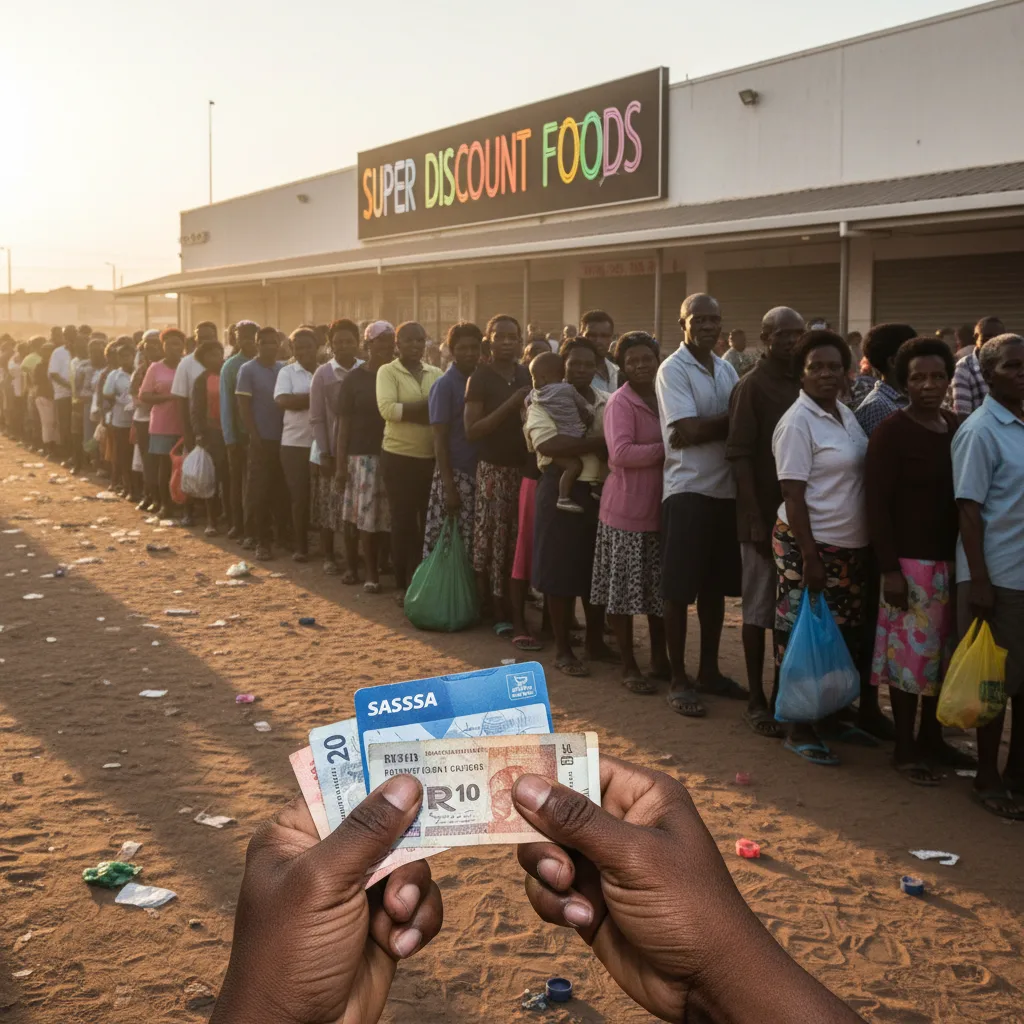
If you’re a beneficiary, you know this routine all too well. You check the March Payment Dates, wait in a line that wraps around the block, and then walk straight into the store to hand that money right back. The Pietermaritzburg Economic Justice & Dignity group says a basic food basket is now over R5,300. That R390 is gone in minutes. Maize meal, oil, bread—that’s it. You’re left with nothing. These retailers have a captive audience. When you don’t have money for transport to shop around, you buy where you stand. Every month, about R3.3 billion in government money flows through SASSA and lands in these big retailers’ tills. They don’t have to worry about the “economic landscape” because they have a guaranteed customer base built on the desperation of the vulnerable.
Price-Gouging or Smart Business? Decoding the Retailers’ Defence
Retail bosses have their excuses ready. They talk about “razor-thin margins” and the nightmare of Stage 8 load shedding in early 2026. Yes, diesel for generators is expensive. We get it. But it’s hard to feel sympathy for their “operational costs” when the CEO is taking home a multi-million Rand bonus. I suspect they’re using inflation as a convenient smoke screen to hike prices even further. They claim they provide jobs, and they do, but at what cost? The question isn’t whether a business should be profitable. It’s whether it’s ethical to hit record-breaking profits while the people buying your bread are literally starving.
Your Grocery Trolley vs. Their Bottom Line: A 2026 Price Reality Check
The way the grant’s value is shrinking isn’t just some theory—it’s what you see on your receipt every day. Let’s look at the actual shelves. In March 2025, 5kg of maize was maybe R45. Now, in March 2026, you’re lucky to find it for R58. A 2-litre bottle of cooking oil has jumped from R80 to over R100. That R20 “raise” SASSA gave you doesn’t even cover the extra cost of those two items. This isn’t just “the market” at work. It feels like a massive wealth transfer. Every time the price of sugar goes up, a child goes without something else. And for those still trying to get on the system, the paperwork is its own kind of hell. If you’re stuck, I’d suggest checking out this complete SRD grant application guide.
Reclaiming Power: Can Beneficiaries Disrupt the System?
It’s easy to feel like we’re just cogs in their machine, but people are starting to push back. I’m seeing more communities start buying co-ops to purchase bulk goods directly from wholesalers. It’s a way to cut out the middleman. Even supporting a local spaza shop makes a difference—at least that money stays in the neighborhood rather than going to a CEO’s third holiday home. We also need to keep demanding that the government step in, maybe with price caps on staples or a windfall tax on these massive profits. If your grant application was turned down and you’ve been left out in the cold, don’t just take it. Use this SASSA Appeals Guide to fight for what you’re owed in 2026.
Where is the Watchdog? The Competition Commission’s Silent Role
Where on earth is the Competition Commission? We all remember the bread price-fixing scandals from years ago. Now, we see all the major players hitting record profits at the exact same time. It smells fishy. Is there actually any competition left, or are they just moving in lockstep? Consumer groups are begging for a real inquiry into the grocery sector this year. The government can’t keep handing out billions in SASSA grants only for these corporations to vacuum it all up. Without someone actually policing these prices, the grant system is just a corporate subsidy program disguised as charity.
Frequently Asked Questions
Did my SASSA grant directly cause these huge profits for retailers like Shoprite?
Is it illegal for supermarkets to make so much profit in 2026?
Will my R390 grant buy me less food in March 2026?
What can I do if I believe food prices at my local supermarket are unfairly high?
How is the South African government responding to this news of record retailer profits?
Does this mean the recent R20 grant increase is completely useless?
Read Next
Bank App Down? How the 2026 Digital Banking Crisis is Locking You Out of Your R390 SASSA Grant
BREAKING for March 2026: As major South African banks like Capitec, FNB, and …
Your R390 March Grant is Already Gone: How New 2026 Bank Fees Will Eat R40 of Your SASSA Payment
BREAKING for March 2026: Just as SASSA beneficiaries receive their first R390 …
Comments & Discussions