Table of Contents
Title: Your Grant Hijacked? The Ultimate 2026 Guide to Fighting SASSA ID Theft
If you rely on your SASSA grant to get through the month, the news from February 2026 should make your blood boil. A massive crime syndicate was recently exposed for using fake IDs to steal grants from vulnerable people across South Africa. It is a disgusting situation, but you aren’t helpless. This guide gives you a clear 5-step security checklist to protect your identity, explains how to spot fraud before it happens, and provides a crisis plan if your grant is hijacked. You need to know how to secure your SASSA account and fight back.
The Wake-Up Call: Why the 2026 Fake ID Scandal Changes Everything
The news that hit South Africa in early February 2026 wasn’t just another headline. It was a direct attack on the survival of millions. When the police busted a syndicate making fake IDs specifically to drain SASSA grants, it showed us a terrifying reality. We aren’t just dealing with basic scam SMSes anymore. These criminals are professional identity thieves. They are creating high-quality fake documents to pretend they are you, which lets them walk away with your R370 grant while you’re left with nothing.
For a long time, we were told to just keep our PINs safe. But the fraud situation in 2026 is much more aggressive. These groups often have help from the inside, they use leaked data, and they have the tech to make nearly perfect ID copies. They might find your info in a bin, through a hack at a company you use, or even from a corrupt official. Once they have your name and ID number, they can basically “become” you in the system and change your payment details. I find it terrifying how easily a life can be upended. This isn’t just a friendly warning. It is an emergency plan because you are in a fight to keep what is yours.
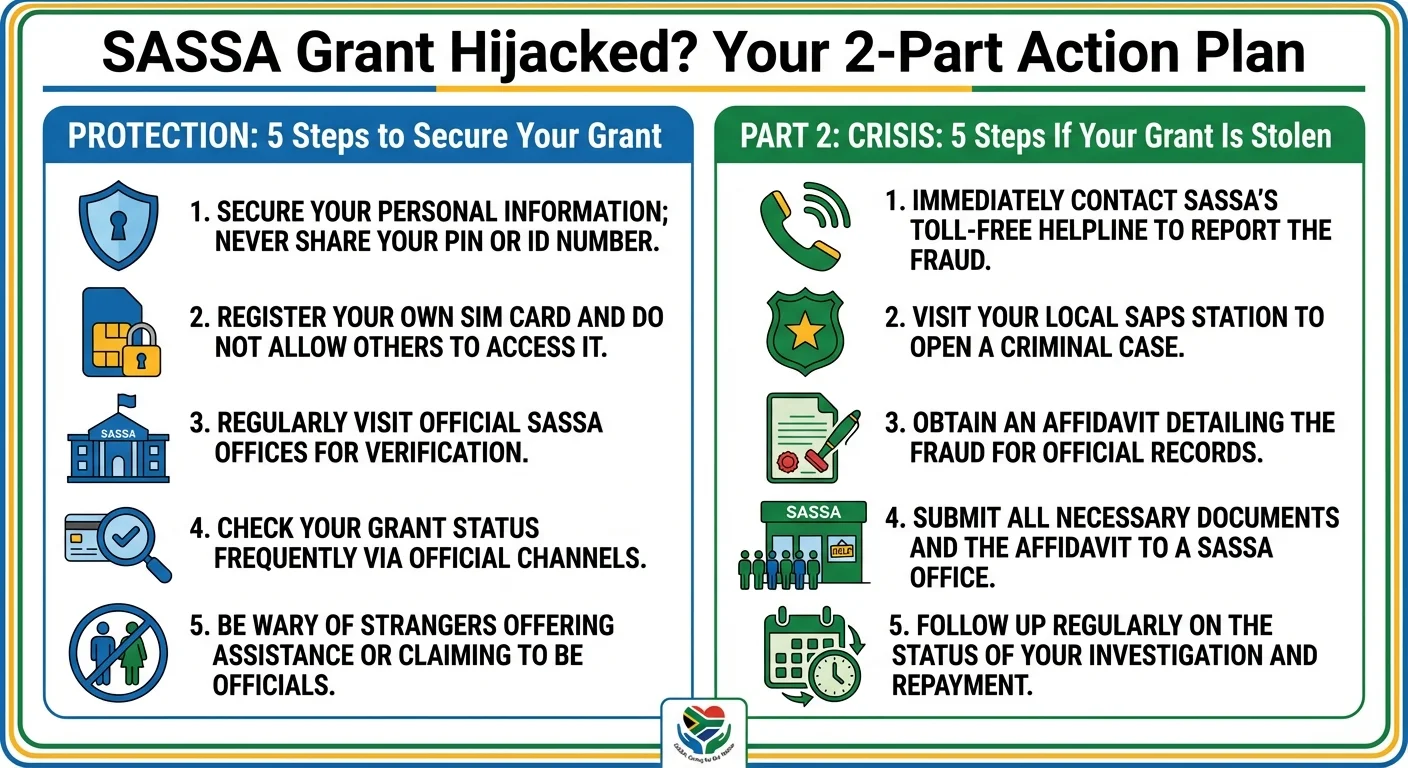
Your Fortress: The 5-Step SASSA Security Checklist for 2026
Sitting back and hoping for the best won’t work anymore. You have to be proactive about your personal data. Look at these five steps as a wall you’re building around your money. Start doing this today.
Step 1: Stop trusting people with your data. Your ID number, your SASSA card details, your PIN, and those One-Time Passwords (OTPs) are the same as cash. I cannot say this enough: do not give them to anyone. Not over the phone, not on WhatsApp, and definitely not via email. SASSA is never going to call you to ask for a PIN. If someone asks, they are lying to you.
Step 2: Secure your SIM card. SIM swap fraud is one of the biggest tools these thieves use. They use a fake ID to get a new SIM card with your number. Once they have that, they get all your banking and SASSA OTPs. Call your provider, whether it’s Vodacom, MTN, or Telkom, and ask them to put extra security or a special PIN on your account to stop anyone from swapping your SIM without you being there.
Step 3: Only use the real websites. The only safe way to check your grant is through the official SASSA site or the Moya App. Stay away from those random websites or Facebook groups that claim they can “speed up” your application. They are almost always scams designed to steal your info. If you need to check anything, go straight to the official SRD R350 Status Check portal.
Step 4: Check your status every single week. Don’t wait for pay day to find out there is a problem. Log in once a week and look for things that don’t seem right. If you see a phone number you don’t recognize or if your payment method changed from your bank to a “cash send” option, you need to act immediately. Catching it early is the only way to stop the theft.
Step 5: Don’t let “helpful” strangers get close. Whether you are at an ATM, a post office, or a community center in Gauteng or anywhere else, be careful of people offering to help you. They might be trying to see your PIN over your shoulder or trick you into giving up your details. Just say “no thanks” and only talk to official SASSA staff inside the actual office.
Warning Signs: How to Spot a Grant Hijacking Attempt in Progress
Thieves usually leave a trail, but you have to be sharp enough to see it. If you notice any of these things, it means someone is trying to rob you.
- OTPs you didn’t ask for: If your phone pings with a SASSA or bank OTP and you aren’t trying to log in, someone else is. This is a massive red flag.
- Weird “Official” phone calls: If someone calls saying they are from SASSA and they need to “verify” your ID or bank details to “release” your money, hang up. It’s a scam.
- Your phone suddenly goes dead: If you suddenly have no signal and can’t make calls for a long time, someone might have done a SIM swap on your number. Use a friend’s phone and call your service provider right away.
- Changes you didn’t make: You check your status and see your money is going to a store or a bank account that isn’t yours.
- Links to “unlock” your grant: If you get a message saying your grant is blocked and you need to click a link to fix it, don’t touch it. It’s a fake site meant to harvest your data.
Crisis Mode: The 5 Steps to Take Immediately If Your Grant Is Stolen
If you realize your money is gone, I know it feels like the world is ending. It’s a sickening feeling. But you can’t just sit there. You have to move fast. Follow this plan exactly.
Call the SASSA Fraud Hotline: Do this first. Call 0800 60 10 11. Tell them your grant was stolen and make sure you get a reference number. This is your proof that you reported it.
Go to the Police (SAPS): Go to your local station immediately. You need to open a case for fraud and identity theft. Don’t let them send you away. You must leave that station with a case number. You won’t get anywhere without it.
Get a Sworn Affidavit: While you are at the police station, you have to write a sworn affidavit. This is a legal document where you state, under oath, that you didn’t get your money and that you didn’t authorize any changes. It needs to be stamped by the police.
Take everything to SASSA: Take that case number and the stamped affidavit to your nearest SASSA office. Give them to an official and tell them you want an internal fraud investigation. Get a receipt or a reference number for these documents.
Be annoying and follow up: You cannot just wait for them to call you. They won’t. You need to call SASSA every week. Give them your reference number and ask for an update. Being persistent is often the only way to get your money back.
Beyond the Grant: Why Protecting Your ID is a Lifelong Battle
The people trying to steal your R370 today aren’t going to stop there. They want your bank account, your credit, and your future. Your ID number is the key to everything in South Africa. Protecting your SASSA grant is just the start of keeping your whole life safe.
Treat your ID card like it’s made of gold. Don’t let people make copies of it if it isn’t absolutely necessary. If you have papers with your ID number on them, tear them into tiny pieces before you throw them away. Also, be careful on Facebook and TikTok. Don’t post your full name, birthday, or address. Criminals love putting those pieces together to impersonate you.
In 2026, knowing how to handle your digital life is how you survive. Use different passwords for everything. Stay alert. By staying on top of this, you aren’t just saving your grant money, you are keeping your dignity and your future safe from people who want to take it from you.
Frequently Asked Questions
Can SASSA refund me if my grant money was stolen through identity theft?
What is a sworn affidavit and why do I need one for SASSA fraud?
How long does a SASSA fraud investigation take in 2026?
Someone stole my ID book. What should I do to protect my SASSA grant?
Can I still get my R370 grant while a fraud investigation is happening?
What is the official SASSA fraud hotline number for 2026?
Read Next
The R500 'SASSA Easter Bonus' SMS is a Scam: Your 2026 Guide to Protecting Your R390 Grant
BREAKING for March 2026: A new, highly convincing SMS scam is promising a R500 …
SASSA April Payout Alert: Major Retailers Warn of 'System Upgrade' Delays Ahead of Easter 2026
BREAKING March 2026: Major SASSA retail pay points like Shoprite, Pick n Pay, …
Comments & Discussions