Table of Contents
Title: The ‘Day Zero’ Tax: How the 2026 Water Crisis Makes Your R370 SASSA Grant Worthless
South Africa is staring down a nightmare in February 2026, and if you’re one of the millions relying on a SASSA R370 grant, the situation is beyond desperate. Between the skyrocketing price of bottled water and the terrifying health risks of dry taps, that small monthly payment is being swallowed whole by a crisis no one seems ready to fix.
National Disaster Declared: The 2026 Water Crisis Hits Boiling Point
It is official, and it is every bit as bad as we feared. On 21 February 2026, the government finally declared a national state of disaster. The drought is suffocating the Eastern Cape, Northern Cape, and parts of KwaZulu-Natal. For those of us watching the numbers, the reality is haunting. Reservoirs are sitting at less than 15% capacity in some areas. ‘Day Zero’ is no longer a scary story we tell about the future. It is happening right now.
For the 8.8 million people surviving on the R370 SRD grant, this isn’t just an “infrastructure challenge.” It’s a fight for life. We are talking about crumbling pipes and years of people in power looking the other way, and now the bill has come due. Clean water is supposed to be a right in South Africa, but in February 2026, it has turned into a luxury that most people simply cannot afford.
The R30 Bottle of Water: Analyzing the New ‘Poverty Tax’
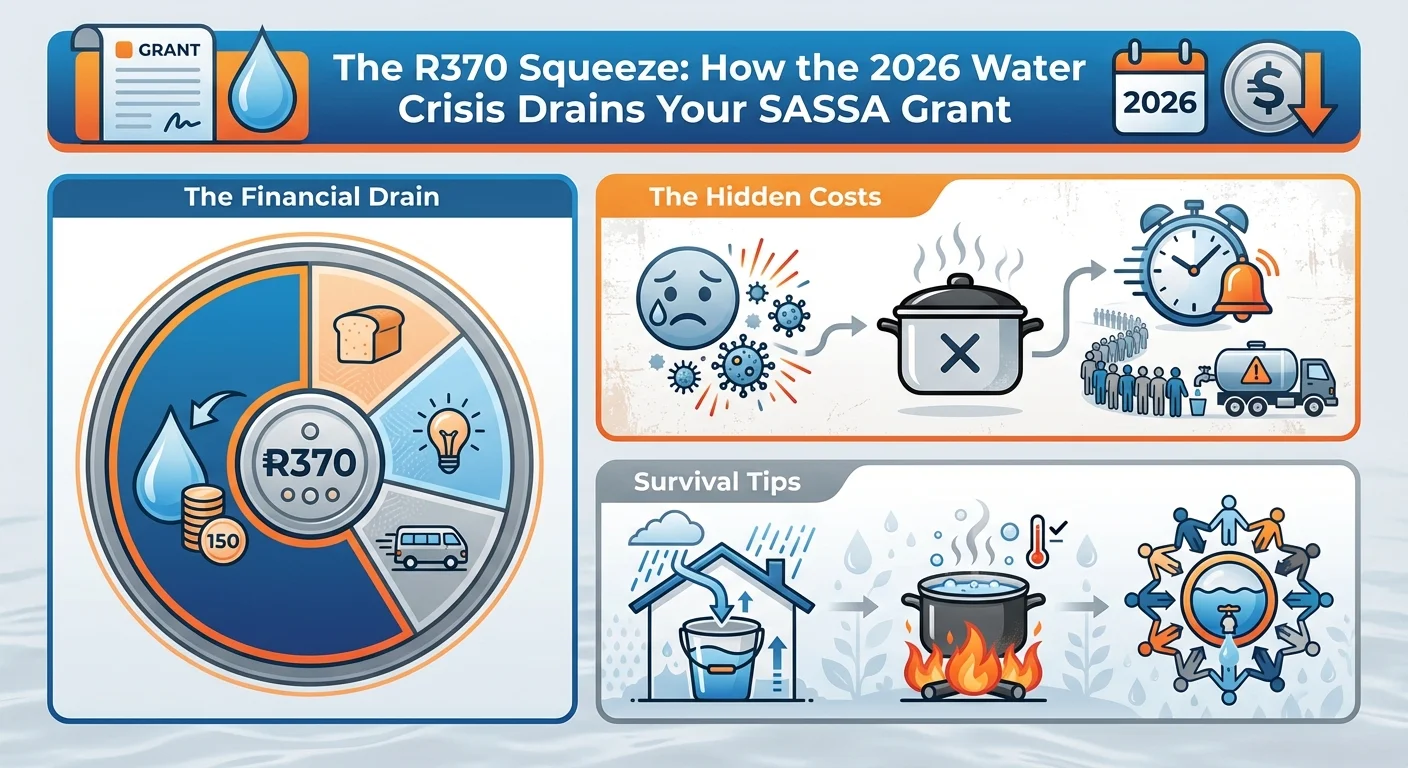
The real tragedy isn’t happening in Parliament. It’s happening at the local spaza shop. The R370 grant was already stretched to the breaking point by food prices that jumped 9% last year. Now, there’s a new “tax” on being poor. In the worst-hit towns, a 5-litre bottle of water is selling for R25 or even R30.
Think about that for a second. One bottle of water takes away nearly 8% of your entire monthly grant. If a family buys just one bottle a day to survive, they’ve spent R300 by the end of the month. That leaves R70 for everything else. Food, electricity, transport, and medicine all have to come out of that R70. It’s an impossible math problem that ends in hunger. This ‘Day Zero’ tax is effectively wiping out the value of the SASSA grant for the people who need it most.
Health, Hunger, and Queues: The Hidden Costs of a Dry Tap
When the taps stop running, the problems don’t stop at the wallet. I’m deeply concerned about the health crisis following right behind this drought. Without clean water, we are going to see cholera and typhoid tear through vulnerable communities. It’s a terrifying prospect.
Then there is the issue of hunger. Think about what it takes to cook maize meal or samp. These are the staples that keep South Africa fed, but they require a lot of water to prepare. When water costs more than the food itself, people start skipping meals. I’ve seen the reports of elderly people and mothers standing for hours in the blistering sun waiting for water tankers that might not even show up. These queues are exhausting and sometimes dangerous. It’s a cycle of poverty that is only getting tighter.
Where is SASSA? Evaluating the Official Response to the Crisis
With a disaster of this scale, you’d expect a massive, coordinated relief effort. But as of 22 February 2026, the Department of Social Development (DSD) and SASSA have stayed quiet. It’s frustrating to see. While the DSD knows how bad things are, we haven’t seen a “drought top-up” or any extra emergency funds for those in the red zones.
The law allows for emergency relief, but it feels like the government is stuck in slow motion. This silence is dangerous. It leaves a gap for scammers to swoop in with fake promises of “water grants” to steal what little people have left. Right now, there is no extra money coming from the state. The government seems focused on moving water trucks around, which is fine, but it doesn’t help the mother who just spent her last R30 on a bottle of water instead of bread.
Your 2026 Water Crisis Survival Guide: Stretching the R370 Grant
We can’t wait for a committee to decide to help. If you are struggling right now, here is how I suggest you try to manage the R370 grant:
- Catch Every Drop: If it rains even a little, get every bucket and bin outside. You can’t drink it straight, but you can use it to flush toilets or wash clothes, saving your clean water for drinking.
- Purify Everything: Don’t take chances with your health. Boil any water from a tanker or a well for at least one full minute. If you can’t boil it, put the water in clear plastic bottles and leave them in the sun for 6 hours. It’s called the SODIS method, and it can save your life.
- Team Up: Don’t buy small bottles. Talk to your neighbors and pool your money to buy 25-litre containers in bulk. It’s cheaper, and you can take turns watching the kids or the house while someone waits in the tanker queue.
- Change How You Cook: Try to cook larger batches of food like pap when you have water, so you aren’t using more water to clean pots every single day.
- Speak Up: If you see a leak, report it. Use the national toll-free number for the DWS. We can’t afford to lose a single drop to broken pipes while people are going thirsty.
Frequently Asked Questions
Will SASSA pay an extra grant for the 2026 water crisis?
Is it safe to drink water from the water tankers?
How can I make my R370 grant cover both food and water?
What are my rights if my area has no water at all?
Will the water crisis affect my SASSA grant payment collection?
How can I check my SASSA grant status during this crisis?
Read Next
SASSA's New 'Mandatory App' Locks Your R390 Grant? The 2026 Guide for Beneficiaries Without a Smartphone
BREAKING April 2026: SASSA is rolling out a mandatory new smartphone app, …
The R140 Paraffin Price SHOCK: How 40% of Your R390 SASSA Grant Will Vanish on May 1st, 2026
BREAKING April 2026: NERSA has approved a devastating 40% increase in the price …
Comments & Discussions