Table of Contents
As the 2026 South African municipal elections get closer, SASSA grants are being treated like a political football. I’ve been watching the ANC, DA, and EFF roll out their promises—from tiny increases to a R1,500 Basic Income Grant—and frankly, it’s hard to tell what’s a real plan and what’s just noise to grab your vote.
The 2026 Election Battlefield: Your Grant is the Grand Prize
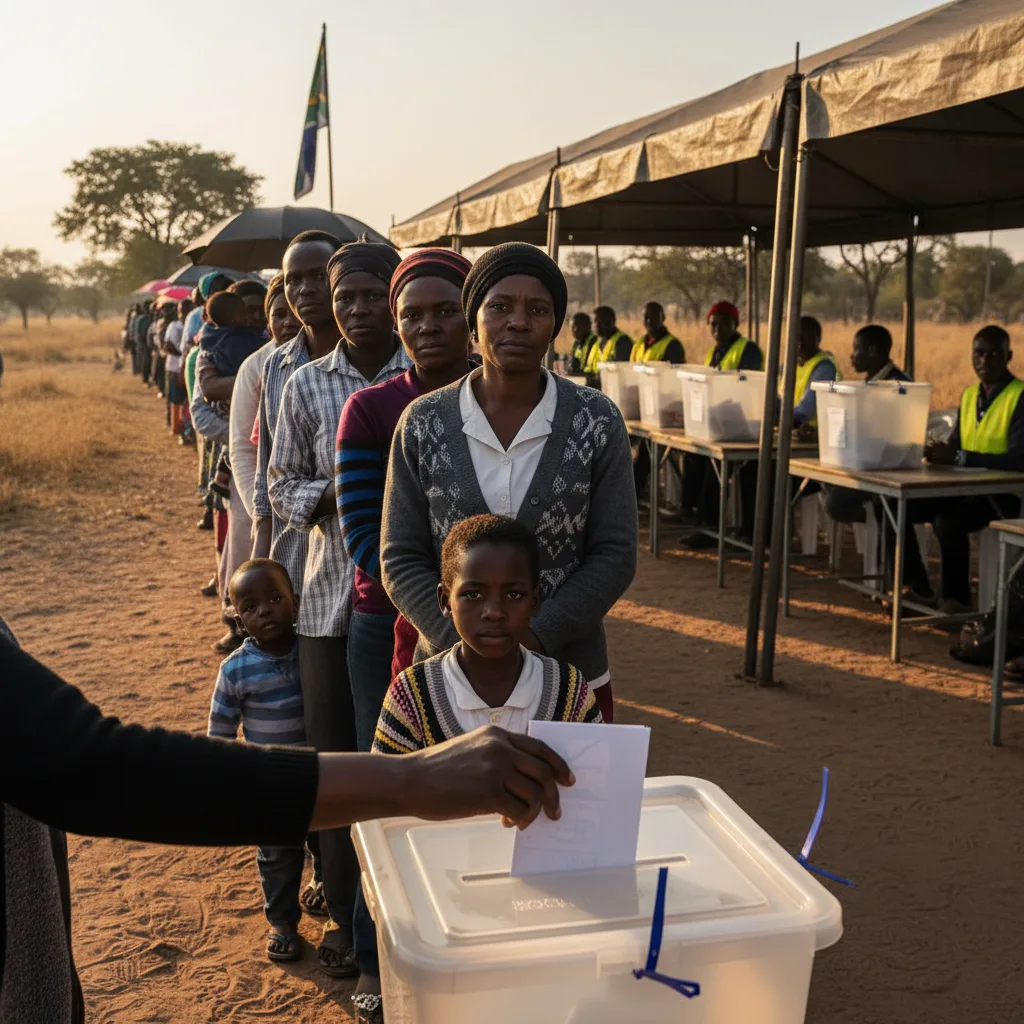
The 2026 municipal elections are turning into a fight where your grant is the main prize. With over 8.5 million people living on the R390 Social Relief of Distress (SRD) grant, politicians know exactly where the power lies. If you are looking for the actual Payment Dates, check there first before getting lost in the campaign speeches. I see parties moving away from talking about roads or water and focusing almost entirely on who can promise the biggest check. It is a high-stakes game, but for most people, it’s about survival, not politics. This election is forcing a conversation about whether these grants are actually enough to live on, but for you, the goal is to figure out who is telling the truth and who is just hunting for votes.
The ANC’s ‘Continuity & Gradual Increase’ Promise: A Closer Look
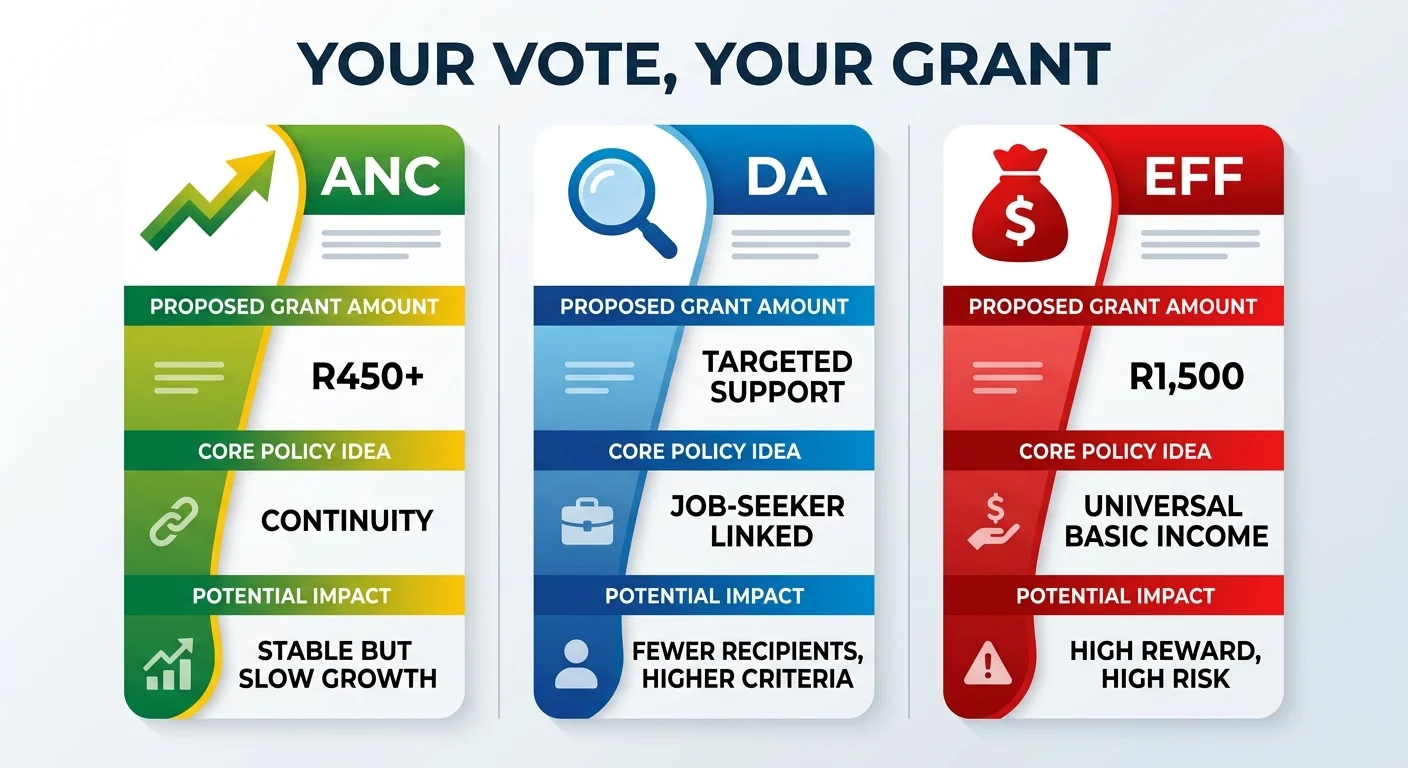
The ANC is playing the “safe” card for 2026. They want you to think of the entire SASSA system as their personal achievement, something they created and only they can protect. At rallies, you’ll hear them warn that opposition parties want to slash social spending. I’ve seen reports suggesting they might push the SRD grant toward R450 by 2027, which matches those leaked ‘Tiered Grant’ documents from earlier this year. But we have to be careful here. The National Treasury is under massive pressure, and the Auditor-General just pointed out that R500 million is lost every year to grant fraud. The ANC’s promise of “more of the same” is a safe political message, but it doesn’t answer the big question: how can anyone survive on this when the food poverty line is already at R760?
The DA’s ‘Targeted Support’ Model: Who Wins and Who Loses?
The Democratic Alliance is going to try and sell you on “fiscal responsibility.” That sounds fine in a boardroom, but on the ground, it means “targeted support.” Their plan likely involves changing who gets the SRD grant to shrink the number of people on the list. They want to link your grant to active job-seeking and use those AI “lifestyle audits” that SASSA has already started testing. The DA thinks this will stop people from becoming “dependent” on the state. The problem is, millions of people could lose their lifeline. If you work in the informal economy or just can’t handle a complicated government website, you might find yourself disqualified even if you’re starving. It’s a shift from a basic right to a conditional benefit, and that should worry anyone who isn’t in a traditional job.
The EFF’s ‘Radical Overhaul’: Is a R1,500 Basic Income Grant Possible?
The EFF is going for the big number: R1,500. It sounds life-changing, and that’s exactly why it’s so popular. They want to scrap the R390 SRD grant and give every unemployed South African a Basic Income Grant (BIG). They say they’ll pay for it by taxing the rich and nationalizing mines. I love the idea of people finally having enough to buy more than just a bag of maize meal, but the math is a bit scary. Some experts say it would jumpstart local shops, while others warn it could crash the whole economy and cause massive inflation. It’s the most tempting promise on the table, but you have to decide if the risk of the country running out of money is worth the hope of a R1,500 payment.
The MK Party & New Players: Wildcards in the Grant Debate
The 2026 political scene is even messier now with the MK Party in the mix. These guys are the wildcards. They often sound just like the EFF, shouting for huge increases to grab the attention of anyone tired of the ANC. It feels like an arms race where everyone is trying to out-promise the next person. When you hear these new parties making big claims, you have to ask: where is the money coming from? Are these actual plans, or are they just using grant promises to get a foot in the door? It’s easy to promise billions when you aren’t the one who has to find the cash.
Beyond the Promises: How to Protect Yourself No Matter Who Wins
No matter who wins in 2026, the way SASSA works isn’t going to change overnight. You need to focus on what you can control right now. First, if a campaigner asks for your ID number or SASSA card in exchange for a vote, walk away. That is illegal. Second, make sure your details are 100% correct in the system. Most people miss their payments because of wrong bank details or old phone numbers. Third, know your rights. If they reject your application, fight it. We have a full SASSA Appeals Guide to show you how. Finally, don’t wait for an SMS. Take charge and do your own SRD Status Check regularly. Politicians will keep talking, but your priority is making sure your money actually lands in your account.
Frequently Asked Questions
Will my R390 SASSA grant actually change before the 2026 elections?
Are political parties allowed to ask for my SASSA card or ID number?
What is the main difference between the current SRD Grant and a Basic Income Grant (BIG)?
How can I find factual information about party policies on grants?
Does my voting choice affect my current SASSA grant application?
Where can I find the official SASSA payment dates for the coming months?
Read Next
SASSA June Payment Update: June 2026 Payment Cycle Confirmed
The June 2026 SASSA payment cycle is confirmed for 2, 3 and 4 June 2026 for the …
The R50 Billion Food Waste SHOCK: Why Your R390 SASSA Grant Can't Buy Food While SA Throws It Away
BREAKING May 2026: A shocking new report reveals South Africa wastes over R50 …
Comments & Discussions