Table of Contents
If you are one of the millions trying to survive on a R370 SASSA grant, the government’s latest announcement for 2026 feels less like environmental policy and more like a punch in the gut. We’ve looked at the numbers behind the new R2/litre fuel ‘Green Levy’ in South Africa, and the reality is grim. From soaring taxi fares to the rising cost of a basic loaf of bread, this tax is going to eat away at what little people have left. This is a guide to what’s coming and how you can try to protect your pocket.
BREAKING: The New R2/Litre ‘Green Levy’ Hits South Africa - What It Means for You
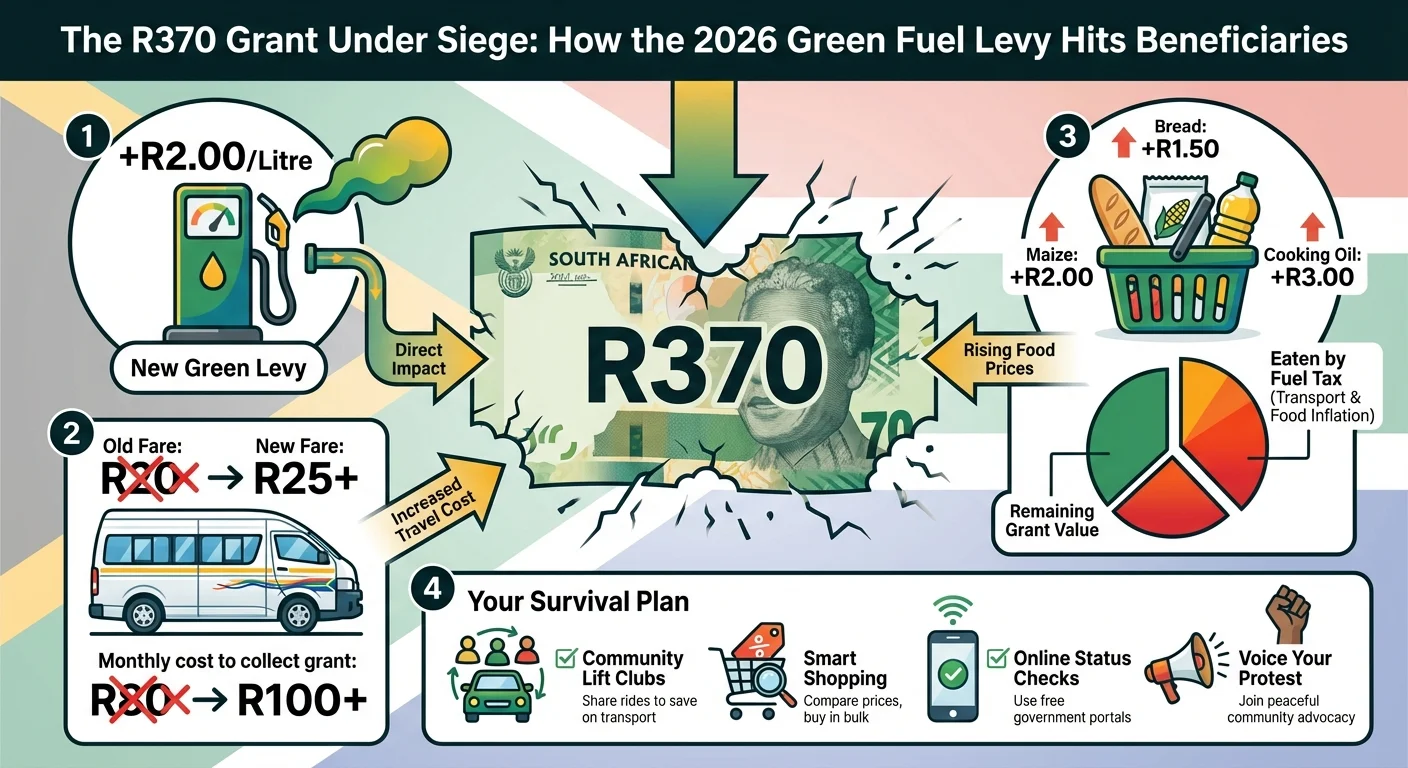
The news on 17 February 2026, hit like a ton of bricks. The government is introducing a new ‘Green Levy’ of R2 per litre on petrol and diesel, starting 1 March 2026. The Treasury claims this is a necessary move to meet climate change goals and fund renewable energy. But let’s be honest: for the 8.5 million people relying on the R370 SRD grant, this isn’t about the planet. It’s an attack on their survival.
This is a flat tax, which is the most unfair way to collect money. It doesn’t care if you’re driving a luxury SUV or sitting in a crowded minibus taxi just trying to get to a clinic. It shows a complete lack of empathy for those already drowning in high costs. The R370 grant is already a joke compared to the price of food. Now, this levy threatens to break the system entirely, leaving the most vulnerable South Africans in a desperate corner.
The R370 Grant vs. The R100+ Taxi Fare: The Brutal New Math of Collecting Your Money
I keep thinking about the math of a grant collection day, and it just doesn’t add up anymore. The biggest hit will be at the taxi rank. Taxi associations have already warned that they have no choice but to hike fares across the country on 1 March 2026.
Think about it. A short trip to a supermarket to collect your SASSA money that used to cost R18 will probably jump to R22. If you live in a rural area and have to travel to the nearest town, you might see fares go up by R10 or R15. Most people don’t just take one taxi. By the time you’ve gone there and back, maybe with a child in tow, a transport bill that was R80 could easily hit R120. Before you even buy a bag of maize, a third of your R370 grant is gone. It’s been paid to the taxi driver, who then hands it back to the government at the petrol pump. You have to be incredibly careful about where you collect your money now. To find the cheapest way to get your cash, check the latest Payment Dates to plan your trip perfectly.
A Hidden Tax on Bread and Maize: How the Fuel Levy Inflates Your Food Bill
The pain doesn’t end when you get out of the taxi. This R2/litre levy is a hidden tax on every single thing you put in your shopping basket. Everything in a supermarket got there on a truck. The diesel used to move maize from the Free State or bread from Gauteng now costs R2 more per litre, and companies aren’t going to pay that themselves. They’ll pass it to you.
Economists are already predicting that basic food prices will jump by 3% to 5% within just two months of the tax starting. That R22 loaf of bread is going to cost R23.50. The maize meal you rely on will see a massive price hike. Your R370 grant, which already buys almost nothing, is losing its power every single day. This isn’t just normal inflation. This is a government-made increase in the cost of staying alive.
Is This an Attack on the Poor? Analyzing the Fairness of the 2026 Green Tax
We all want a greener South Africa, but the way the government is doing this is deeply wrong. A flat fuel tax is regressive. It takes a huge chunk of money from a poor person while a wealthy family barely notices it. The carbon footprint of someone on a SASSA grant is almost zero, yet they are the ones paying the highest price for this “green” future.
It feels like the poor are being punished for a climate crisis they didn’t cause. A fairer way would have been to tax luxury goods, private jets, or massive polluting industries. Instead, the government chose a blunt tool that taxes the very act of moving. It makes me wonder where their priorities really lie. Are they trying to save the environment, or are they just trying to fix their budget by squeezing the people who have the least?
Your Survival Plan: 5 Ways to Fight Back Against the Shrinking R370 Grant
It’s easy to feel defeated, but you have to find ways to make that R370 stretch. Here is a plan to help you deal with the new costs:
- Group Together for Transport: Talk to your neighbors who also get grants. Don’t all go separately. Organize a lift club or hire one local car to take a group of you at once and split the fuel cost.
- One Trip, Many Errands: You can’t afford “quick trips” to town anymore. Plan your grant day so you do everything—shopping, clinic visits, and banking—in one single journey.
- Get Paid at the Till: Don’t waste money on ATM fees or extra travel to a bank. Get your grant at Shoprite, Pick n Pay, or Boxer. You can get your cash and buy your food in one place, and many of these stores offer cashback which saves you even more.
- Check Before You Go: Never leave home without knowing your money is there. Use an online SRD Status Check to be 100% sure. A wasted taxi fare is money you’ll never see again.
- Speak Up: This was a political choice, and it can be changed. Talk to your ward councillor and join community groups. We need to push for a higher Basic Income Grant to offset these taxes. Your voice is the only thing that will make them listen.
Frequently Asked Questions
What is the new 'Green Levy' or fuel tax in South Africa for 2026?
Will this R2 tax increase my SASSA grant amount to compensate?
How much will this fuel levy increase my taxi fare?
My grant status is 'declined'. Is this related to the new tax?
What are the best ways to save money on transport to collect my SASSA grant?
When exactly does this new R2/litre fuel tax start?
Does this fuel tax affect paraffin prices as well?
Read Next
SASSA's New 'Mandatory App' Locks Your R390 Grant? The 2026 Guide for Beneficiaries Without a Smartphone
BREAKING April 2026: SASSA is rolling out a mandatory new smartphone app, …
The R140 Paraffin Price SHOCK: How 40% of Your R390 SASSA Grant Will Vanish on May 1st, 2026
BREAKING April 2026: NERSA has approved a devastating 40% increase in the price …
Comments & Discussions