
Table of Contents
Title: The R20 Bread & R30 Milk Crisis: How Major Retailers Are Killing Spaza Shops & Your R390 SASSA Grant in 2026
A brutal new report from April 2026 shows that the aggressive spread of big supermarket chains into our townships is choking the life out of local spaza shops. This crisis hits SASSA beneficiaries the hardest, effectively shrinking the R390 grant through sneaky travel costs and higher local prices. Here is what this means for the future of South Africa’s township economy and your pocket.
The Spaza Shop Apocalypse: A Silent Crisis Unfolding in April 2026
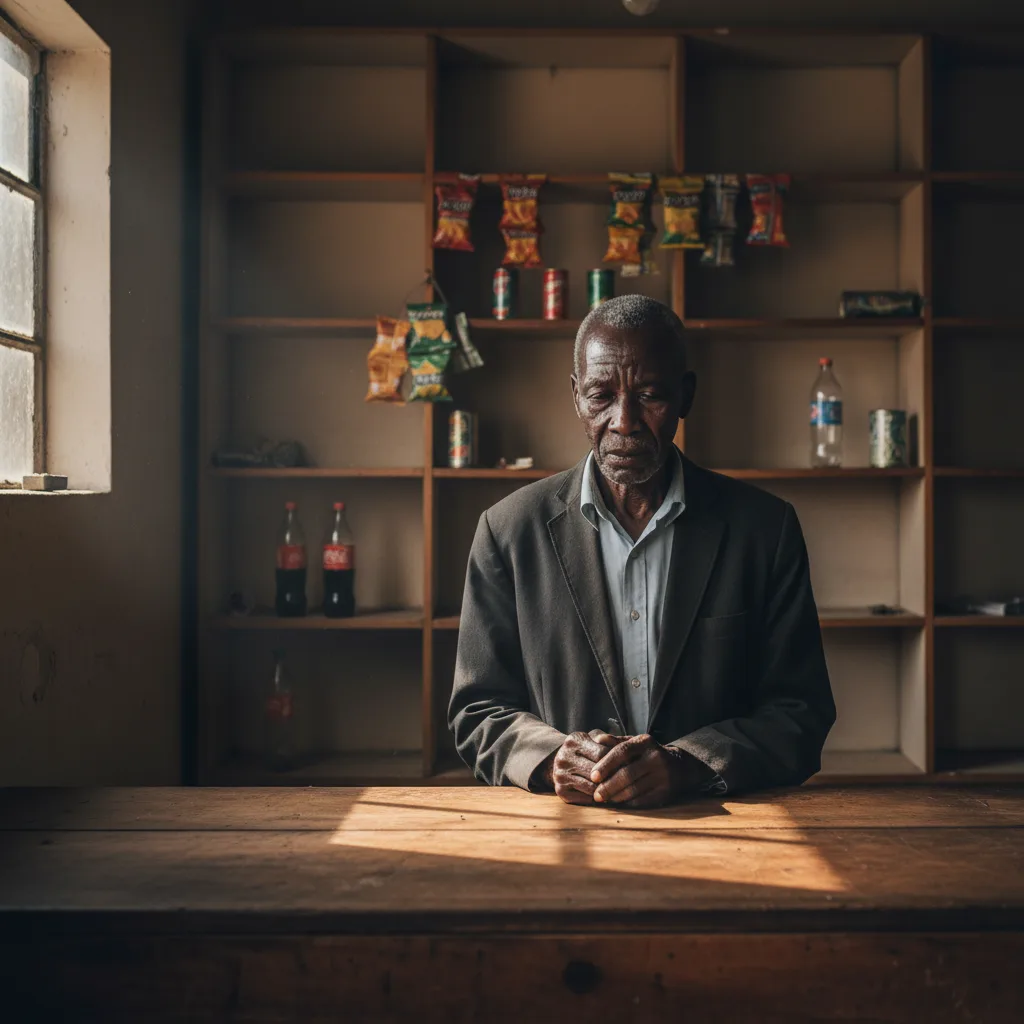
There is a quiet economic war happening in our streets, and the R390 SASSA grant is caught right in the middle of it. A shocking report from the Township Economic Council (TEC) released in April 2026 found that about 35% of spaza shops in places like Gauteng and KwaZulu-Natal have closed down in just the last 18 months. It isn’t because people stopped buying things. It is because they cannot compete with the aggressive pricing of national supermarket chains that are moving into every corner of the township.
This is a massive problem for the millions of SASSA beneficiaries who depend on these local stores. The report shows that while bread might be 15% cheaper at a massive retailer, that “saving” is often an illusion that hides much deeper costs for the community.
The Real Cost of ‘Cheap’ Bread: Unpacking the Supermarket Trap
Seeing a loaf of bread for R18 at a big retailer feels like a win when you are trying to survive on R390 a month. But I believe it is a carefully set trap. Development economist Dr. Busi Khumalo argues that this business model pushes the real costs onto the poorest people. She points out that while the price on the shelf looks good, the total cost to the consumer is much higher.
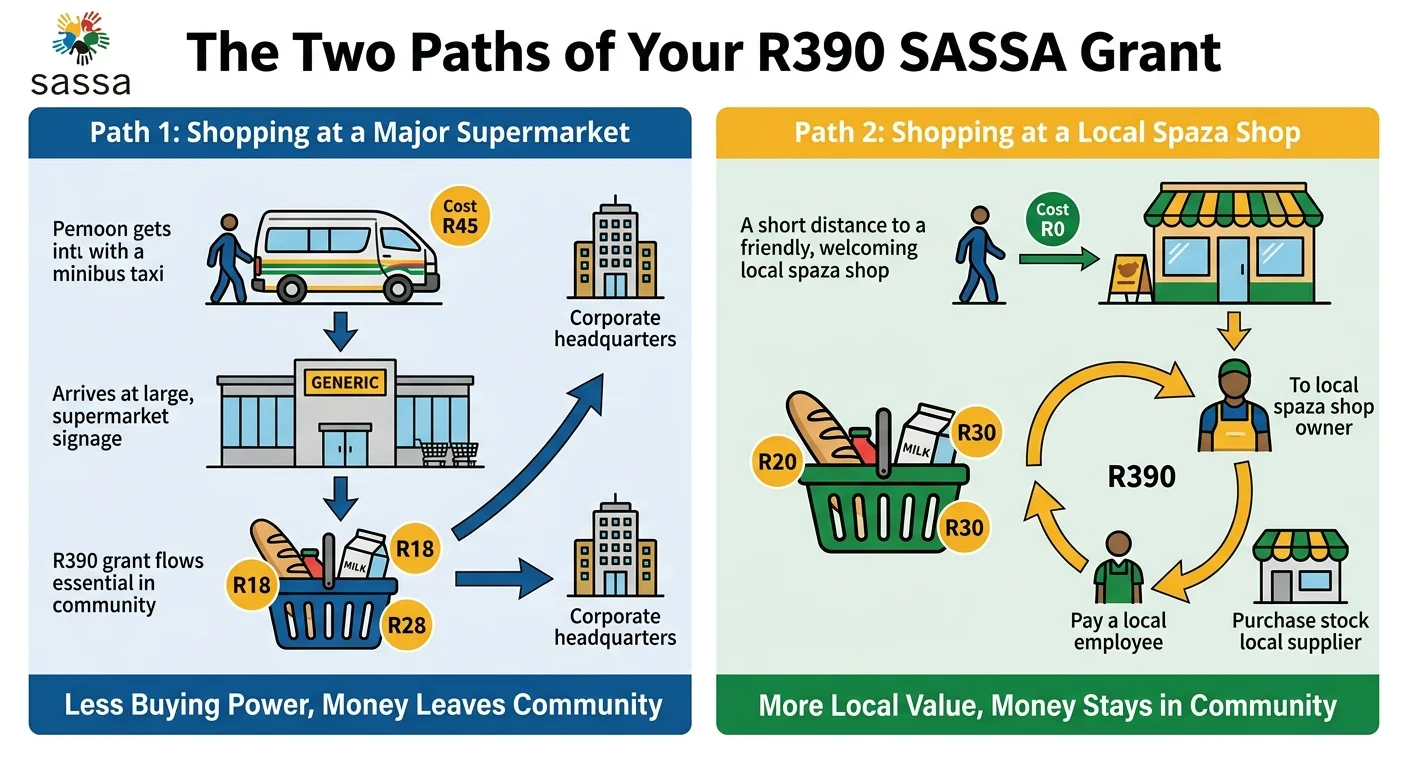
The data shows that the average SASSA beneficiary now spends R45 on taxi fares just to get to a major retailer and back. That one trip eats up more than 11% of your entire monthly grant. This “travel tax” completely wipes out any small savings you made on groceries. And there is another issue: when you shop at a big supermarket, you are forced to spend a huge chunk of your grant all at once. This makes it much harder to manage your cash for the rest of the month. A local spaza often gives informal credit to regulars, which is a lifesaver that a big corporate store will never provide.
Your R390 Grant’s Shrinking Power: How Rands Disappear Before They’re Spent
The value of your SASSA grant depends on where you spend it. When local spaza shops close, money is being sucked out of the township. If you spend R300 at a local shop, that money stays in the neighborhood. The owner uses it to pay local staff, buy from local bakers, and support their own family nearby.
When that same R300 goes to a national chain, the profit leaves the community immediately and goes to a corporate head office or wealthy shareholders. This drain makes poverty worse. According to Stats SA data from 2026, food inflation has already cut the buying power of the R390 grant by 8%. But when you add the travel costs and the fact that money no longer circulates locally, the grant is actually worth about 20% to 25% less than it was before the local shops started disappearing.
More Than a Store: The Social Fabric Unraveling with Spaza Closures
Losing a spaza shop is about much more than just where you buy your milk. For many SASSA beneficiaries, especially the elderly and people living with disabilities, the local shop is a lifeline. It is a safe place to get news, a spot to buy emergency airtime, and a place where the owner knows your name and understands if you are a few Rand short until payday.
Many of these shops also serve as SASSA cash pay points. This saves people from making dangerous and expensive trips to crowded town centers. The TEC report mentions that 60% of elderly grant recipients use spaza shops because they trust them and feel safe there. As these shops vanish, our most vulnerable neighbors are left with fewer options and much higher risks.
A Call to Action: How Beneficiaries Can Reclaim Their Economic Power
The situation looks grim, but we are not powerless. This crisis is forcing people to think differently about how they use their money. I am seeing more SASSA beneficiaries using digital stokvels to pool their grants together. By buying in bulk directly from wholesalers, they can beat the supermarket prices and keep the money in the community.
There is also a move toward community food gardens so people don’t have to rely on big chains for fresh food. On the political side, groups are now pushing the government to protect informal businesses. They want subsidized wholesale groups for spaza owners and “supermarket-free zones” where local shops can actually grow. I encourage everyone to support their local shops whenever possible. Even if you pay a tiny bit more for one item, you are investing in the safety and the future of your own neighborhood.
Frequently Asked Questions
Why have spaza shops become so expensive in 2026?
Is it better to use my R390 SASSA grant at a supermarket or a spaza shop?
What is the government doing to protect spaza shops from big retailers?
How does the closure of spaza shops affect my SASSA payment?
Can community buying clubs or stokvels really save me money?
Are major supermarkets intentionally trying to shut down spaza shops?
Read Next
SASSA June Payment Update: June 2026 Payment Cycle Confirmed
The June 2026 SASSA payment cycle is confirmed for 2, 3 and 4 June 2026 for the …
The R50 Billion Food Waste SHOCK: Why Your R390 SASSA Grant Can't Buy Food While SA Throws It Away
BREAKING May 2026: A shocking new report reveals South Africa wastes over R50 …
Comments & Discussions