
Table of Contents
The R350 Grant Under Siege: How Budget Cuts, R28 Petrol, and Scams Threaten Your Grant in January 2026
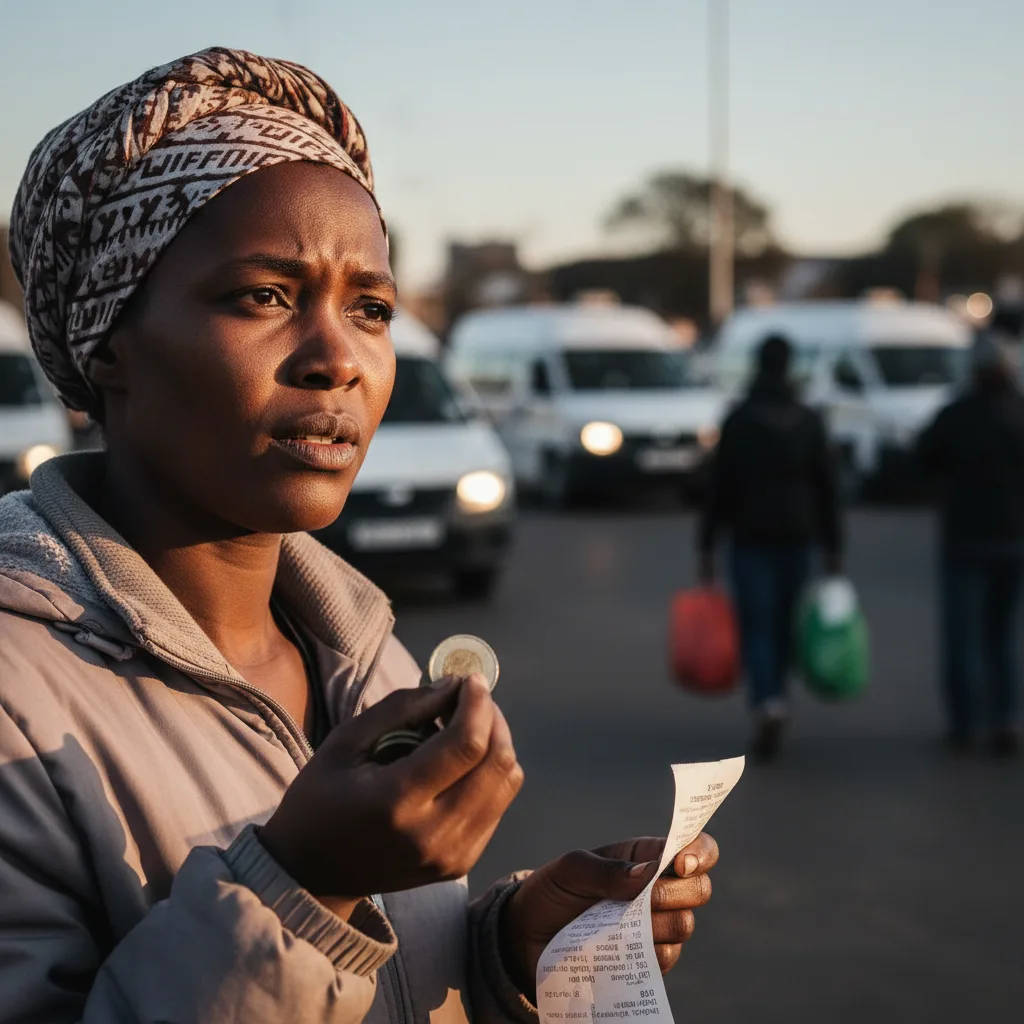
I’ve been looking at the numbers for January 2026, and frankly, they’re terrifying. If you’re one of the millions relying on the SASSA R350 grant in South Africa, you already know the struggle is real. But this month feels different. Between petrol hitting R28 a litre and the government whispering about budget cuts, the R350 isn’t just small—it’s practically vanishing.
The Perfect Storm: A January 2026 Crisis for Beneficiaries
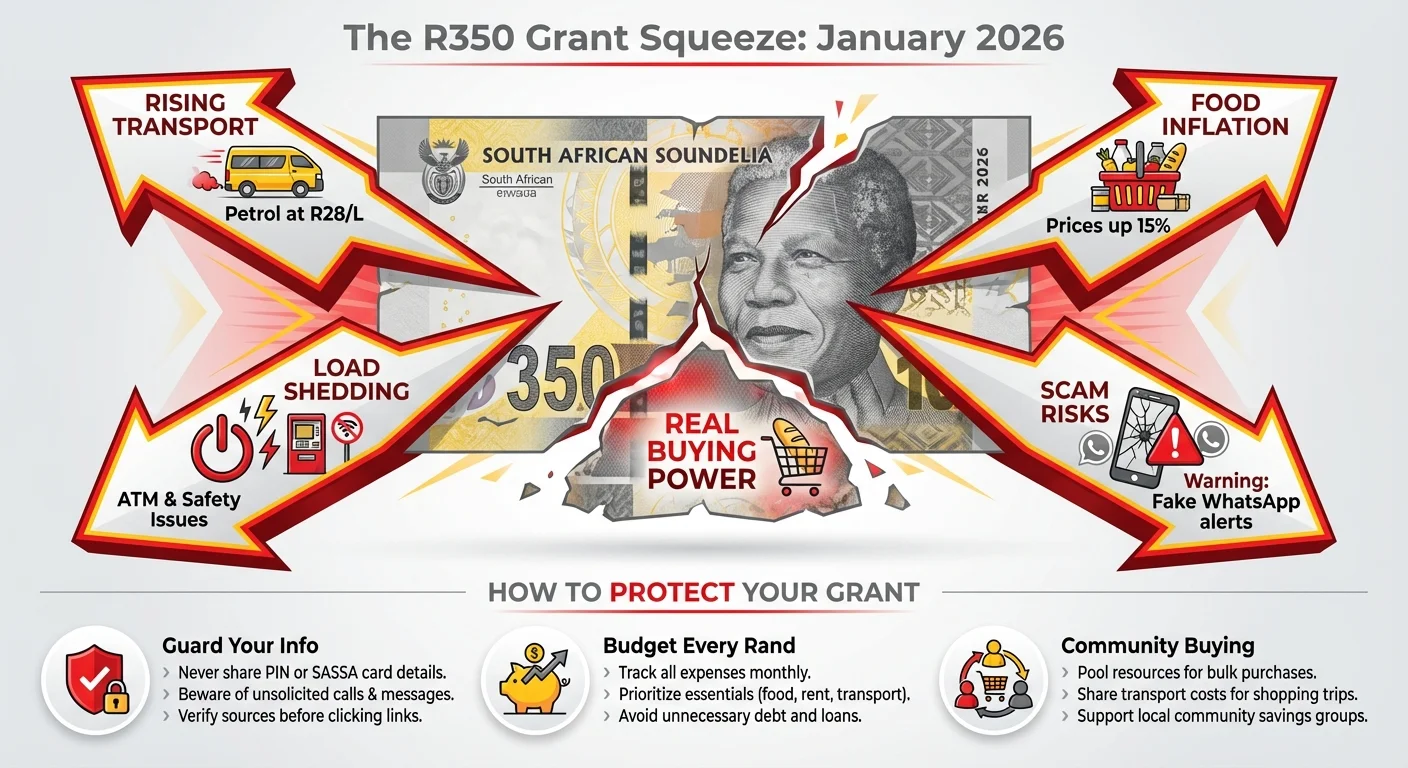
We are looking at a total crisis for beneficiaries this month. It’s not just one thing going wrong; it’s everything hitting at once. While everyone is busy doing their SRD Status Check and checking Payment Dates, the actual value of that cash is dying before the notification even pings your phone. This isn’t just another news cycle. It feels like a direct attack on people who are already at their breaking point.
Threat 1: The Looming Shadow of National Budget Cuts
The biggest worry right now? The government’s own words. The Finance Minister is starting to use that scary language about “tough decisions” and “reviewing social spending” for the February 2026 National Budget Speech. We all know what that means. It’s code for potential cuts or even ending the SRD grant. This grant was always supposed to be temporary, but for many, it’s the only thing keeping the lights on. The uncertainty is cruel, plain and simple, and it’s leaving millions of people anxious about where their next meal will come from.
Threat 2: R28/Litre Petrol - Your Grant Money Evaporating at the Pump
Then there’s the petrol price. We’re looking at R28 per litre in February 2026, and that is a massive blow. Most people don’t live a short walk from a shop or a SASSA office. You’ve got to take a taxi, and taxi drivers have no choice but to hike fares when fuel goes up. If you spend R100 just to go collect your R350 and buy mealie meal, you’ve lost nearly a third of your money before you’ve even started. It’s a tax on the people who can least afford it.
Threat 3: The Silent Thief - 15% Food Inflation Decimates Buying Power
StatsSA says food inflation is at 15%, but if you’re the one standing in the aisle at the supermarket, it feels much worse. A basic basket of food that used to be R1,300 is now pushing R1,500. For someone on a SASSA grant, that math just doesn’t work. The R350 is supposed to help, but it barely covers bread, oil, and maize for a week. In reality, that R350 buys what R300 would have bought a couple of years ago. It’s heartbreaking to see how little is left after the basics are paid for.
Urgent Alert: The New ‘SASSA Verification’ WhatsApp Scam of January 2026
As if life wasn’t hard enough, criminals are getting more aggressive. There’s a new WhatsApp trick going around this January 2026. You get a message saying your grant is “on hold” and you need to do “biometric verification.” It looks official, but it’s a trap. They want your ID and phone number so they can steal your payment. I hate seeing people get preyed on when they’re already struggling.
How to protect yourself:
- NEVER click on links in texts or WhatsApps about your grant.
- SASSA will NEVER ask for your PIN or bank details via message.
- Only use the official website to manage your details. If you’re unsure, use the official USSD line at
*134*7737#to check your status safely.
Threat 4: Load Shedding Chaos - A New Danger for Grant Collection
Then there’s the power. Stage 4 load shedding is back, and it makes everything a nightmare. When the lights go out, the ATMs stop working and the cell towers die. You can’t even do an SRD Status Check because your phone is dead or there’s no signal. Plus, standing in a dark street to wait for a pay point to open is dangerous. This isn’t just a nuisance; it’s a safety risk for every single grant recipient in places like Gauteng and the Western Cape.
Is the R350 Grant Still Viable in 2026? A Hard Look at the Numbers
Let’s look at the actual math for a typical person in January 2026. It’s ugly.
- Grant Amount: R350
- Taxi Fare (2 trips): - R80
- Bank/Cash Send Fee: - R10
- Airtime (for status checks): - R10
- Remaining Amount: R250
This R250 has to fight 15% food inflation. Its real buying power is closer to R210. This is the reality policymakers need to wake up to. The R350 grant is becoming a gesture rather than a solution. If your application was declined, you need to jump on the Appeals Guide immediately, but even then, the wait is agonizing.
What You Can Do NOW to Survive This Crisis
You can’t fix the economy, but you can try to protect the little you have:
- Plan Your Trips: Don’t go to the shop and the pay point on different days. Combine them to save on taxi fares.
- Budget Before You Shop: Know exactly what you need. Stick to the staples like maize and oil.
- Form Community Stokvels: Pool money with trusted neighbors to buy food in bulk. It’s cheaper for everyone.
- Guard Your Information: Be paranoid about your personal info. Delete suspicious messages immediately.
- Use Safe Pay Points: Withdraw your cash inside a supermarket where there is security and lights, especially during load shedding.
The Government’s Dilemma: Balancing the Books on the Backs of the Poor?
Here’s my take: the government is in a corner. They want to stabilize national debt, but doing it by taking food away from the poor is a disaster. That R350 doesn’t just sit in a bank. It goes straight into local spaza shops and supports small businesses. If they cut it, the whole local economy feels the hit. This upcoming budget is going to be a massive moral test for the administration.
Conclusion: A Call for Urgency and Empathy
Things are looking incredibly tough for SASSA beneficiaries this month. Between the scams, the petrol prices, and the threat of budget cuts, it’s a lot to handle. We’re all waiting for the Payment Dates to be confirmed, but the real worry is how far that money will actually go. Now is the time to be careful, plan every cent, and look out for your neighbors.
Frequently Asked Questions
Is the SASSA R350 grant being stopped in 2026?
How does the R28 petrol price affect my R350 grant?
What is the new 'SASSA Verification' WhatsApp scam?
What is the real value of the R350 grant with 15% food inflation?
How can load shedding affect my SASSA payment?
How can I make my grant money last longer?
When is the 2026 National Budget Speech?
What should I do if a scammer contacts me about my SASSA grant?
Read Next
SASSA's New 'Selfie' Test Blocks Your R390 Grant? The 2026 Master Guide to Pass 'Biometric Verification Failed'
BREAKING March 2026: A new mandatory ‘Biometric Selfie’ verification …
The R100 'Easy Credit' Trap: How 'Buy Now, Pay Later' is Draining Your R390 SASSA Grant in 2026
BREAKING March 2026: A new wave of ‘Buy Now, Pay Later’ (BNPL) …
Comments & Discussions