Table of Contents
A deep dive into the 2026 reality for millions of South Africans receiving the newly increased R370 SRD grant. We investigate whether this minor adjustment helps or hurts, explore the viral trend of turning the grant into a business startup fund, and debate if SASSA is fostering dependency or accidentally creating a new wave of micro-entrepreneurs. This article provides real-world examples, practical tips, and a thought-provoking analysis of the future of social grants in South Africa.
The R20 Illusion: Why 2026’s Grant Increase is a Drop in the Ocean
As January 2026 unfolds, the news of the SASSA Social Relief of Distress (SRD) grant increasing from R350 to R370 has been met with a collective sigh, not of relief, but of resignation. This R20 increase, while technically a step up, feels more like a political gesture than a meaningful intervention. For the millions of South Africans who depend on this grant as their sole source of income, this increase barely registers against the relentless tide of inflation. It’s an illusion of progress that masks a deepening crisis of affordability and survival.
The Brutal Reality: The Real Cost of Living in January 2026
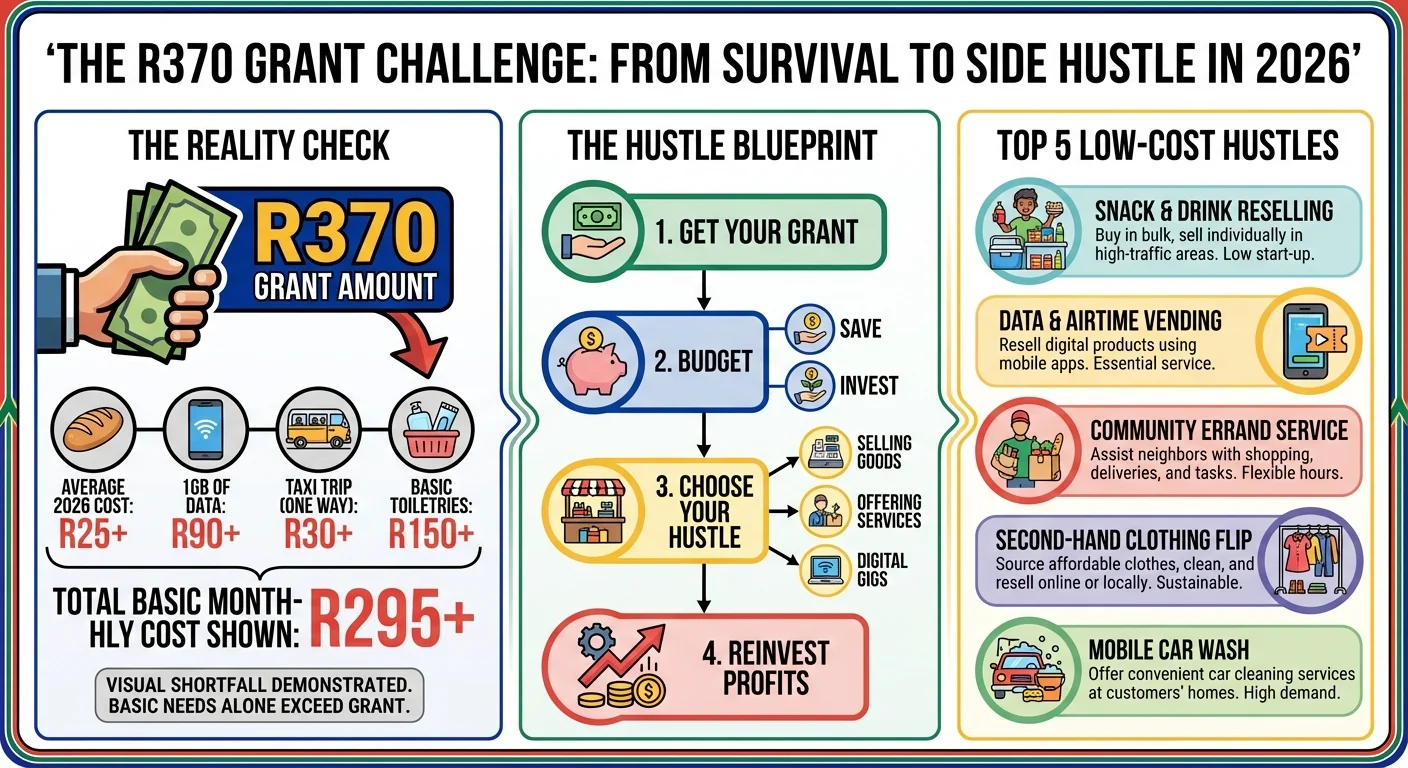
Let’s be brutally honest about what R370 can buy in South Africa today. A loaf of bread now pushes R22. A single local taxi trip can cost R18 or more. 1GB of data, a lifeline for job searching and communication, averages around R40. A small pack of chicken pieces, a bar of soap, and a bag of maize meal can easily consume another R100. Before a week is out, the R370 is not just gone; it’s a distant memory. This isn’t living; it’s a frantic, monthly calculation of what essential to sacrifice next. The grant, intended as a safety net, is so full of holes that people are falling right through.
Birth of the ‘Hustle Economy’: Desperation or Defiance?
Faced with this impossible math, a powerful and defining trend has emerged in 2026: the R370 side hustle revolution. This isn’t about getting rich; it’s about survival. It’s about defiance. When the system provides just enough to starve slowly, people are forced to become innovators. They are transforming their grant money from a consumption fund into seed capital for micro-enterprises. This ‘hustle economy’ is a direct response to a policy that fails to grasp the reality on the ground. It’s both a symptom of a broken system and a testament to the unbreakable spirit of South Africans.
Viral Trend: How South Africans Are Turning R370 into R2,000
Social media and community groups are buzzing with strategies. The goal is audacious: turn R370 into something that can actually sustain a family. These aren’t complex business models; they are agile, community-focused, and born from necessity.
Popular Low-Cost Hustles in 2026:
- Bulk-Buying & Reselling: Using the R370 to buy items like sweets, snacks, or single cigarettes in bulk and selling them individually for a small profit.
- Community Services: Offering services like cleaning yards, washing cars, or running errands for neighbours who can afford to pay a small fee.
- Data & Airtime Vending: Using a portion of the grant to buy digital vouchers and reselling them within the community, especially to those who live far from shops.
- Cooking & Baking: Preparing small batches of vetkoek, muffins, or a simple meal to sell to workers and schoolchildren.
Case Study 1: The Spaza Shop Starter Pack
Take Zola from Tembisa, for example. She uses R250 of her R370 grant to buy a tray of eggs, a bag of potatoes, and cooking oil. She makes and sells chips and egg rolls outside the local school. The remaining R120 is for her own family’s immediate needs. Her daily profit of R50-R70 is painstakingly saved to buy more stock. It’s a high-wire act with no room for error, but it’s the difference between her children eating or going hungry.
Case Study 2: The Digital Hustler
Then there’s Thabo in Khayelitsha. He uses his grant to buy a large data bundle. He then creates a Wi-Fi hotspot and sells access to his neighbours for R5 an hour so they can check WhatsApp or apply for jobs online. It’s a modern solution to a modern problem, leveraging the grant to provide a critical service his community needs.
The Dark Side: The Risks SASSA Doesn’t Warn You About
This entrepreneurial spirit is inspiring, but it’s fraught with danger. A single failed batch of vetkoek, a stolen phone used for selling data, or a few days of bad weather can wipe out an entire month’s ‘investment’. There is no safety net for the side hustle. Furthermore, many live in fear that earning any small income might disqualify them from the grant they so desperately need. This forces them to operate in the shadows. It’s crucial to constantly monitor your grant’s standing; you can perform a regular SRD Status Check to ensure your lifeline remains active while you navigate these risky waters.
The Dependency Debate: Is SASSA Creating Entrepreneurs or Entrenching Poverty?
This is the uncomfortable question government officials need to ask. On one hand, you could argue the grant is an unintentional catalyst for grassroots entrepreneurship. On the other, a more critical view is that the grant is so inadequate it forces people into precarious, high-risk activities with no support, entrenching a cycle of hand-to-mouth living. It’s not empowerment if it’s born from pure desperation. True empowerment would involve pairing the grant with skills training, mentorship, and a clear pathway to formal business support without the fear of losing the grant.
A Smarter Way Forward: What Government Should Be Doing Instead
Instead of paltry R20 increases, imagine a different approach for 2026. What if SASSA partnered with the NYDA or the Department of Small Business Development? What if receiving a grant opened up access to a free course on basic bookkeeping or marketing? What if there was a ‘hustle grant’ top-up for those who could present a viable micro-business plan? This would transform the grant from a simple handout into a hand-up, fostering sustainable livelihoods instead of perpetual dependency. It’s time to move the conversation from mere survival to supported success.
Your First Steps: A Realistic Guide to Starting a Side Hustle on R370
If you’re considering this path, proceed with caution and a clear plan.
- Don’t Use It All: Never invest your entire R370. Set aside at least half for your absolute basic needs.
- Solve a Local Problem: Look around your community. What do people need? Don’t sell what you want to sell; sell what they want to buy.
- Start Small: Your first goal isn’t profit; it’s to make your initial investment back. Buy the smallest possible amount of stock to test your idea.
- Know Your Numbers: Understand your cost per item and your selling price. Even a R1 profit per item adds up.
- Talk to People: Your customers will tell you what they want. Listen to them.
Stay Informed: Check Your Grant Status and Payment Dates for January 2026
While navigating your hustle, don’t lose sight of the grant itself. Official information is your most powerful tool. Make it a weekly habit to perform an SRD Status Check online to catch any issues early. Also, be sure to check the official SASSA Payment Dates for January and February 2026 so you can plan your budget and stock purchases accordingly. Knowing exactly when your funds will arrive is critical for managing your finances and your small business.
Conclusion: The R370 Grant is Not an Income, It’s a Crossroads
The R370 SRD grant in 2026 is not a solution to poverty. It’s a crossroads. For millions, it represents a monthly choice between passive suffering and active, risky survival. The explosion of the side hustle economy is a powerful message to policymakers: South Africans do not want to be dependent. They are crying out for genuine opportunities, not just crumbs. The R20 increase is an insult to their resilience. It’s time for a system that invests in their potential, not one that merely measures out their survival in pocket change.
Frequently Asked Questions
How much is the new SRD grant in January 2026?
Can I lose my SASSA grant if I start a side hustle?
What are the official SASSA payment dates for January 2026?
What are the safest side hustles to start with R370?
My SASSA application was declined, what should I do now?
How can I check my SASSA status using my phone?
*134*7737# from the mobile number you registered with and follow the prompts. Alternatively, visit our step-by-step guide on how to perform an SRD Status Check.Are there other government programs to help me start a business?
What is the biggest mistake people make when starting a hustle with their grant money?
Read Next
SASSA's New 'Mandatory App' Locks Your R390 Grant? The 2026 Guide for Beneficiaries Without a Smartphone
BREAKING April 2026: SASSA is rolling out a mandatory new smartphone app, …
The R140 Paraffin Price SHOCK: How 40% of Your R390 SASSA Grant Will Vanish on May 1st, 2026
BREAKING April 2026: NERSA has approved a devastating 40% increase in the price …
Comments & Discussions