Table of Contents
Title: The R50 Billion Food Waste SHOCK: Why Your R390 SASSA Grant Can’t Buy Food While SA Throws It Away
I’ve just been looking at the latest May 2026 figures on food waste, and frankly, they’re sickening. While millions of people are trying to survive on a R390 SASSA SRD grant that barely covers a week’s worth of maize, our country is dumping over 10 million tonnes of food into landfills. We’re talking about R50 billion worth of groceries just rotting away every year. It’s a national scandal that shows a system that has completely lost its way, and I want to look at how this mountain of discarded food could actually change lives if we stopped being so wasteful.
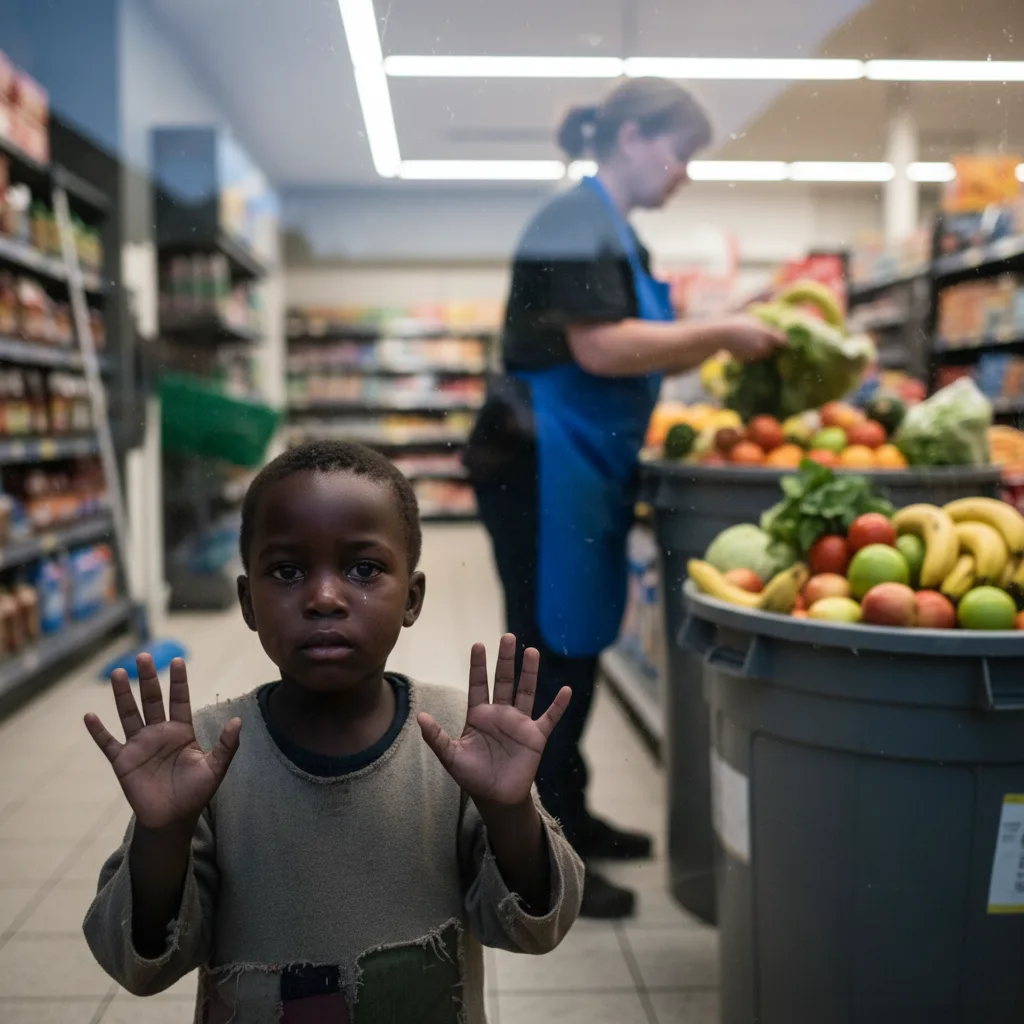
The Scale of the Scandal: R50 Billion Wasted While Millions Go Hungry
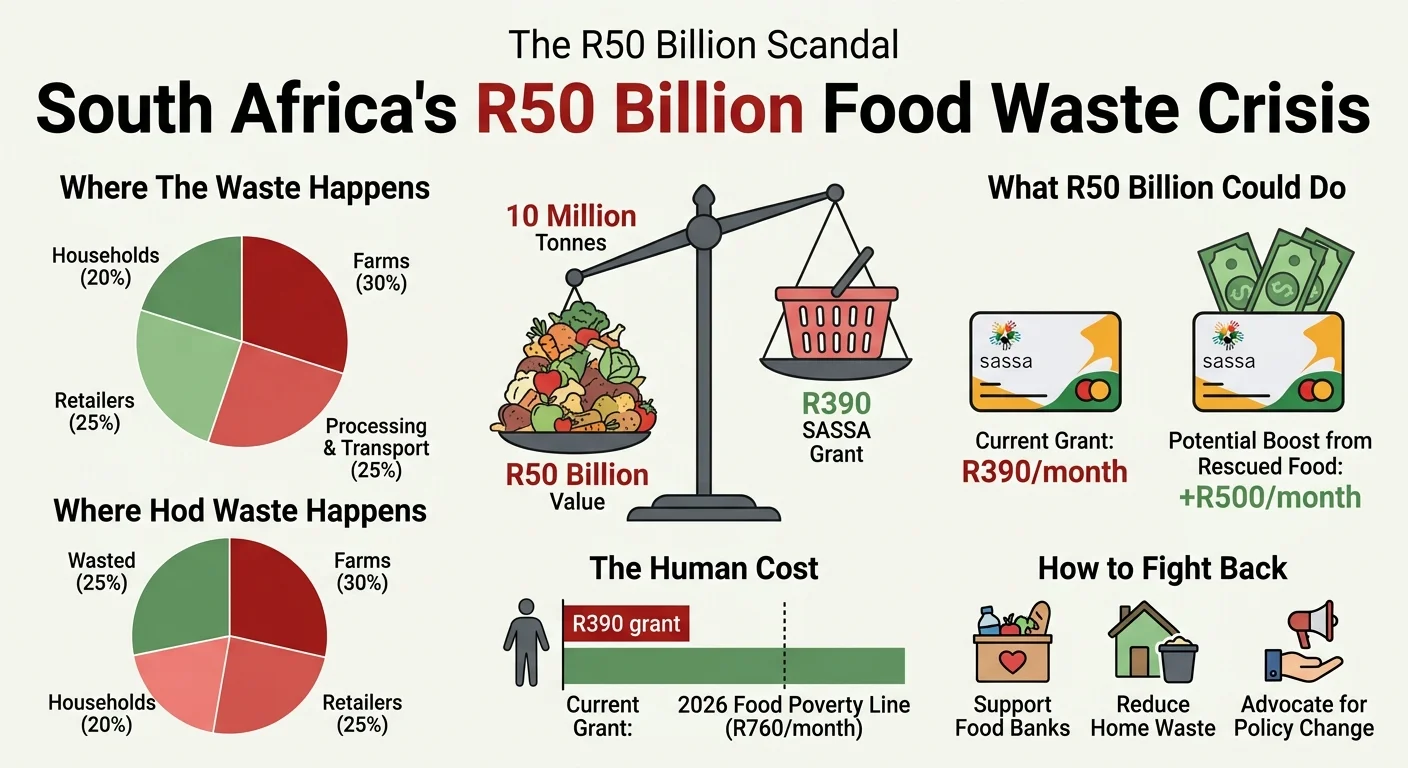
A report from the CSIR doing the rounds this May 2026 describes two very different South Africas. In one, we’re tossing 10.3 million tonnes of perfectly good food—not just scraps, but actual produce from farms and shelves. That’s R50 billion to R60 billion a year, or roughly 2% of our GDP, just gone. In the other South Africa, 8.5 million people are scraping by on the R390 SRD grant.
I can’t help but do the math: if we redirected that R50 billion, every single person on that grant could get an extra R500 a month. That would actually push people above the R760 food poverty line that Stats SA set for 2026. Instead, we have a moral crisis where retailers chuck food because it’s nearing a “best before” date, while families have to choose between a loaf of bread and keeping the lights on. It’s a failure of the heart as much as the economy.
From Farm to Landfill: Where is All the Food Going?
Most people think waste happens in their own kitchens, but the 2026 data shows the real rot starts much earlier. About 30% of this waste happens right on the farm because a carrot looks a bit “wonky” and a supermarket won’t buy it. Another 25% gets lost in storage and processing.
But the part that really gets to me is the 25% lost at the retail level. Walk into any major supermarket and you’ll see shelves packed to the brim just to look “plentiful.” At the end of the day, that “abundance” ends up in a dumpster—fresh bread, milk, and slightly bruised fruit. Experts like Dr. Nomvula Khumalo are right: stop blaming the person at home. The real issue is this industrial-scale dumping that keeps food out of reach for the poor. It’s a weird paradox where we have plenty of food, but only if you can afford the “perfect” version of it.
The R390 Reality vs. Retailer Waste: A Tale of Two South Africas
If you’re a SASSA beneficiary, you know the “check-out counter anxiety.” You have R390 for the month. A 2kg bag of maize is R45, bread is R20, and oil is R40. That grant is gone before you’ve even filled a single bag. If you are waiting on your money, you can check the latest Payment Dates to see when it might arrive.
It’s infuriating to think that while you’re counting cents, a store nearby is dumping hundreds of kilos of bread because it’s “cheaper” than donating it. Retailers often hide behind the excuse of logistics, saying it’s too hard to move surplus food. But groups like FoodForward SA are already doing it for 2,750 different organisations. The system is rigged to make dumping food easier than feeding people.
A Broken System: Why Government and SASSA Are Failing to Bridge the Gap
Our government is essentially asleep at the wheel on this. In France, they’ve actually banned supermarkets from throwing away edible food. Here? We don’t even have “Good Samaritan” laws to protect donors from legal trouble. This gap lets the R50 billion scandal keep rolling year after year.
SASSA does what it can to get the money out, but R390 is just a tiny bandage on a massive, gaping wound. We need a national food rescue plan that turns waste into jobs and meals. If you’ve been struggling with a rejected application, you should look at this Appeals Guide—but the bigger fix has to come from policy change. We need to make it more expensive for a CEO to dump food than to give it away.
The Rise of Community Action: How South Africans Are Fighting Back
Since the system is broken, people are taking matters into their own hands. I’m seeing community fridges popping up in 2026 where anyone can leave or take what they need. Apps are finally connecting restaurants with people who need cheap, surplus meals.
Groups like SA Harvest are proving that the food is already there—it’s just sitting in the wrong place. Supporting these local food banks and NPOs isn’t just about being “charitable.” It’s a way of saying we won’t accept a world where profit matters more than a hungry child. It’s a quiet, powerful rebellion against a wasteful system that has forgotten its humanity.
Frequently Asked Questions
How much food is wasted in South Africa every year?
Why does my R390 SASSA grant buy so little food in 2026?
Are supermarkets allowed to throw away edible food?
How could the R50 billion in wasted food help SASSA beneficiaries?
What can I do to help reduce food waste and support food security?
Where does most of the food waste in South Africa happen?
Read Next
SASSA June Payment Update: June 2026 Payment Cycle Confirmed
The June 2026 SASSA payment cycle is confirmed for 2, 3 and 4 June 2026 for the …
The R1,500 Grant Promise: How ANC, DA & EFF Are Targeting Your SASSA Vote in the 2026 Elections
BREAKING May 2026: As the 2026 municipal election campaigns ignite, political …
Comments & Discussions